

Travelling between Makkah and Madinah with young children changes the calculation between the Haramain train and a private taxi in ways that do not apply to solo or adult-only travellers. Speed on paper is not the only thing that matters when you have a toddler who needs a toilet stop with no warning, or a baby who has just fallen asleep in a car seat. This guide compares the two options specifically through the lens of travelling with young children.
Reviewed planning guidance. Every family and every child is different. Use this as a starting point for your own decision, and confirm current facilities directly with SAR for the train option.
The honest comparison starts with what children actually need
For an adult traveller, the Haramain train’s speed between Makkah and Madinah is close to unbeatable, and a private taxi’s main advantage is convenience rather than time. With young children in the mix, several other factors become just as important as raw journey time, and they tend to shift the balance differently for different families.
Comfort during the journey
On the train
The Haramain train offers a smooth, air-conditioned ride with proper seating, which many families find more comfortable for young children than a car for the intercity leg itself. Children who get restless in a confined car seat for a long stretch often do better with the ability to move slightly in their train seat or walk a short distance within the carriage.
In a private taxi
A private taxi offers a familiar, enclosed space where parents can manage a child directly, without other passengers nearby, which some families find easier for settling a fussy toddler or managing a feeding or nap routine. It also means you are not asking a young child to sit still and quiet in a public carriage for the length of the journey.
Toilet stops
This is often the single biggest practical factor for families with young children, and it is where the two options diverge most clearly.
On the train
Once the train has departed, you are committed to onboard facilities until arrival. Onboard toilets exist, but travelling with a toddler mid potty-training, or a child prone to unpredictable timing, means there is no option to pull over if something goes wrong.
In a private taxi
A private taxi can stop when a child genuinely needs it. This flexibility is one of the strongest practical reasons families with younger children often prefer road transport for this route, even though the journey itself takes longer than the train.

Luggage handling with children in tow
On the train
Travelling with children usually means more luggage than an adult trip alone, nappies, formula, extra clothing, and a pushchair in addition to normal cases. Managing all of this through a station, onto a platform, and into a carriage, while also managing a child, adds a layer of physical effort that solo travellers do not face.
In a private taxi
A door-to-door private transfer removes the station-transfer step entirely. Luggage is loaded once at your starting point and unloaded once at your destination, with the driver typically able to help, which matters when you are also holding a child’s hand or carrying a sleeping baby.
Car seats and family space
On the train
The train does not use car seats, since children travel in standard seating or, for infants, on a parent’s lap depending on age, alongside SAR’s own policies. Families used to a car seat for a young child will need to adjust expectations for the train leg specifically. SAR’s private cabin style option, where available, can offer more contained family space than open seating.
In a private taxi
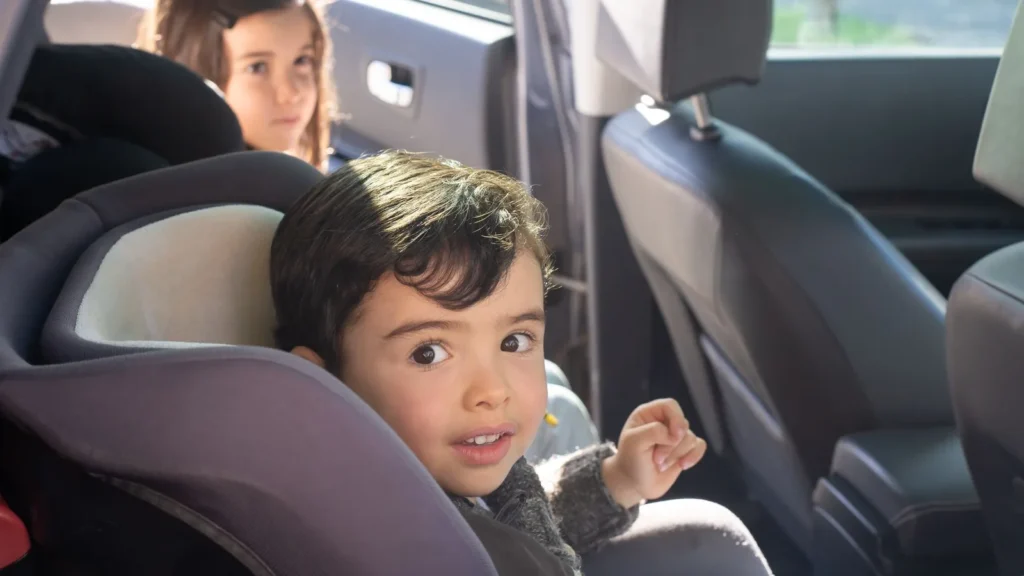
A private taxi allows a family to bring or request an appropriate child seat for the vehicle, keeping the same seating arrangement a family would use for any car journey. For parents who are particular about how a young child is secured in a vehicle, this consistency is a genuine advantage.

Which suits families better
There is no single right answer, and the honest picture depends on your child’s age, temperament, and your own priorities for the day.
The train tends to suit families when
Your children are a little older and more settled with sitting for a defined stretch, you are travelling light, your journey does not clash with a nap or feeding window that a stop would help with, and you are also comfortable managing a station transfer with luggage and a pushchair at both ends.
A private taxi tends to suit families when
You are travelling with a toddler, an infant, or a child who needs unpredictable stops, you are carrying a full luggage and equipment load, you want to use your own car seat, or you simply want the certainty of one continuous door-to-door journey without a station handover in the middle.
A practical middle ground
Some families choose the train for the intercity leg specifically because they can time it around a child’s nap, and then book a private taxi for the first and last mile between the station and their hotel at each end. This is worth considering if part of your family genuinely enjoys the train experience, while still keeping the flexibility of a private transfer at the points where luggage and small children make things harder.
Feeding, naps and keeping young children settled
On the train
A train seat gives a parent room to feed a baby or settle a young child reasonably comfortably, though you are still sharing a carriage with other passengers, which some parents find adds a small amount of self-consciousness to managing a fussy child in public. Timing your journey around a nap window can work well on the train, since the smooth, consistent motion often helps young children settle.
In a private taxi
A private taxi gives a family complete privacy for feeding, changing, or simply letting a child be loud or unsettled without other passengers nearby. For parents of very young babies in particular, this privacy is often the deciding factor over any other consideration.
Booking considerations specific to families
Booking the train with children
When booking Haramain tickets for a family, check whether infants and young children require their own paid seat or can travel on a parent’s lap, since this affects both cost and the physical space you will have during the journey. Booking early also matters more for families, since the private cabin option, where it suits your group best, is a limited allocation on each service.
Booking a private taxi with children
When booking a private transfer, specify the ages of any children travelling and whether you need a car seat provided or are bringing your own, along with your luggage and pushchair count. This lets your provider assign a vehicle with genuinely enough space, rather than a standard saloon that turns out to be tight once a car seat and family luggage are loaded.
What most families end up choosing
In practice, families with children old enough to sit through the journey comfortably, and with a lighter luggage load, often do choose the train for the speed and comfort of the ride itself. Families with a baby, a toddler, or a heavier luggage and equipment load more often choose a private taxi for the flexibility, even though the road journey takes longer than the train. Neither choice is wrong, and the right one comes down to being honest about what your own children, and your own patience on travel day, can realistically manage.
Related guides
- Makkah to Madinah: Haramain Train vs Private Taxi Compared
- Travelling to Umrah With Children: A First-Timer’s Planning Guide
- Umrah Transport for Families: Seats, Pushchairs and Luggage