Booking Return Intercity Transport in Advance vs Arranging It Once You’re There
Reviewed planning guidance. This article is general planning guidance for pilgrims arranging ground transport for Umrah or Hajj. Always check your airline’s current baggage rules and the latest Nusuk guidance before you travel.
Most pilgrims think carefully about how they will get from the airport to Makkah, and often how they will travel between Makkah and Madinah. What gets far less thought is the return leg, the journey that carries you and your luggage back to the airport at the end of the trip, sometimes across the country and against a departure time that will not wait for you. Whether to book that return intercity journey before you fly or leave it to arrange once you are in Saudi Arabia is a genuinely practical decision, and the right answer depends on your itinerary, your group, and how much certainty you want built into the final days of your pilgrimage.
Why the return leg gets less attention than it deserves
Early in the planning process, most of the mental energy goes into the outbound journey: which airport you land at, how you get to your hotel, when you perform Umrah or begin Hajj rites. The return leg sits at the far end of the itinerary, easy to defer because it feels distant and because, in theory, transport is always available somewhere in Saudi Arabia. That assumption is broadly true, but it hides a few practical wrinkles.
Your return journey usually has to align with a fixed flight time, which the outbound journey does not.
By the final days of a trip, especially after Hajj, you may be tired, travelling with more luggage than you arrived with, and less inclined to negotiate transport on the spot.
Demand for transport out of Makkah and Madinah can spike sharply around the end of Hajj and the close of Ramadan, exactly when many pilgrims need to leave.
None of this means arranging transport on the ground is a mistake. It means the decision deserves the same attention you already give the outbound leg.
What booking your return intercity transport in advance gives you
The main benefit of booking ahead is certainty on a day when certainty matters most. If your flight leaves Jeddah at a fixed time and you need to travel from Madinah, you are working backwards from a deadline you cannot move. A pre-arranged pickup at an agreed time removes the need to source a vehicle while also managing check-out, luggage, and the walk to and from the Haram.
A booking made in advance also lets you fix the price and the vehicle size before you travel, rather than negotiating under time pressure. For a family or a group travelling with more suitcases than they brought on the way out, agreeing the vehicle size early avoids an awkward conversation at the kerb about whether everyone and everything will actually fit. Journeys such as Makkah to Madinah, from 550 SAR with Hajj & Umrah Taxi, can be booked with a fixed price rather than left to be settled on the day.
Advance booking is particularly worth doing when:
Your return flight is early morning or overnight, when fewer transport options are actively working.
You are travelling as a family or group and need a specific vehicle size confirmed.
Your return falls during the final days of Hajj or the last week of Ramadan, when demand for any kind of transport rises sharply.
You would simply rather spend your last days in Saudi Arabia focused on worship and farewells than on logistics.
When arranging transport once you’re there can work
There are situations where booking the return closer to the time, or even on the day, is a reasonable and low-risk approach. If your itinerary is genuinely open, for example you have not yet decided whether you will spend three more days in Madinah or move on sooner, locking in a fixed departure time weeks in advance may not suit you. Similarly, if you are travelling alone or as a couple outside the busiest weeks of the pilgrimage calendar, with a flexible flight and modest luggage, the pressure on transport availability is generally lower.
Arranging on the ground tends to work best when you have a genuine buffer, meaning your flight is not the same day as your intercity journey, or you have at least a day’s slack if something takes longer than expected. It also depends on you being comfortable managing that logistics conversation in the final, often more tiring, days of the trip rather than the earlier, calmer planning stage.
The trade-off is straightforward: flexibility in exchange for a small amount of uncertainty. That is a fair trade for some pilgrims and not for others, and it is worth being honest with yourself about which type of traveller you are before you decide.
The real risks of leaving it to the last minute
The risk with arranging return transport at the last moment is not that no vehicle will ever be found, it is that the margin for error shrinks right when you can least afford it. A same-day search for transport during a peak period can mean paying more than you would have with an advance booking, waiting longer than planned, or ending up with a smaller vehicle than your group and luggage actually need.
This matters most when the return journey is tied directly to a flight departure. Missing an intercity connection because transport took longer to arrange than expected can turn a manageable delay into a missed flight, particularly on routes like Madinah to Jeddah where the intercity leg and the airport transfer both have to happen before check-in closes. For general planning purposes, it is worth reviewing the UK government’s foreign travel advice for Saudi Arabia well before you travel, and building your return-day timings with a realistic margin rather than a tight one.
How to decide: questions worth asking yourself
Rather than treating this as a binary choice you make once for the whole trip, it helps to run through a short set of questions for your specific return journey.
Is your return intercity leg on the same day as your flight, or do you have a buffer day?
Does your return fall during Hajj days, the final ten days of Ramadan, or another period you know will be busy?
Are you travelling with a group or family where vehicle size needs confirming ahead of time?
Would an unexpected delay on the day genuinely disrupt your plans, or could you absorb it?
Do you already know your exact departure city and rough timing, or is that still likely to change?
If most of your answers point towards tight timing, larger groups, or peak season, booking ahead removes a variable you do not need on your last day. If your answers point towards a flexible schedule and a real buffer, arranging closer to the time is a reasonable choice that keeps your options open.
Making the booking, whichever way you choose
If you decide to book your return journey in advance, do it once your outbound arrangements and accommodation are confirmed, so the dates and cities are settled rather than provisional. Keep your booking confirmation and driver contact details somewhere accessible, alongside your Nusuk documentation, rather than buried in an email you might not be able to open easily on the day. It is also worth checking the latest guidance on the official Nusuk pilgrim platform for anything that affects your movement dates before you finalise transport timing.
If you decide to arrange transport once you are there, build in the same discipline you would apply to a booking made in advance: know roughly what a fair fixed price looks like for your route, confirm the vehicle before you commit to it, and start the conversation with enough time left before your flight that a delay of an hour or two would not put your departure at risk. A reputable operator will always be able to quote a fixed price and confirm a vehicle before you travel, even at short notice.
Whichever route you choose, the goal is the same: a return journey that fits around your actual pilgrimage plans, not one that adds stress to the final days of a trip that should end as calmly as it began.
Frequently asked questions
Q: How far in advance should I book return intercity transport? A: There is no fixed rule, but booking once your accommodation dates and departure city are confirmed, rather than waiting until the final days, generally gives the most reliable outcome, especially during Hajj or the last ten days of Ramadan.
Q: Is it more expensive to arrange transport on the day? A: It can be, particularly during busy periods when demand is high and fewer vehicles are readily available. A fixed price agreed in advance removes that uncertainty.
Q: What if my return travel dates might still change? A: If your itinerary is genuinely open, it is reasonable to wait and arrange transport once your dates are firm, provided you keep a realistic buffer before any fixed flight departure.
Q: Does booking in advance mean I lose flexibility? A: A confirmed booking does reduce flexibility on that specific day, which is exactly why it suits pilgrims whose return date and flight are already fixed rather than those still deciding their plans.
Q: Should families and larger groups book ahead? A: Generally yes, since confirming vehicle size in advance avoids a difficult conversation about luggage and seating on the day itself, when everyone is tired and ready to head home.
Q: Where can I check for any updates that might affect my return journey? A: The official Nusuk pilgrim platform and the UK government’s travel advice for Saudi Arabia are both worth checking in the weeks before you travel, alongside your airline’s own guidance.
If you would like help matching your plans to the right vehicle, Hajj & Umrah Taxi can put together a fixed-price quote based on your exact travel details. Get in touch before you fly and we will make sure your transport is arranged around how you are actually travelling, not the other way round.
Splitting the Makkah to Madinah Journey: Is a Stopover Worth It for Transport Comfort
Reviewed planning guidance. This article is general planning guidance for pilgrims arranging ground transport for Umrah or Hajj. Always check your airline’s current baggage rules and the latest Nusuk guidance before you travel.
The road between Makkah and Madinah covers roughly 450 kilometres, and most pilgrims simply book a car or shared vehicle and travel it in one sitting. But not every group finds that straightforward. If you are travelling with elderly parents, young children, someone recovering from surgery, or you simply know that four or five hours in a vehicle is hard on your body, the idea of splitting the journey into two shorter legs with a rest stop in between is worth thinking through properly, not just as an afterthought if the trip turns out to be uncomfortable.
What “splitting the journey” actually means in practice
A stopover on this route is not a formal package that transport providers sell as a single product. In practice it means one of two things. The first is a short break of thirty minutes to an hour at a rest area partway along the route, usually near Rabigh or another point roughly midway, where the vehicle pulls in so passengers can pray, stretch, use facilities and have a drink before continuing. The second, more deliberate option is an overnight split: travelling part of the way, staying in a hotel for a night, and completing the remaining distance the next day. This second version is closer to what people usually mean when they ask whether a “stopover” is worth arranging.
Both are different from choosing to travel overnight in one continuous journey, which is a separate decision covered elsewhere in our planning guides. Here we are specifically weighing whether to break the single 450 kilometre trip into two distinct legs rather than treating the whole route, day or night, as one sitting. It is also worth being clear with your transport provider about which of the two you mean when you ask about a stopover, since a thirty minute prayer break and an overnight hotel stay are planned very differently, need different bookings, and change the price of your trip in different ways.
Why pilgrims consider a stopover at all
The core reason is physical comfort, and it tends to come from a small number of recurring situations:
Travelling with elderly parents or grandparents who find sitting still for four or more hours genuinely painful, particularly if they have joint or circulation problems.
Travelling with young children who cannot be reasonably expected to stay settled for the full journey without a proper break.
A pilgrim who has just completed Umrah rites or Hajj days and is physically exhausted, sometimes still recovering from the exertion of Tawaf, Sa’i or the days at Mina and Arafat.
Anyone managing a health condition where prolonged sitting, changes in routine, or missed rest genuinely affects them, not just mild discomfort.
Groups who would simply rather see the journey as two manageable days than one long one, especially if their itinerary already has flexible days built in.
None of these are unusual concerns. Anyone who has done the drive knows that even in a comfortable private vehicle, four to five hours is a long stretch, and longer again if road conditions or prayer stops add time. It is worth thinking about this before you fly rather than deciding on the day, since a tired group arriving at the pickup point is a poor moment to start weighing up whether to change the plan.
Weighing the case for and against splitting the trip
The strongest argument for an overnight stopover is that it turns one demanding day into two easier ones. Instead of arriving at your Madinah hotel tired and wanting only to sleep, you arrive with some energy left, which matters if you want your first hours in Madinah to include unhurried prayer at Masjid an-Nabawi rather than a rushed check-in followed by collapsing into bed.
A stopover also gives more flexibility around prayer times. Rather than timing a single long journey around Dhuhr, Asr or Maghrib and hoping the vehicle’s schedule lines up, breaking the trip means each leg is shorter and easier to plan around whichever prayer falls during that stretch. For families with children, an overnight break can also simply make the whole day less stressful for everyone in the vehicle, driver included. A tired, restless child in hour four of a five hour drive is a real practical problem, not a minor inconvenience, and a stopover removes that entirely by keeping each leg to roughly half the distance.
Against all of that, there are genuine downsides to splitting the journey that are easy to underweight when you are focused only on comfort during the drive itself.
An overnight stopover means an extra hotel night, extra cost, and one more check-in and check-out to manage while already travelling with luggage and, often, tired family members.
It adds a full extra day to your itinerary, which matters if your visa duration, flight dates or the rest of your pilgrimage schedule are already tight.
Two separate transport legs generally means two separate bookings and two pickup times to coordinate, rather than one continuous journey with a single driver and a single point of contact.
For many healthy adult travellers, five hours in a comfortable, air conditioned private vehicle with one or two short prayer breaks is simply not a significant hardship, and splitting it may add more disruption than it removes.
In short, a stopover solves a comfort problem at the cost of time, money and added logistics. Whether that trade is worth making depends almost entirely on who is actually in the vehicle, and on how much slack the rest of your itinerary can absorb if the split adds an unplanned day.
Who genuinely benefits most from a stopover
Based on the situations pilgrims most often raise with us, a stopover tends to be worth arranging when at least one of the following applies: someone in the group has a mobility or health condition that makes prolonged sitting genuinely difficult, rather than just tiring; you are travelling with very young children and no other adult is free to manage them for the full drive; the group has just finished Hajj days and is physically depleted rather than simply short on sleep; or your itinerary already has a flexible day that an overnight stop can slot into without disrupting flights or visa timing.
If none of those apply, a well-planned single journey, with the vehicle scheduled to include a proper prayer and rest break partway, usually covers the comfort issue without the added cost and complexity of an overnight split. A short thirty to sixty minute stop at the midpoint often achieves most of the benefit of a full stopover, at a fraction of the disruption. It also keeps your itinerary intact, which matters more than it might seem in the moment, particularly when hotel nights in both cities are already booked and paid for.
Practical points if you decide to split the journey
If you do decide an overnight stopover is the right call, a few practical points make it work more smoothly. Confirm your hotel booking for the stopover point before you travel rather than assuming you can arrange it on arrival, particularly during busier periods of the Umrah or Hajj calendar when accommodation along the route fills up quickly. Check the latest guidance on the official Nusuk platform for anything that affects your permit or movement between cities, since requirements can be updated and you want your plans to line up with whatever is current rather than what was true last season.
Agree your pickup times for both legs in advance, ideally with the same transport provider handling both, so you are not coordinating two separate unknown drivers on a journey you have already split for the sake of reducing stress. A one-way Makkah to Madinah transfer with Hajj & Umrah Taxi starts from 550 SAR, and the same applies whether you book it as one continuous journey or as two shorter legs either side of an overnight stop, so pricing an overnight split is mostly a matter of adding the hotel cost rather than a dramatically different transport bill. It is also worth checking current UK travel advice on gov.uk before you finalise dates, since general guidance for Saudi Arabia is reviewed periodically and it is sensible to have read the latest version before you travel.
Finally, tell your driver in advance if anyone in the group has specific needs, whether that is a wheelchair, extra time to board, or simply a preference for more frequent short stops rather than one longer break. A driver who knows this before setting off can plan the route and timing around it, which tends to make far more difference to comfort than the stopover decision itself.
Frequently asked questions
Q: Does splitting the Makkah to Madinah journey cost significantly more? A: The transport cost itself is broadly similar whether you travel in one leg or two, since it is largely determined by distance. The main added cost is the extra hotel night at the stopover point.
Q: How long is the Makkah to Madinah road journey without a stopover? A: It typically takes around four to five hours by road, depending on the route, traffic and how many prayer or rest stops the journey includes.
Q: Is a short rest stop along the way different from an overnight stopover? A: Yes. A short rest stop is a thirty to sixty minute break within a single continuous journey, while an overnight stopover means completing the trip over two separate days with a hotel stay in between.
Q: Is a stopover worth arranging for a healthy adult travelling alone? A: Usually not. A single journey with one or two planned rest breaks is generally comfortable enough for most healthy adults, and a stopover adds cost and time without a clear benefit in that case.
Q: Can I arrange a stopover with the same driver for both legs? A: It is worth asking your transport provider directly, since arrangements vary. Booking both legs through the same provider generally makes coordination simpler than treating them as two unrelated bookings.
Q: Will a stopover affect my Umrah or Hajj permit timing? A: It can, depending on your visa and any permit conditions tied to your dates, so check your specific documentation and the latest guidance on the official Nusuk platform before building an overnight stop into your plans.
If you would like help matching your plans to the right vehicle, Hajj & Umrah Taxi can put together a fixed-price quote based on your exact travel details. Get in touch before you fly and we will make sure your transport is arranged around how you are actually travelling, not the other way round.
The Multi-Stop Makkah to Madinah Route via Badr: What It Adds to Your Journey
Most private transfers between Makkah and Madinah run along the direct highway route, but some pilgrims choose to add a stop at Badr along the way. It adds time and cost to the journey, so it is worth understanding what is actually at Badr, why pilgrims choose to stop there, and whether the detour is the right trade-off for your own trip before you book it.
Reviewed planning guidance. Route timing and site access can vary. Confirm current access arrangements and journey time additions with your transport provider when booking a Badr stop.
What is at Badr
Badr is a town that sits off the direct Makkah to Madinah highway and holds deep significance in Islamic history as the site of the first major battle fought by the early Muslim community, in the second year after the Hijrah. For many pilgrims, particularly those who have read about the events of Badr and its place in early Islamic history, visiting the site in person adds a layer of meaning to their journey between the two holy cities that the direct highway route does not offer.
What pilgrims typically visit
Pilgrims who stop at Badr generally visit the area associated with the battlefield and the nearby burial ground linked to those who fell there, along with the local mosque. This is a ziyarah stop in the same spirit as other historical sites pilgrims visit around Makkah and Madinah, rather than a tourist attraction, and most pilgrims treat it accordingly, with a quiet, reflective visit rather than an extended stay.
Why some pilgrims choose to add this stop
The direct route between Makkah and Madinah is the fastest way to travel, and most pilgrims take it without a second thought. Pilgrims who choose the Badr detour tend to have a specific reason for it: an interest in the history connected to the early Muslim community, a wish to visit a site with genuine religious significance while they are already making the same journey, or simply making the most of already being on the road between the two cities rather than planning a separate trip to the area later.
It suits a first Hajj or Umrah differently to a repeat visit
Pilgrims on their first trip often want to keep their itinerary focused on the essentials, given how much is already happening in a first visit. The Badr stop tends to appeal more to pilgrims who have already completed Umrah or Hajj before, have more familiarity with the core rituals, and want to use a later trip to explore additional sites connected to Islamic history along the way.
The practical time and cost trade-off
Adding Badr to a Makkah to Madinah transfer is not a small diversion, and it is worth being realistic about what it costs you in time and money before booking it.
Extra journey time
Because Badr sits off the direct highway, routing through it adds meaningful time to what would otherwise be a more direct transfer, on top of whatever time you spend actually visiting the site itself. This makes the stop a poor fit for anyone on a tight schedule, for example travellers who need to connect with a fixed onward flight or a booked hotel check-in window later the same day.
Extra cost
A multi-stop private transfer routed through Badr typically costs more than the direct journey, reflecting both the extra distance and the extra time the driver spends on the trip. Confirm this cost as part of your booking rather than assuming it is included in a standard Makkah to Madinah fare, since the detour is a genuinely different journey from the direct route.
Weighing it against your itinerary
The stop is easiest to justify when your schedule already has flexibility built in, when you are travelling as a smaller group who can agree on the extra stop together, and when the history of Badr specifically matters to you or your travelling companions. It is harder to justify on a day where you are also managing young children, a tight connection, or a full luggage load, since all of these make an already longer journey more tiring.
Booking a Badr stop as part of your transfer
Discuss it at the time of booking, not on the day
Because the detour changes both the route and the time required, it needs to be arranged as part of your booking rather than requested as a last-minute change once you are already in the vehicle. This lets your provider quote accurately and plan the journey properly.
Ask what the stop actually includes
Confirm with your provider exactly how long you will have at Badr and whether the driver waits on site or the stop is timed as part of a fixed schedule. This avoids a rushed or, conversely, an unexpectedly long stop that throws off the rest of your day.
Consider timing around prayer and rest
Since the detour adds real time to an already long intercity journey, think about how it interacts with prayer times and any rest stops you would normally take on the direct route, so the added stop fits naturally into your day rather than competing with it.
Is the Badr route right for your journey
If the history of Badr genuinely matters to you, your schedule has room for the extra time, and the added cost is acceptable, the detour can turn a routine intercity transfer into something more meaningful. If you are working to a tight connection, travelling with young children, or simply want the fastest route between the two cities, the direct highway transfer remains the more practical choice, and a Badr visit is something you can plan separately on a future trip instead.
What makes Badr different from other ziyarah stops
Most of the ziyarah sites pilgrims visit around Makkah and Madinah, such as Jabal al-Nour, Jabal Thawr, or the sites around Uhud, sit close to the city itself and can be added to a trip without significantly changing your intercity travel plans. Badr is different because it sits between the two cities rather than near either one, so visiting it is inherently tied to how you travel the Makkah to Madinah leg specifically, rather than being a separate short excursion you can slot in on a quiet afternoon.
Who tends to skip this stop
Most pilgrims, on any given trip, still take the direct route between Makkah and Madinah, and there is nothing lacking in that choice. Tight itineraries, package tour schedules set by a group organiser, and journeys already extended by other stops such as an overnight break are all good reasons to skip Badr on a particular trip and focus on the direct transfer instead. The detour is genuinely optional, and providers offering the direct route are not offering a lesser service, simply a different one suited to a different kind of trip.
Combining Badr with an overnight stop
Some pilgrims who want to add a Badr stop combine it with an overnight break in the intercity journey rather than trying to fit everything into a single long day. Splitting the Makkah to Madinah leg across two days, with the Badr visit built into that plan, spreads out the extra time the detour adds and can make for a less tiring overall journey than adding the stop to an otherwise single, long day of travel. This is worth discussing with your transport provider if the historical stop matters enough to you to justify restructuring the journey around it.
A brief note on the history
The battle fought at Badr in the second year after the Hijrah is widely regarded as a turning point in early Islamic history, and it is referenced directly in the Quran. For many pilgrims, this background is exactly why a quiet visit to the site feels worthwhile, adding historical and spiritual context to a journey that, on the direct route, would otherwise be purely functional.
Makkah to Madinah With Young Children: Taxi vs Haramain Train Compared
Travelling between Makkah and Madinah with young children changes the calculation between the Haramain train and a private taxi in ways that do not apply to solo or adult-only travellers. Speed on paper is not the only thing that matters when you have a toddler who needs a toilet stop with no warning, or a baby who has just fallen asleep in a car seat. This guide compares the two options specifically through the lens of travelling with young children.
Reviewed planning guidance. Every family and every child is different. Use this as a starting point for your own decision, and confirm current facilities directly with SAR for the train option.
The honest comparison starts with what children actually need
For an adult traveller, the Haramain train’s speed between Makkah and Madinah is close to unbeatable, and a private taxi’s main advantage is convenience rather than time. With young children in the mix, several other factors become just as important as raw journey time, and they tend to shift the balance differently for different families.
Comfort during the journey
On the train
The Haramain train offers a smooth, air-conditioned ride with proper seating, which many families find more comfortable for young children than a car for the intercity leg itself. Children who get restless in a confined car seat for a long stretch often do better with the ability to move slightly in their train seat or walk a short distance within the carriage.
In a private taxi
A private taxi offers a familiar, enclosed space where parents can manage a child directly, without other passengers nearby, which some families find easier for settling a fussy toddler or managing a feeding or nap routine. It also means you are not asking a young child to sit still and quiet in a public carriage for the length of the journey.
Toilet stops
This is often the single biggest practical factor for families with young children, and it is where the two options diverge most clearly.
On the train
Once the train has departed, you are committed to onboard facilities until arrival. Onboard toilets exist, but travelling with a toddler mid potty-training, or a child prone to unpredictable timing, means there is no option to pull over if something goes wrong.
In a private taxi
A private taxi can stop when a child genuinely needs it. This flexibility is one of the strongest practical reasons families with younger children often prefer road transport for this route, even though the journey itself takes longer than the train.
Luggage handling with children in tow
On the train
Travelling with children usually means more luggage than an adult trip alone, nappies, formula, extra clothing, and a pushchair in addition to normal cases. Managing all of this through a station, onto a platform, and into a carriage, while also managing a child, adds a layer of physical effort that solo travellers do not face.
In a private taxi
A door-to-door private transfer removes the station-transfer step entirely. Luggage is loaded once at your starting point and unloaded once at your destination, with the driver typically able to help, which matters when you are also holding a child’s hand or carrying a sleeping baby.
Car seats and family space
On the train
The train does not use car seats, since children travel in standard seating or, for infants, on a parent’s lap depending on age, alongside SAR’s own policies. Families used to a car seat for a young child will need to adjust expectations for the train leg specifically. SAR’s private cabin style option, where available, can offer more contained family space than open seating.
In a private taxi
A private taxi allows a family to bring or request an appropriate child seat for the vehicle, keeping the same seating arrangement a family would use for any car journey. For parents who are particular about how a young child is secured in a vehicle, this consistency is a genuine advantage.
Which suits families better
There is no single right answer, and the honest picture depends on your child’s age, temperament, and your own priorities for the day.
The train tends to suit families when
Your children are a little older and more settled with sitting for a defined stretch, you are travelling light, your journey does not clash with a nap or feeding window that a stop would help with, and you are also comfortable managing a station transfer with luggage and a pushchair at both ends.
A private taxi tends to suit families when
You are travelling with a toddler, an infant, or a child who needs unpredictable stops, you are carrying a full luggage and equipment load, you want to use your own car seat, or you simply want the certainty of one continuous door-to-door journey without a station handover in the middle.
A practical middle ground
Some families choose the train for the intercity leg specifically because they can time it around a child’s nap, and then book a private taxi for the first and last mile between the station and their hotel at each end. This is worth considering if part of your family genuinely enjoys the train experience, while still keeping the flexibility of a private transfer at the points where luggage and small children make things harder.
Feeding, naps and keeping young children settled
On the train
A train seat gives a parent room to feed a baby or settle a young child reasonably comfortably, though you are still sharing a carriage with other passengers, which some parents find adds a small amount of self-consciousness to managing a fussy child in public. Timing your journey around a nap window can work well on the train, since the smooth, consistent motion often helps young children settle.
In a private taxi
A private taxi gives a family complete privacy for feeding, changing, or simply letting a child be loud or unsettled without other passengers nearby. For parents of very young babies in particular, this privacy is often the deciding factor over any other consideration.
Booking considerations specific to families
Booking the train with children
When booking Haramain tickets for a family, check whether infants and young children require their own paid seat or can travel on a parent’s lap, since this affects both cost and the physical space you will have during the journey. Booking early also matters more for families, since the private cabin option, where it suits your group best, is a limited allocation on each service.
Booking a private taxi with children
When booking a private transfer, specify the ages of any children travelling and whether you need a car seat provided or are bringing your own, along with your luggage and pushchair count. This lets your provider assign a vehicle with genuinely enough space, rather than a standard saloon that turns out to be tight once a car seat and family luggage are loaded.
What most families end up choosing
In practice, families with children old enough to sit through the journey comfortably, and with a lighter luggage load, often do choose the train for the speed and comfort of the ride itself. Families with a baby, a toddler, or a heavier luggage and equipment load more often choose a private taxi for the flexibility, even though the road journey takes longer than the train. Neither choice is wrong, and the right one comes down to being honest about what your own children, and your own patience on travel day, can realistically manage.
Haramain High Speed Rail: A Booking Guide for Pilgrims Choosing Between Train and Taxi
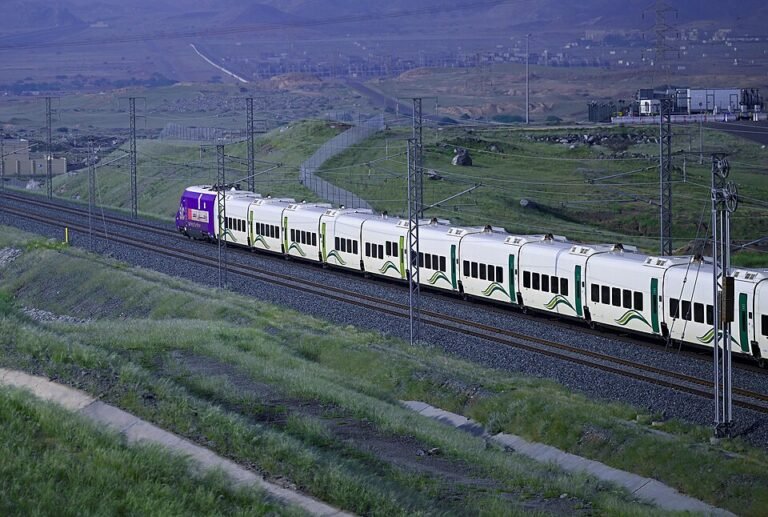
The Haramain High Speed Rail is one of the most comfortable ways to travel between Makkah and Madinah, but pilgrims booking it for the first time often get stuck on a simpler question than they expect: how do you actually buy a ticket. This guide walks through the booking mechanics themselves, ticket classes, how far in advance to book, and where the stations are, so you can decide with confidence whether the train or a private taxi is the better fit for your trip.
Reviewed planning guidance. Fares, schedules and app features change periodically. Always confirm current pricing, timetables and booking channels directly with SAR (Saudi Arabia Railways) before you travel.
Who operates the Haramain High Speed Rail
The Haramain line is operated by SAR, Saudi Arabia’s national railway operator, which also runs the Mashair Train serving the Hajj sites around Makkah. Because SAR is the official operator, its own website and app are the most reliable places to book, rather than third-party resellers, which can carry additional fees or outdated schedule information.
How to actually buy a ticket
Booking through the app
SAR offers a dedicated booking app for the Haramain Express, which allows passengers to search journeys, select seats, and pay directly on a smartphone. For UK-based pilgrims booking before they fly, this is usually the most convenient route, since it means your ticket is confirmed before you land in Saudi Arabia rather than something to sort out once you arrive.
Booking online
Tickets are also fully bookable through SAR’s website, which mirrors the app’s functionality for passengers who prefer booking on a laptop or need to manage a larger group booking where seat allocation across several passengers is easier to review on a bigger screen.
Booking at the station
Station counters remain available for passengers who prefer to book in person, or who need to adjust an existing booking, though relying on this as your only option is riskier during busy periods when trains can sell out, particularly around Ramadan and the weeks surrounding Hajj.
Ticket classes explained
SAR sells Haramain tickets across a small number of classes, and choosing the right one is largely a question of budget against comfort, since the journey time itself does not change between classes.
Economy
Economy is the standard class most pilgrims travel in, offering comfortable seating for the journey at the lowest fare point. For a straightforward Makkah to Madinah trip without heavy luggage or specific comfort needs, Economy is generally sufficient.
Business
Business class offers additional comfort and more spacious seating at a higher fare, and tends to suit pilgrims who want a calmer, less crowded carriage, particularly on trains running during peak travel weeks when Economy carriages are fuller.
Private cabin options
SAR also offers a private cabin style option on some services, aimed at families or small groups wanting a separate, more private space rather than open seating. This is worth considering for families travelling with young children who may need more room to settle during the journey.
Add-ons at booking
When booking, SAR allows passengers to add extras such as baggage allowance beyond the standard limit, meals, and lounge access at the station. Reviewing these options at the time of booking, rather than assuming they will be available on the day, avoids disappointment if a service is fully allocated.
How far in advance to book
Because the Haramain line is heavily used by pilgrims, especially during Ramadan, the weeks around Hajj, and school holiday periods when UK and European travellers cluster their trips, popular departure times can sell out well ahead of the travel date. Booking as soon as your itinerary dates are fixed, rather than waiting until you land in Saudi Arabia, is the safest approach if you have a specific departure time in mind. Outside these peak periods, more flexibility exists closer to travel, but early booking still tends to give better seat choice and, on some fare types, better pricing.
Station locations
The Haramain line connects Makkah, Madinah, Jeddah, and King Abdulaziz International Airport, with each city’s station located outside the historic centre rather than immediately adjacent to the Haram areas. This is the detail that most affects your overall journey time and is where the comparison with a private taxi actually starts to matter.
Why the station location matters for your total journey time
A train journey between Makkah and Madinah itself is fast, but your door-to-door time also includes getting from your hotel to the departure station, and then from the arrival station to your hotel at the other end. Neither of these legs is covered by your train ticket, so they need to be planned and, in most cases, booked separately as ground transport.
Booking mechanics compared with booking a private taxi
The core difference between booking the train and booking a private taxi is what a single booking actually covers. A Haramain ticket covers only the station-to-station leg and is bought through SAR’s own app, website or a station counter, with fixed departure times you need to work your day around. A private taxi booking covers the entire door-to-door journey in one transaction, at a time you choose rather than a fixed timetable, and does not require a separate first and last mile arrangement at either end.
When the train’s booking process suits your trip
If your schedule is flexible around a fixed departure time, and you are comfortable arranging separate transport to and from each station, the train’s booking process is straightforward and the fare is often lower than a private transfer for the intercity leg alone.
When a private taxi’s booking process suits your trip
If you are travelling with a group, carrying significant luggage, travelling with young children or elderly relatives, or simply want one booking to cover the whole journey without coordinating a station transfer at both ends, a private taxi’s single-booking simplicity is often worth more than the train’s per-leg cost saving.
Managing a group or family booking
Booking multiple seats together
When booking for a family or group, the app and website both allow you to select multiple passengers within the same booking, but seat allocation together is not always automatic, particularly on busier services. Reviewing the seat map before confirming payment, rather than assuming the system will keep your group together, is worth the extra minute it takes.
Paying and confirming your booking
Both the app and the website accept standard card payment, and a confirmed booking generates a ticket that can be shown digitally at the station rather than needing to be printed, which is useful for pilgrims travelling light. Keep a copy of your booking reference somewhere separate from your phone as well, in case you need it at a station counter for any reason.
What to check before you rely on the train for a tight schedule
Because the Haramain service runs to a fixed timetable rather than on demand, it suits journeys where you can build your day around a set departure time. If your itinerary has a tight connection at either end, for example a flight later the same day or a hotel check-in deadline, confirm the specific departure and arrival times for your chosen service against your other plans before booking, rather than assuming there will be a convenient train close to when you need one. Peak periods in particular can mean the most convenient departure times sell out first, leaving only earlier or later options by the time you book.
Making the most of your ticket
Once booked, arriving at the station with a reasonable buffer before departure, particularly during busy periods when security and boarding can take longer, helps the whole booking process feel as smooth as the journey itself. Combined with a private transfer booked separately for the first and last mile, a Haramain ticket booked properly in advance is one of the most reliable ways to move between Makkah and Madinah on a fixed schedule.
One-Way vs Return Intercity Transport Between Makkah and Madinah
Booking transport between Makkah and Madinah raises a question that is easy to overlook until you are actually filling in the booking form: do you book each leg of your intercity journey separately as a one-way trip, or book a return together in one go? Both are genuinely available options for most pilgrims, and the right answer depends more on how firm your itinerary is than on price alone.
Reviewed planning guidance. Details can change; use the linked official sources and get a live quote for current pricing and availability.
How one-way intercity booking works
A one-way booking covers a single leg, for example Makkah to Madinah on a specific date and, if relevant, a specific time. You book it as its own transaction, and if you later need the reverse journey, you book that separately, either at the same time or closer to the date once your plans are firmer. This is the more flexible of the two approaches, since neither leg is tied to the other, and it suits pilgrims whose return date or timing is not fully settled when they book their outbound journey.
When flexibility matters more than convenience
If your Umrah trip includes an open-ended stretch, for example an unconfirmed number of days in Madinah before deciding when to head back to Makkah for departure, one-way bookings let you commit to the leg you are sure about now and sort the other leg once your plans settle, without needing to change or cancel a return booking made too early.
How return intercity booking works
A return booking covers both legs of your Makkah-Madinah journey in a single transaction, with both dates, and sometimes both approximate times, confirmed upfront. This suits pilgrims with a fixed itinerary, for example a set number of nights in each city as part of a package or a pre-planned personal schedule, where both dates are already known and unlikely to change.
What you gain by booking together
Booking both legs together means one conversation with your transport provider covering your whole intercity plan, rather than two separate bookings to keep track of. It also means your provider has visibility of your full itinerary shape from the outset, which can help them flag anything worth knowing, for example if your return leg lands during a particularly busy period, such as around Ramadan or a public holiday.
Pricing considerations
Whether a return booking works out cheaper than two separate one-way bookings varies by provider and by the specific dates involved, and is not a fixed rule you should assume applies everywhere. Some providers offer a modest saving for booking both legs together since it simplifies their own scheduling; others price each leg independently regardless of whether it is booked alone or as part of a return. Ask directly when you get your quote rather than assuming either approach is automatically the cheaper one for your specific dates.
Changing your mind after booking
If your plans shift after you have booked a return and you need to change one leg’s date or time, ask your provider what their amendment process is before you book, so you know what to expect if this happens. This is generally more straightforward to resolve with a provider you have booked directly with than through a third-party platform with less flexibility.
What most pilgrims actually choose
In practice, pilgrims with a settled, package-style itinerary where both cities and dates are fixed well in advance tend to book return journeys together for the convenience of a single booking conversation. Pilgrims travelling independently, particularly those without a fixed return date at the point of booking their outbound leg, more often use one-way bookings and arrange the return closer to the time once their plans are confirmed. Neither approach is objectively better; the right choice depends on how settled your specific itinerary is when you are ready to book.
Frequently asked questions
Is it cheaper to book a return Makkah-Madinah transfer than two one-way trips?
This varies by provider and by the specific dates involved. Ask directly when you get a quote rather than assuming either option is automatically cheaper.
Should I book a return if I am not sure when I will travel back?
If your return date is genuinely open, a one-way booking for your outbound leg, followed by a separate booking for the return once your plans are firmer, avoids needing to change a return booking made too early.
Can I change the date of one leg of a return booking after I have made it?
This depends on your provider’s amendment process. Ask about this before you book a return, so you know what to expect if your plans shift.
What do most pilgrims choose?
Pilgrims with a fixed, package-style itinerary tend to book returns together for convenience. Those travelling independently with an open return date more often use separate one-way bookings.
Transport, airport, visa and visitor arrangements can change. These official sources are provided so you can check the current position for your journey. Checked 2026-07-25.
Hajj & Umrah Taxi Cab Co offers both one-way and return Makkah-Madinah bookings, with straightforward amendments if your dates shift. Tell us how settled your itinerary is and we will suggest whichever approach suits your trip.
Makkah to Madinah Transport During Ramadan: Timing Around Iftar and Taraweeh
Ramadan changes the rhythm of daily life across Saudi Arabia, and travelling between Makkah and Madinah during the holy month is no exception. Roads that are busy at most times of year become significantly busier around Iftar, and quieter than usual during the hours immediately before and after Suhoor. If you are booking intercity transport during Ramadan, timing your journey around these shifts, rather than treating it like any other month, makes a real difference to how comfortable the trip is.
Reviewed planning guidance. Details can change; use the linked official sources and get a live quote for current pricing and availability.
Why road conditions change so much during Ramadan
Across the country, the approach to Iftar, the meal that breaks the fast at sunset, draws a huge number of people off the roads and into homes, mosques and restaurants within a short window. In the run-up to that moment, roads can become extremely busy as people rush to reach their destination before sunset, and then go remarkably quiet for a period immediately afterwards while everyone is eating. This pattern repeats every single day of Ramadan, so it is predictable, and predictable things can be planned around.
A similar, though less extreme, pattern shows up around Suhoor, the pre-dawn meal, and Taraweeh, the extended night prayers held after Isha throughout the month, both of which affect when people are moving around Makkah and Madinah and when the two holy mosques themselves are at their most crowded.
Avoid scheduling your departure right before Iftar
If your intercity journey’s departure time lands in the hour or so before sunset during Ramadan, expect heavier traffic than usual on the route out of the city, as local traffic converges with pilgrim and visitor traffic all trying to reach a destination before the fast breaks. Where your schedule allows some flexibility, either travelling well before this window or waiting until after Iftar has settled tends to produce a smoother journey than departing right in the middle of it.
What this means for booking
When you book Makkah-Madinah transport during Ramadan, mention that you are travelling during the holy month and share your intended departure time clearly, so your provider can flag if it falls in a period likely to be busier than normal, and suggest an adjustment if one would help.
Travelling after Iftar and around Taraweeh
Many pilgrims find that travelling in the hours after Iftar, once the initial rush has passed, works well, since roads have generally quietened and the intense heat of the day, if travelling in a hot period of the year, has eased somewhat. Bear in mind, though, that Taraweeh prayers draw large numbers of worshippers to and from the mosques each night, so traffic immediately around the Grand Mosque in Makkah and the Prophet’s Mosque in Madinah can pick up again later in the evening as prayers begin and end.
Night arrivals into a Ramadan-busy city
If your intercity journey is timed to arrive late at night, be aware that hotel areas around both holy mosques can still be busy with worshippers moving to and from Taraweeh well after most cities would have quietened down for the night. This does not usually cause serious delays to a private transfer, but it is worth knowing so you are not surprised by activity levels at an hour that would normally be quiet.
Suhoor and pre-dawn departures
Some pilgrims deliberately choose an early, pre-dawn departure to travel before the Suhoor meal and the Fajr prayer that follows it, reasoning that roads will be quiet and the temperature cooler. This can work well, but confirm with your transport provider that pre-dawn pickups are available during Ramadan specifically, since demand patterns and driver availability during the month can differ from the rest of the year.
Build in extra time either way
Whichever window you choose, allow more buffer than you would for the same journey outside Ramadan. Even outside the sharpest peaks around Iftar, general traffic patterns across Makkah and Madinah shift during the holy month as more people are out later in the evening and the cities themselves are operating at higher visitor volumes than usual. A journey that would normally take a predictable amount of time can run longer during Ramadan, and building in that margin protects you from a tight connection at the other end, whether that is a hotel check-in, a flight, or simply wanting to arrive in good time for prayer.
Frequently asked questions
What is the worst time to travel between Makkah and Madinah during Ramadan?
The hour or so immediately before Iftar tends to see the heaviest traffic, as people rush to reach their destination before the fast breaks. Where possible, avoid departing right in the middle of this window.
Is it better to travel before or after Iftar?
Both can work. Travelling well before the pre-Iftar rush, or waiting until after Iftar has settled, tends to be smoother than departing right during the rush itself. Share your planned departure time when booking so your provider can flag any concerns.
Does Taraweeh affect intercity travel timing?
Taraweeh prayers draw large numbers of worshippers to the mosques each night, which can increase traffic in the immediate vicinity of the Grand Mosque and the Prophet’s Mosque later in the evening, even after the main Iftar rush has passed.
Should I allow more time for my journey during Ramadan than usual?
Yes. General traffic patterns shift throughout the month, so build in more buffer than you would for the same journey outside Ramadan, particularly around Iftar and Taraweeh times.
Transport, airport, visa and visitor arrangements can change. These official sources are provided so you can check the current position for your journey. Checked 2026-07-25.
Hajj & Umrah Taxi Cab Co plans Ramadan intercity journeys around Iftar and Taraweeh timing, not just distance and duration, so your Makkah-Madinah transfer avoids the busiest windows wherever your schedule allows it.
Haramain Train Station to Your Hotel: Booking the First and Last Mile
The Haramain High Speed Rail line between Makkah and Madinah gets pilgrims between the two holy cities in under two and a half hours, which is a genuinely fast, comfortable option compared with driving the full distance by road. What the train does not do is take you from your hotel door to the station, or from the station at the other end to your hotel door. That first and last mile is a separate transport decision, and planning it properly is what actually determines whether your Haramain journey feels seamless or stressful.
Reviewed planning guidance. Details can change; use the linked official sources and get a live quote for current pricing and availability.
Why the station-to-hotel leg catches pilgrims out
It is easy to book a Haramain train ticket, focus entirely on the timings of that one journey, and only think about getting to and from the station once you are already at your hotel with luggage and limited time before departure. Both Haramain stations, in Makkah and in Madinah, sit some distance from the central hotel districts around the two holy mosques, close enough for a short taxi ride but too far to walk comfortably with luggage, particularly in the heat. Treating the station transfer as an afterthought is one of the most common reasons pilgrims arrive at the station later than planned.
Booking the first leg: hotel to station
Book your transport to the station with enough buffer before your train’s scheduled departure to account for check-in, security screening and walking to the platform, none of which take long individually but which add up, particularly if the station is busy. A pre-booked taxi that knows your train time and station of departure can plan the pickup to get you there comfortably rather than right at the wire, which matters because a missed Haramain departure is not always easy to rebook onto the next available service, especially during busy periods.
Give your provider the actual train details
Share your train departure time and which station you are travelling from, Makkah or Madinah, when you book your hotel-to-station transfer, rather than just requesting “a taxi to the station”. This lets your provider plan a pickup time that accounts for the actual journey and any traffic at that time of day, not a generic estimate.
Booking the second leg: station to hotel at the other end
The arrival-end transfer is arguably the more important one to plan properly, since you land in an unfamiliar station, potentially tired from travel, and need to get to your hotel without unnecessary delay. Book this leg in advance with your train’s scheduled arrival time, and confirm where at the station your driver will be waiting, since Haramain stations can have multiple exits and pickup points depending on which platform and concourse you come out through.
If your train runs late, which does happen occasionally, a provider tracking your actual journey rather than working from a fixed pickup time can adjust automatically. This is one more reason to book a proper pre-arranged transfer for this leg rather than trying to find transport on the spot after a long journey.
Combining both legs into one clean plan
The most reliable approach is to book both the outbound hotel-to-station transfer and the arrival station-to-hotel transfer together as part of the same journey plan, rather than arranging them separately or leaving the arrival end to be sorted once you land. This gives your transport provider the full shape of your Haramain trip, both trains and both transfers, and means nothing is left to be improvised on the day.
Travelling with luggage
Haramain trains have designated luggage space, but moving bags through the station itself, from taxi drop-off to check-in to platform, and the same in reverse at the other end, is easier with fewer, well-packed bags than with several loose items. If you are travelling with a lot of luggage, mention this when booking your station transfers so the right size vehicle is sent.
Frequently asked questions
How far are the Haramain stations from the hotel areas in Makkah and Madinah?
Both stations sit some distance from the central hotel districts around the two holy mosques, close enough for a short taxi journey but too far to walk comfortably with luggage. Book a transfer rather than planning to walk.
Should I book my station transfers separately or together?
Booking both the outbound and return station transfers together, alongside your train times, gives your provider the full picture of your journey and avoids anything being left unplanned for the day itself.
What happens if my Haramain train runs late?
A transport provider tracking your actual journey rather than a fixed pickup time can adjust your station-end pickup automatically. Book a pre-arranged transfer rather than relying on finding transport on the spot after a delayed arrival.
How much time should I allow to get to the station before my train?
Allow enough time for check-in, security screening and walking to the platform on top of your travel time from the hotel. Share your train time with your transport provider so the pickup is planned with a sensible buffer, not right at the wire.
Transport, airport, visa and visitor arrangements can change. These official sources are provided so you can check the current position for your journey. Checked 2026-07-25.
Hajj & Umrah Taxi Cab Co books both ends of your Haramain journey together, hotel to station and station to hotel, matched to your actual train times, so the fast part of your trip is not undone by a scramble to arrange transport at either end.
Overnight Intercity Travel Between Makkah and Madinah: Is It Worth It?
Reviewed planning guidance. Details can change; use the linked official sources and get a live quote for current pricing and availability.
Travelling between Makkah and Madinah after dark isn’t just a scheduling quirk, for a lot of pilgrims it’s a genuine strategy. You land in the new city fresh for Fajr, you skip the worst of the daytime heat on the road, and you don’t lose a chunk of your day sitting in a vehicle when you could be at the Haram. It’s not automatically the right choice for everyone, though, and it comes with its own trade-offs depending on whether you’re taking a private taxi or the Haramain train. Here’s how to think it through properly.
Why pilgrims choose to travel overnight
The appeal of an overnight leg comes down to three things: temperature, timing, and how you want to use your daylight hours. Saudi Arabia’s daytime heat, especially outside the cooler winter months, makes several hours on the road considerably more draining than the same journey after sunset. Travelling overnight also means you can time your arrival for early morning, giving you the chance to freshen up and be at the mosque for Fajr in the new city rather than losing that first morning to a drive. And practically, every hour spent travelling during the day is an hour not spent at the Haram, which matters more than it might sound like when your trip is only a week or two long.
None of that means overnight travel suits everyone. If you’re travelling with young children, elderly relatives who need proper rest, or anyone with a health condition that makes broken sleep difficult, a daytime journey with planned rest stops may serve you better than an overnight one where everyone arrives tired regardless of how smoothly it goes.
How the heat actually factors into the decision
It’s worth being specific about why heat matters so much for this route, rather than treating it as a vague reason to prefer the evening. The drive between Makkah and Madinah covers a stretch of open highway with long, exposed sections, and during the hottest months, a vehicle’s air conditioning is working hard for several hours at a stretch, which can make a daytime journey feel considerably more tiring than the distance alone would suggest. Night driving avoids that entirely, and also tends to avoid the worst of the visibility and glare issues that can come with driving toward a low sun at certain times of day.
None of this means daytime travel is unsafe or unmanageable, plenty of pilgrims travel this route in daylight every single day of the year without issue. It simply means that if you have the flexibility to choose, and particularly if you’re travelling outside the cooler winter months, an evening or overnight departure removes one variable that otherwise needs managing through rest stops, hydration, and pacing.
Private taxi at night: what changes after dark
A private overnight transfer between Makkah and Madinah works much like the daytime version, with a few practical differences worth planning around. Roads are quieter, so journey times are often more predictable than during the day, when traffic around both holy cities can be heavy. Rest stops still matter, drivers typically build in a break partway through the route, and it’s worth confirming this in advance if you’d like to stop for prayer or to stretch your legs.
The main advantage of a private vehicle overnight is flexibility: you set your own departure time to fit your worship schedule rather than a fixed timetable, the vehicle goes directly to your hotel rather than a station, and everyone in your group can sleep in their own seat rather than managing luggage transfers at a terminal. For families and larger groups this tends to be the more comfortable option, particularly if anyone needs to lie back or has mobility needs. Our guide on arranging transport for elderly pilgrims between Makkah and Madinah goes into more detail on what to ask for if you’re travelling with older relatives.
The Haramain train option for a night journey
The Haramain High Speed Railway also runs services between Makkah, Madinah and Jeddah, and for some pilgrims it’s an appealing alternative to a road journey. Train travel removes the variability of road traffic entirely, and for a fit, independent traveller without heavy luggage, it can be a comfortable way to cover the distance quickly. That said, exact timetables, the availability of later evening or early morning departures, and current fares change from season to season, so always check the latest schedule through an official or verified booking channel before building a plan around a specific train time, rather than assuming a service you used previously still runs at the same time.
The trade-offs against a private taxi are practical ones. Stations sit outside the very centre of both cities, so you’ll usually need a taxi at each end regardless of which mode you choose for the main leg, luggage has to be managed through the station rather than loaded once into a single vehicle, and a fixed departure time means less flexibility if your evening plans at the Haram run later than expected. We’ve compared the two in more depth in our Haramain train or private transfer guide, which is worth reading alongside this one if you haven’t settled on a mode yet.
Weighing the two for a night departure specifically
For a specifically overnight journey, the calculation shifts slightly from a daytime comparison. A private taxi gives you control over your exact departure time, which matters more at night when you might be leaving straight after Isha prayer or after a late evening at the Haram rather than working around a fixed timetable. It also means one vehicle, one set of luggage handling, and door-to-door delivery to your hotel at an hour when you’d rather not be navigating an unfamiliar station.
The train can still work well if your schedule happens to align with a suitable departure and you’re travelling light, but it generally requires more planning around timetables that can change, plus taxis at both ends of the rail journey. If you’re travelling as a family, with an elderly relative, or with a group, the extra handling involved in a train journey at night tends to outweigh the benefit, whereas a solo or paired traveller with minimal luggage may find it perfectly workable.
What it actually costs to travel overnight
Pricing for both a private taxi and the Haramain train can shift depending on time of day, season, and demand, so it’s worth getting a current, live quote for your specific dates rather than assuming an overnight journey costs the same as a daytime one. Some pilgrims assume travelling at night is automatically cheaper because the roads are quieter, but that’s not a reliable rule, pricing is driven more by season and demand than by the hour of departure. The most useful thing you can do is compare a same-day quote for both options against your planned dates, factoring in the taxis you’d need at each end of a train journey, rather than comparing headline fares alone.
It’s also worth thinking about value rather than just price. A private taxi that takes you directly from your Makkah hotel to your Madinah hotel, with no station transfers and no waiting around a platform at an odd hour, often works out better value for a family or group than it first appears once you add up the taxis needed at both ends of a train journey, plus the time spent managing luggage through a station.
Planning a comfortable overnight leg
Book your transport in advance regardless of mode, arranging an overnight taxi or train ticket on arrival adds unnecessary stress at an hour when options are more limited.
If travelling by taxi, agree your departure time around your evening worship rather than an arbitrary clock time, so you’re not rushing away from the Haram.
Pack a small bag with essentials accessible, rather than everything buried in checked luggage, so you can rest comfortably without digging through bags mid-journey.
If anyone in your group needs a proper rest stop, mention it when booking so the driver can plan around it rather than pushing straight through.
Whichever way you decide to travel, the underlying principle is the same one that applies to daytime travel between the two cities: book ahead, know exactly who or what you’re relying on to get you there, and build in enough time that arriving fresh matters more than arriving fast. Overnight travel can genuinely deliver both, but only if the planning happens before you set off, not once you’re standing outside your hotel at an unfamiliar hour trying to work out your options.
Frequently asked questions
Is it safe to travel between Makkah and Madinah at night?
Both the road route and the Haramain train operate overnight services and are used regularly by pilgrims. As with any journey, book through a reputable operator, confirm your driver or ticket details in advance, and check current UK government travel advice at gov.uk before you travel.
How long does the overnight drive between Makkah and Madinah take?
Journey times vary with route and conditions, but night driving tends to be more predictable than daytime travel because roads are quieter. Your operator can give you a current estimate at the time of booking.
Does the Haramain train run late at night or early in the morning?
Timetables and service frequency change between seasons, so check the latest schedule through an official or verified booking channel before planning around a specific departure time.
Is an overnight private taxi more expensive than travelling in the day?
Pricing can vary by time of day and season. Get a live quote for your specific dates and route rather than relying on a general estimate.
Can I stop for prayer during an overnight taxi journey?
Yes, most drivers build in a rest stop partway through the route. Confirm this when you book so it’s planned in rather than arranged on the spot.
Is overnight travel a good idea if I’m travelling with elderly parents?
It can work well if they’re able to rest in the vehicle, but broken sleep affects people differently. See our guide on transport for elderly pilgrims between Makkah and Madinah for what to consider before deciding.
Whichever way you decide to travel, book your airport and intercity transport with Hajj & Umrah Taxi Cab Co and arrange your overnight journey around your worship schedule, not the other way round.
Makkah to Madinah Taxi Guide: Distance, Timing and Rest Planning
Reviewed planning guidance. Details can change; use the linked official sources and get a live quote for current pricing and availability.
If you’ve already decided a private taxi is how you want to travel between Makkah and Madinah, the next questions are practical rather than philosophical. How far is it really. How long should you set aside. When should you leave so you’re not stuck in traffic around the Haram at the worst possible moment. Where do you actually stop, and where do you get picked up and dropped off at each end. This guide answers those questions directly, for pilgrims who have already chosen the private vehicle route and want to plan the journey itself properly.
How far apart Makkah and Madinah actually are
By road, Makkah and Madinah sit roughly 400 to 450 kilometres apart, with the exact figure depending on which route your driver takes and precisely where in each city you start and finish. Most journeys run along the main highway connecting the two cities, which is the standard route used by taxis, private cars and coaches alike.
It’s worth being honest about why there isn’t one single agreed number. Your hotel’s exact location within Makkah or Madinah shifts the distance by a few kilometres either way, as does any diversion for roadworks, a rest stop, or a change in route depending on traffic conditions on the day. Treat any figure you read, including this one, as a general guide rather than a fixed measurement for your specific trip. If you want an exact distance and time for your actual addresses, that’s something a transport provider can work out for you when you book, rather than something you can pin down in advance from a general guide.
How long the drive takes in practice
In normal conditions, the drive between the two cities takes somewhere in the region of four to five and a half hours, though this varies with traffic, weather, how many stops you make, and where exactly your journey begins and ends. That’s a wide range on purpose. A direct journey with no stops in light traffic sits at the lower end. A trip with a proper rest break, a meal stop, or heavier traffic near either city sits at the higher end, and there’s nothing unusual about that.
Rather than fixating on a single number, it helps to think of the journey in three parts: getting clear of Makkah itself, the open highway stretch in between, and the approach into Madinah. The middle stretch is usually the most predictable part of the drive, since it’s mostly motorway with steady traffic. The two ends, getting out of one city and into the other, are where timing and congestion make the biggest difference to how long the whole trip actually takes, which is why the next section matters more than the raw distance figure.
If you need a firm estimate for planning purposes, whether that’s to coordinate with a hotel check-in time or a connecting flight, get a fixed quote through our booking form. A quote based on your actual pickup and drop-off addresses and travel date will always be more useful than a general range.
When to leave: avoiding peak congestion near the Haram
Timing matters more on this route than most pilgrims expect before they’ve made the journey once. The area immediately around the Haram in Makkah gets extremely congested at prayer times, particularly around the five daily prayers and especially during Maghrib and Isha, when large numbers of worshippers are moving to and from the mosque on foot and by vehicle at the same time.
If your pickup point is anywhere near the Haram, and for most pilgrims staying in central Makkah it will be, leaving in the window immediately before or during a prayer time can add a significant amount of time just to clear the immediate area, before you’ve even reached the highway. A departure scheduled an hour or so after a prayer, once the roads have settled, tends to move far more smoothly than one scheduled right on top of it.
The same logic applies in reverse at the Madinah end. If your journey is timed to arrive close to a prayer, particularly Maghrib or Isha, expect the final stretch into the city and the approach to your hotel to slow down noticeably as traffic builds around the Prophet’s Mosque.
This isn’t something you need to calculate precisely yourself. When you book, tell your driver or transport provider your intended departure window and let them factor prayer times into the actual pickup time they suggest. A driver who works this route regularly will usually have a good sense of which departure slots tend to run smoothly and which ones sit you in traffic for the first half hour of the trip.
Night driving versus daytime driving
Both are common on this route, and neither is inherently the wrong choice. Each has trade-offs worth knowing before you pick.
A night departure, particularly one that starts late in the evening, generally means lighter traffic on the highway itself and cooler temperatures if you need to stop along the way. For pilgrims who’ve just come off a long-haul flight and want to sleep through part of the drive, or families with children who settle more easily once it’s dark, a night journey can make the miles pass more comfortably. The trade-off is that facilities at rest stops may be quieter or more limited late at night, and if anyone in your group prefers to see the route or feels safer travelling with visibility of the road, daytime suits them better.
A daytime departure gives you full visibility of the road and surrounding desert landscape, more choice and better staffing at any rest stops you use, and an easier time managing meals and prayer breaks around normal daylight hours. The trade-off is that daytime heat can be intense, particularly outside the cooler months, which matters if you’re planning to get out of the car for any length of time at a stop.
For most families, the deciding factor ends up being less about the road itself and more about your own schedule: when your flight lands, when your hotel check-in or check-out falls, and whether anyone in your party manages long journeys better by day or by night. Discuss this with your transport provider when you book, since they can usually offer a view on which departure window suits your specific dates.
Planning rest stops for families, elderly relatives and young children
A four to five and a half hour drive is long enough that most groups benefit from at least one proper stop, and this is one of the clearest practical advantages of travelling by private taxi rather than a fixed-schedule option. You decide if and when to stop, not a timetable.
For families travelling with young children, a stop roughly midway through the journey tends to work best, giving children a chance to move around, use a bathroom, and reset before the second half of the drive. It’s worth packing snacks and drinks for the car itself rather than relying entirely on finding something suitable at a stop, particularly if anyone in your group has specific dietary needs.
For elderly relatives, the priority is usually a stop that isn’t rushed. Getting in and out of a vehicle, walking to facilities, and getting settled again all take longer than they would for a younger traveller, and trying to compress that into a five-minute pause creates exactly the kind of stress a private taxi is meant to avoid. Tell your driver in advance if anyone in your group needs more time at a stop, so it’s built into the plan rather than negotiated on the road.
If prayer times fall during your journey, factor a stop around that into your timing too. Many pilgrims prefer to combine a prayer stop with a general rest break rather than stopping twice, and a driver who knows the route can usually suggest a sensible point to do both together.
None of this needs to be planned to the minute before you travel. The point of booking a private vehicle rather than a fixed departure is that stops can be agreed as you go, based on how your group is actually feeling on the day, rather than fixed in advance and inflexible once you’re on the road.
Luggage and Zamzam water on a long road trip
Pilgrims very often carry more on the way home than they did on the way out, and it’s worth planning for that rather than being caught out by it. Zamzam water containers, extra bags of dates, prayer items and gifts picked up along the way all add to your luggage volume, sometimes considerably.
A private taxi gives you a boot that’s yours alone rather than a shared space you’re negotiating with other passengers, which matters more than people expect once Zamzam containers are in the mix. If you know in advance that you’ll be carrying several containers of Zamzam water or unusually bulky luggage, mention this when you book so the right size of vehicle is arranged, rather than discovering a mismatch between your bags and the boot space on departure day.
It also helps to keep a small bag of essentials within reach in the cabin rather than packed away in the boot: water, any medication, snacks, and anything you’d need without asking the driver to unload the whole boot at a rest stop.
What a private taxi offers for this specific journey
Without repeating a full comparison of every transport option, it’s worth being clear about what a private taxi specifically gives you for a road journey of this length. You’re collected from your accommodation and delivered to your accommodation at the other end, with no separate leg to arrange in between. The timing of your departure, and any stops along the way, are things you can discuss and agree with your driver rather than fit yourself around.
That matters most when your group includes people who tire easily, need flexibility around prayer times, or are carrying more luggage than a shared vehicle comfortably accommodates. It also means that if your flight lands late or your plans shift, you’re working with a driver rather than a fixed schedule that doesn’t move for you.
Choosing pickup and drop-off points at both ends
Where exactly you get picked up and dropped off has more effect on your overall journey time than most pilgrims think about in advance, particularly in Makkah where roads closest to the Haram can be restricted or extremely congested at points during the day.
If you’re staying at a hotel with its own entrance and forecourt, this is usually the simplest pickup point, and most drivers will be familiar with hotel access points along the main routes into and out of the Haram area. If your accommodation sits in a busier or more restricted zone, agree a specific meeting point with your driver in advance, whether that’s a named entrance, a nearby landmark, or a short walk to a road where vehicles can stop more easily. Confirming this the day before, rather than trying to work it out by phone once you’ve landed or once you’re ready to leave, saves a surprising amount of stress.
For groups, it’s worth agreeing a single assembly point rather than assuming everyone will make their own way to the vehicle at the right time. If your group is travelling from different parts of a hotel, or from more than one hotel, tell your transport provider this when you book so the pickup can be planned around it rather than improvised.
The same principle applies in reverse at your destination. If you know your hotel’s entrance can be hard to reach by car at certain times, or if you’re being dropped somewhere other than your final accommodation, mention it in advance rather than leaving your driver to work it out on arrival.
Frequently asked questions
How far is the drive between Makkah and Madinah?
Roughly 400 to 450 kilometres by road, depending on the exact route and where your journey starts and ends within each city. Treat this as a general range rather than a fixed figure, since your specific pickup and drop-off points can shift it slightly.
How long should I expect the taxi journey to take?
Somewhere in the region of four to five and a half hours in normal conditions, depending on traffic, weather, how many stops you make, and timing around prayer times at either end. For a firm estimate based on your actual travel dates and addresses, get a fixed quote through our booking form.
Is it better to travel at night or during the day?
Both are common and workable. Night journeys generally mean lighter traffic and cooler conditions, which suits pilgrims wanting to sleep through part of the drive. Daytime journeys give better visibility and more choice at rest stops, but can mean more heat if you’re stopping along the way. Your own schedule and how your group manages long journeys usually matters more than a general preference for one over the other.
Should we plan a rest stop, or just drive straight through?
For most families, especially those with young children or elderly relatives, at least one proper stop roughly midway through the journey makes the trip noticeably more comfortable. A private taxi lets you agree stops with your driver as needed rather than working around a fixed timetable, so this can be planned around how your group is actually feeling on the day.
What should we do about Zamzam water and extra luggage on the return trip?
Let your transport provider know in advance if you’ll be carrying Zamzam water containers or more luggage than you travelled out with, so the right size of vehicle is booked. It’s also worth keeping a small bag of essentials in the cabin rather than packed away, in case you need something during a stop.
How do we arrange pickup if our hotel is close to the Haram?
Agree a specific pickup point with your driver in advance, particularly if your hotel sits in an area where vehicle access is restricted at busy times. A named entrance or a short walk to a more accessible road is often more reliable than assuming a car can pull up directly outside. For groups, agreeing a single assembly point ahead of time avoids confusion on departure day.
Transport, airport, visa and visitor arrangements can change. These official sources are provided so you can check the current position for your journey. Checked 2026-07-25.
If you’re planning a private taxi journey between Makkah and Madinah, get a fixed quote through our booking form for your specific dates, pickup points and group size. Hajj & Umrah Taxi Cab Co can work the timing, stops and luggage needs into the plan before you travel, so the journey itself is one less thing to think about.