

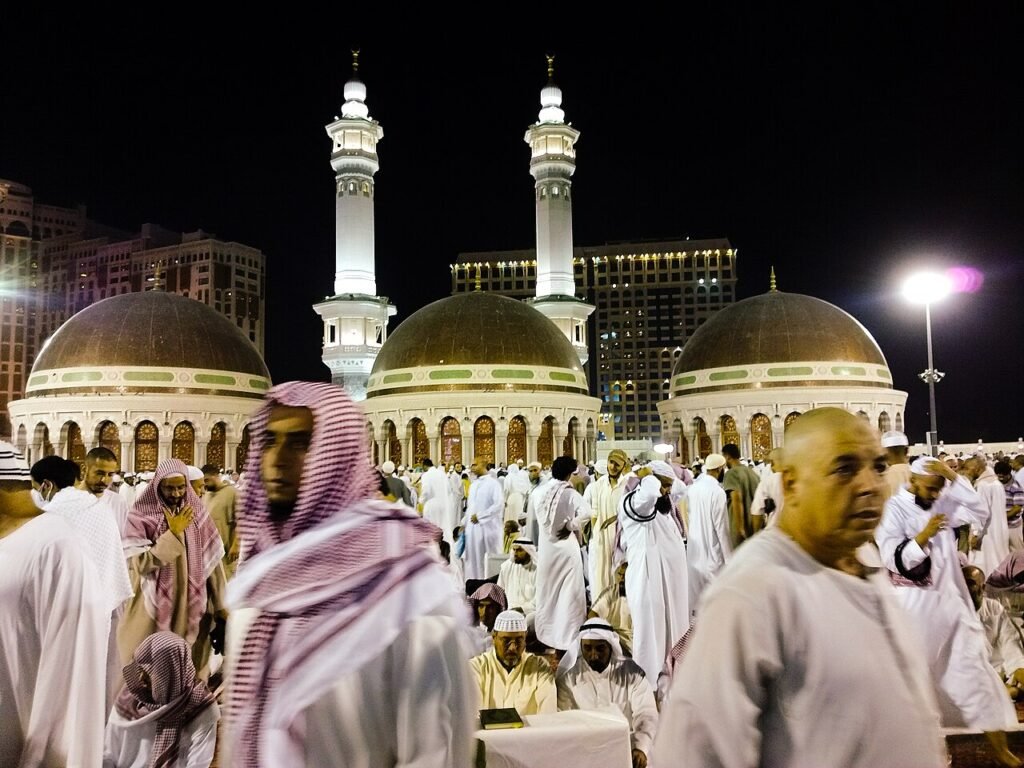
Ramadan changes the rhythm of daily life across Saudi Arabia, and travelling between Makkah and Madinah during the holy month is no exception. Roads that are busy at most times of year become significantly busier around Iftar, and quieter than usual during the hours immediately before and after Suhoor. If you are booking intercity transport during Ramadan, timing your journey around these shifts, rather than treating it like any other month, makes a real difference to how comfortable the trip is.
Reviewed planning guidance. Details can change; use the linked official sources and get a live quote for current pricing and availability.
Why road conditions change so much during Ramadan
Across the country, the approach to Iftar, the meal that breaks the fast at sunset, draws a huge number of people off the roads and into homes, mosques and restaurants within a short window. In the run-up to that moment, roads can become extremely busy as people rush to reach their destination before sunset, and then go remarkably quiet for a period immediately afterwards while everyone is eating. This pattern repeats every single day of Ramadan, so it is predictable, and predictable things can be planned around.
A similar, though less extreme, pattern shows up around Suhoor, the pre-dawn meal, and Taraweeh, the extended night prayers held after Isha throughout the month, both of which affect when people are moving around Makkah and Madinah and when the two holy mosques themselves are at their most crowded.
Avoid scheduling your departure right before Iftar
If your intercity journey’s departure time lands in the hour or so before sunset during Ramadan, expect heavier traffic than usual on the route out of the city, as local traffic converges with pilgrim and visitor traffic all trying to reach a destination before the fast breaks. Where your schedule allows some flexibility, either travelling well before this window or waiting until after Iftar has settled tends to produce a smoother journey than departing right in the middle of it.
What this means for booking
When you book Makkah-Madinah transport during Ramadan, mention that you are travelling during the holy month and share your intended departure time clearly, so your provider can flag if it falls in a period likely to be busier than normal, and suggest an adjustment if one would help.

Travelling after Iftar and around Taraweeh
Many pilgrims find that travelling in the hours after Iftar, once the initial rush has passed, works well, since roads have generally quietened and the intense heat of the day, if travelling in a hot period of the year, has eased somewhat. Bear in mind, though, that Taraweeh prayers draw large numbers of worshippers to and from the mosques each night, so traffic immediately around the Grand Mosque in Makkah and the Prophet’s Mosque in Madinah can pick up again later in the evening as prayers begin and end.
Night arrivals into a Ramadan-busy city
If your intercity journey is timed to arrive late at night, be aware that hotel areas around both holy mosques can still be busy with worshippers moving to and from Taraweeh well after most cities would have quietened down for the night. This does not usually cause serious delays to a private transfer, but it is worth knowing so you are not surprised by activity levels at an hour that would normally be quiet.
Suhoor and pre-dawn departures
Some pilgrims deliberately choose an early, pre-dawn departure to travel before the Suhoor meal and the Fajr prayer that follows it, reasoning that roads will be quiet and the temperature cooler. This can work well, but confirm with your transport provider that pre-dawn pickups are available during Ramadan specifically, since demand patterns and driver availability during the month can differ from the rest of the year.

Build in extra time either way
Whichever window you choose, allow more buffer than you would for the same journey outside Ramadan. Even outside the sharpest peaks around Iftar, general traffic patterns across Makkah and Madinah shift during the holy month as more people are out later in the evening and the cities themselves are operating at higher visitor volumes than usual. A journey that would normally take a predictable amount of time can run longer during Ramadan, and building in that margin protects you from a tight connection at the other end, whether that is a hotel check-in, a flight, or simply wanting to arrive in good time for prayer.
Frequently asked questions
What is the worst time to travel between Makkah and Madinah during Ramadan?
The hour or so immediately before Iftar tends to see the heaviest traffic, as people rush to reach their destination before the fast breaks. Where possible, avoid departing right in the middle of this window.
Is it better to travel before or after Iftar?
Both can work. Travelling well before the pre-Iftar rush, or waiting until after Iftar has settled, tends to be smoother than departing right during the rush itself. Share your planned departure time when booking so your provider can flag any concerns.
Does Taraweeh affect intercity travel timing?
Taraweeh prayers draw large numbers of worshippers to the mosques each night, which can increase traffic in the immediate vicinity of the Grand Mosque and the Prophet’s Mosque later in the evening, even after the main Iftar rush has passed.
Should I allow more time for my journey during Ramadan than usual?
Yes. General traffic patterns shift throughout the month, so build in more buffer than you would for the same journey outside Ramadan, particularly around Iftar and Taraweeh times.
Checked sources
Official information for your planning
Transport, airport, visa and visitor arrangements can change. These official sources are provided so you can check the current position for your journey. Checked 2026-07-25.
Hajj & Umrah Taxi plans Ramadan intercity journeys around Iftar and Taraweeh timing, not just distance and duration, so your Makkah-Madinah transfer avoids the busiest windows wherever your schedule allows it.