

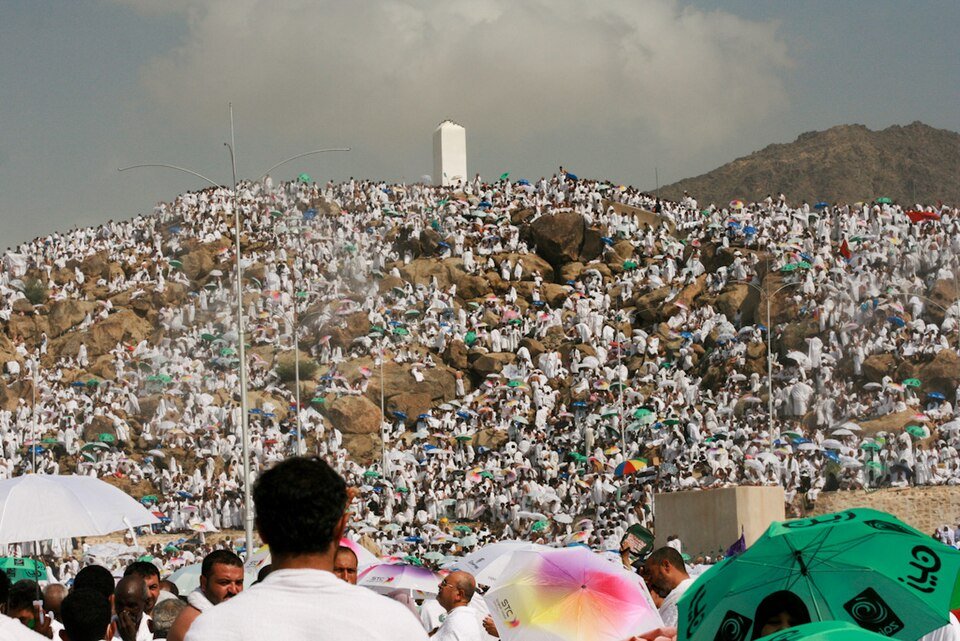
One of the more unsettling things that can happen during Hajj is learning, sometimes with very little warning, that the official transport plan for your group has changed. Perhaps your camp’s scheduled bus movement to Arafat has shifted earlier, or the route back from Muzdalifah has been adjusted for crowd management reasons. It can feel alarming in the moment, but short notice changes are a normal, expected part of how Hajj is managed at this scale, and knowing what to expect helps you respond calmly rather than anxiously.
Why Hajj transport plans change at short notice in the first place
Hajj involves moving several million people between a small number of sites within a matter of days. Saudi authorities, working with Muassasah establishments, Hajj missions and accredited service providers, plan this movement in extraordinary detail, but the plan has to remain flexible enough to respond to real conditions on the ground, including crowd density, weather, and safety considerations at any given moment. A route or timing that looked right weeks in advance may need to be adjusted on the day itself to keep everyone moving safely.
This is fundamentally different from a regular taxi booking going wrong. It reflects a live, coordinated safety response covering millions of people, not a failure of your individual arrangements.
What usually happens when a plan changes
In most cases, changes are communicated down through the same chain that organised your transport in the first place: from Saudi authorities and Muassasah coordination, through your Hajj mission or accredited service provider, to your camp or group leader, and finally to you. This is why staying close to your group leader and camp during the Hajj days matters so much, even when it feels more convenient to go off independently. Your group leader is usually your fastest and most reliable source of accurate, updated information.
If you are travelling with a smaller, independently organised group rather than a large mission, the same principle applies at a smaller scale: whoever coordinated your Hajj day transport is your first point of contact if something changes, and they should have a way of reaching you, whether that is a group messaging channel, a meeting point, or simply briefing everyone in person each morning.
How to prepare for the possibility, without assuming the worst
- Before Hajj begins, ask your group leader or provider directly how you will be informed if plans change at short notice.
- Save emergency and coordination contact numbers in your phone, and keep a paper copy too in case of connectivity issues in crowded areas.
- Stay with your group as much as possible during the Hajj days themselves, particularly during transitions between sites, since this is when changes are most likely to be communicated.
- Keep your Nusuk documentation and Nusuk Card, if issued, on you at all times, since these help identify you as part of an organised group if you do become separated.
- Agree a simple meeting point and plan with your immediate family or party in advance, in case phone networks become congested during peak movement times.
If you do get separated from your planned transport
If a change happens and you find yourself unsure where to go, the calmest and most effective response is usually to stay where you are, if it is safe to do so, and look for the nearest official coordination point, security personnel, or Hajj mission representative, rather than trying to independently navigate a large scale change on your own. Saudi authorities and Hajj missions have extensive experience managing exactly this kind of situation, and there are established channels for reconnecting separated pilgrims with their groups.
This is also a moment where having your documentation on you, rather than left at your accommodation, makes a real difference, since it helps anyone assisting you to identify your group and mission quickly.
Managing the emotional side of a sudden change
It is completely normal to feel anxious if a plan changes unexpectedly during Hajj, particularly for first time pilgrims. Try to remember that these adjustments exist precisely to keep pilgrims safe given the scale of movement involved, and that the systems in place, from Muassasah coordination to Saudi civil defence and Hajj security personnel, are built around managing exactly this kind of situation smoothly. Taking a breath, staying with those around you, and following instructions from officials or your group leader will serve you far better than trying to solve an unexpected change alone.
What a well-run group does differently
Experienced Hajj group leaders, and providers who have operated through many Hajj seasons, tend to build a simple daily rhythm into how they manage the Hajj days: a short briefing each morning covering the plan for that day, a clear, repeated meeting point if the group becomes separated at any stage, and a habit of counting the group at key transition points rather than assuming everyone is still together. None of this is complicated, but it is precisely this kind of unglamorous, repeated discipline that makes short notice changes far less stressful when they do happen, because everyone already knows what to do without needing new instructions in the moment.
If you are travelling with a smaller, informally organised group rather than a large mission, it is worth deliberately building this same habit in yourselves, even if it feels slightly unnecessary at the time. A five minute conversation each morning about the day’s plan and the fallback meeting point costs very little and can make a significant difference if something does change.
It also helps to remember that these adjustments are one of the clearest signs that the wider system is working as intended, rather than failing. Saudi authorities monitor crowd density, weather and road conditions continuously throughout the Hajj days, and a willingness to alter a plan at short notice, rather than rigidly sticking to a schedule that no longer fits real conditions on the ground, is a safety feature, not a flaw. Pilgrims who understand this in advance tend to find these moments far less unsettling than those who arrive expecting a perfectly fixed, unchanging timetable.
Frequently asked questions
How often do Hajj transport plans actually change at short notice?
Minor timing adjustments are relatively common given the scale of coordination involved, though significant changes are less frequent. Either way, being mentally prepared for the possibility, without expecting it as a certainty, is the most useful approach.
Who is actually responsible for telling me if my group’s plan changes?
This responsibility sits with the coordination chain linked to your Nusuk registration, typically flowing from Saudi authorities and Muassasah coordination through your Hajj mission or accredited provider to your group leader, who then informs you directly.
Should I try to contact my transport provider directly if I hear about a change from another source?
It is reasonable to ask your group leader or provider to confirm any change you hear about informally, since informal information passed between pilgrims is not always accurate. Always treat your official group leader or provider as your primary, reliable source.
What should I keep with me at all times during the Hajj days in case of a change?
Your passport or Nusuk documentation, your Nusuk Card if issued, emergency contact numbers written down as well as saved on your phone, water, and any essential medication. These matter regardless of whether a change to your transport plan occurs.
Related guides
- What Happens If Your Driver Doesn’t Show: Booking Safeguards to Look For
- Dhul Hijjah Countdown: A Week-by-Week Hajj Transport Planning Timeline
- Hajj Transport for First-Time Group Leaders: A Step-by-Step Guide
Checked sources
- Ministry of Hajj and Umrah, haj.gov.sa
- Nusuk Hajj platform, hajj.nusuk.sa
- GOV.UK, Saudi Arabia travel advice, pilgrimage section