

Reviewed planning guidance. Details can change; use the linked official sources and get a live quote for current pricing and availability.
Being asked to organise Hajj transport for your family, your local mosque group, or a wider community party is a genuine responsibility, and it usually lands on someone who has never done it before. There is no formal training for it, just a list of people relying on you to get the logistics right. This guide walks through the process in order, from the first weeks of planning through to the day everyone lands, so you know what to action and when, rather than trying to work it all out at once.
Step one: establish exactly who you are responsible for
Before anything else, get a clear, written list of everyone travelling under your coordination. This sounds obvious, but it is the step most first-time group leaders skip, relying instead on a rough headcount that changes as the departure date approaches. For each person, note their age, any mobility or medical needs, how much luggage they are likely to bring, and whether they are travelling the full length of the trip or joining or leaving partway through. This list becomes the foundation for every transport decision that follows, from vehicle size to how many separate bookings you actually need.
Step two: confirm the group’s visa and registration route
How your group’s Hajj visas were issued affects what transport arrangements are expected or required. Group placements through official Hajj operators are typically registered and tracked through the Nusuk Hajj platform, and movement during the Hajj rites themselves is usually organised through that group registration rather than booked independently. Confirm your group’s registration status and what it means for movement logistics directly on hajj.nusuk.sa before assuming your group needs to arrange every leg of transport itself.
Step three: decide which legs you need to book independently
Once you know what your group’s registration already covers, work out what is left for you to arrange. For most groups this includes:
- Airport pickup on arrival, at Jeddah or Madinah depending on your group’s flight route.
- Hotel to hotel transfer between Makkah and Madinah if your itinerary spans both cities.
- Return transfer to the airport at the end of the trip.
- Any Ziyarah visits to historical or religious sites that fall outside the main rites.
Movement during Mina, Arafat and Muzdalifah is usually organised through your group’s camp allocation rather than booked as an independent transport leg, but confirm this explicitly with your Hajj operator rather than assuming it, since assumptions here are one of the most common sources of confusion for first-time group leaders.

Step four: work out vehicle numbers and sizes properly
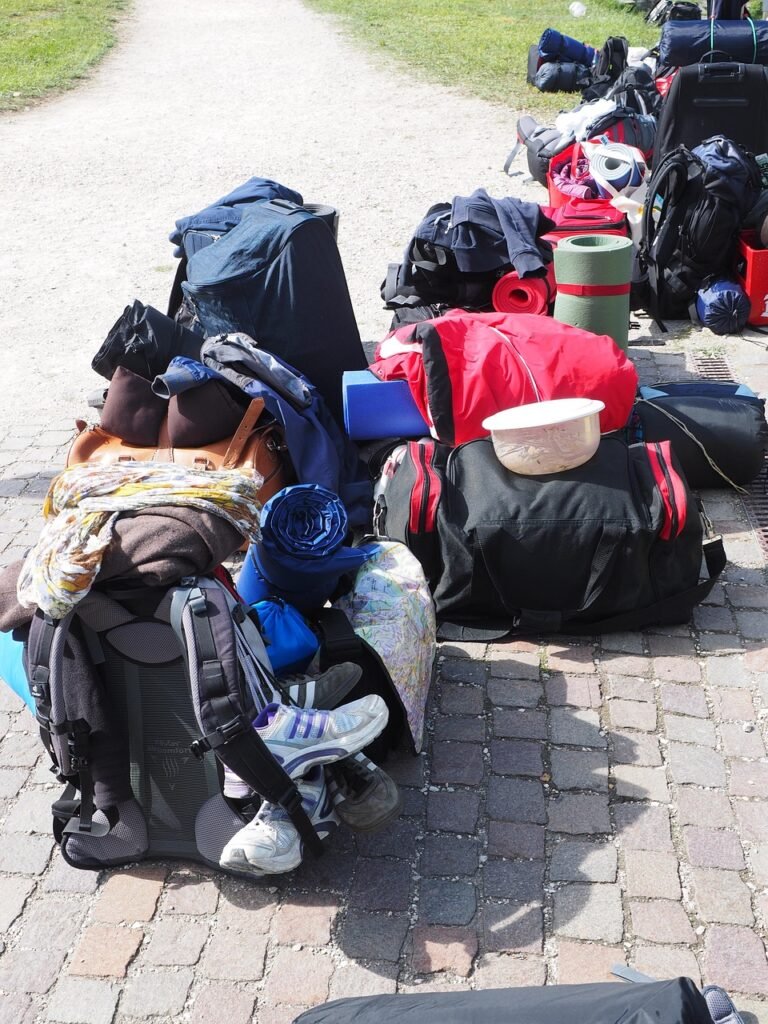
This is where the list you built in step one earns its keep. Vehicle capacity is not just about seats, it is about seats plus realistic luggage space, and a group of eight adults with a full set of Hajj luggage each will not fit comfortably into a vehicle rated for eight passengers with minimal bags. Work out how many vehicles you actually need based on real luggage volume, not just headcount, and decide whether it is more practical to split into two mid-sized vehicles or book one larger minibus. Our guide to choosing a vehicle for six or more pilgrims goes through this calculation in more detail and is worth reading before you request quotes, since getting the vehicle size wrong is one of the most disruptive mistakes to discover on arrival day.
Step five: request quotes with full group details, not a rough estimate
When you approach a transport provider, give them the full picture rather than a rounded headcount. Exact passenger numbers, luggage volume, any wheelchairs or mobility equipment, ages of any children who may need car seats, and your specific flight numbers all affect what vehicle and arrangement a provider can realistically offer. A provider working from vague information can only give you a vague quote, and vague quotes have a habit of changing once the real details emerge closer to travel. Our group leader transfer checklist sets out exactly what information to gather and share, and using it from the outset saves you from a round of follow-up questions later.

Step six: confirm payment, communication and contingency plans
Before you commit to a booking, get clear answers on how payment works for a group booking, whether that is one consolidated payment from you as the leader or individual payments from each family unit. Agree a single point of contact for the group, either you directly or a named driver contact, so that any changes on the day route through one channel rather than several confused messages. And ask specifically what happens if a flight is delayed or a passenger count changes at the last minute, since group bookings are more complex to adjust than a single passenger transfer, and knowing the process in advance avoids a stressful scramble if something shifts.
Step seven: the final week before departure
In the days before you travel, reconfirm every detail rather than assuming the original booking still holds exactly as agreed weeks or months earlier. Practical steps worth taking:
- Reconfirm exact flight numbers, landing times and terminal for every leg of the group’s journey.
- Share the transport provider’s direct contact details with at least one other responsible adult in the group, not just yourself, in case you are unreachable at a critical moment.
- Reconfirm the final passenger count and luggage volume, since group numbers often shift slightly right up to departure.
- Print or save booking confirmations somewhere accessible, not buried in an email you may not have signal to check on arrival.
- Brief the group on the pickup process, where to meet, who to look for, and what to do if anyone gets separated in a busy arrivals hall.
Common mistakes first-time group leaders make
A few patterns come up repeatedly with first-time group leaders, and knowing about them in advance is often enough to avoid them entirely. Underestimating how much the group’s plans will change between booking and departure is one of the most common, a cousin joins late, a grandparent decides not to travel, a return flight gets rebooked, and each change needs to be communicated to your transport provider promptly rather than assumed to be obvious. Treating the group as a single unit when it actually has very different needs within it is another, an elderly parent, a toddler, and a fit adult in their thirties all have different practical requirements even though they are travelling together, and a good transport plan accounts for that rather than treating everyone identically.
Leaving communication entirely to word of mouth within the group is a third common issue. Once you have confirmed a booking, share the essential details directly and in writing with everyone travelling, not just the people you speak to most often, so that nobody is caught out not knowing the pickup arrangement because the message never reached them. And finally, assuming that because you handled the arrival transfer well, the return leg will simply take care of itself. Group logistics for the return journey deserve the same attention as the arrival, arguably more, since fatigue and a packed schedule in the final days of a Hajj trip make it easier for details to slip.
If any member of your group has specific mobility needs, our guide on wheelchair and mobility information for pilgrim transfers is worth reading alongside this one, since accessibility requirements are one of the areas where generic group planning most often falls short of what an individual actually needs.
Frequently asked questions
What is the first thing a first-time Hajj group leader should do about transport?
Build a clear, written list of everyone travelling under your coordination, including ages, mobility needs and expected luggage, before requesting any quotes. This list drives every other transport decision.
Do I need to book transport for Mina, Arafat and Muzdalifah myself?
Usually not. That movement is typically organised through your group’s registration and camp allocation for crowd safety reasons. Confirm this directly with your Hajj operator rather than assuming it either way.
How do I know what size vehicle my group needs?
Base it on realistic luggage volume as well as passenger headcount, not seats alone. A group that looks like it fits a standard vehicle on paper may need a larger one once actual Hajj luggage is accounted for.
Should the whole group pay for transport together or individually?
Either can work, but agree it in advance with your transport provider so there is no confusion about who is responsible for payment and by when.
What should I do if my group’s flight details change close to departure?
Tell your transport provider as soon as anything changes, and make sure at least one other adult in the group has the provider’s direct contact details in case you cannot be reached.
Checked sources
Official information for your planning
Transport, airport, visa and visitor arrangements can change. These official sources are provided so you can check the current position for your journey. Checked 2026-07-25.
If you are coordinating Hajj transport for your family or community group for the first time, get in touch with Hajj & Umrah Taxi with your full group details and we will confirm exactly what is realistic for your numbers, your luggage and your budget before you commit to a booking.