

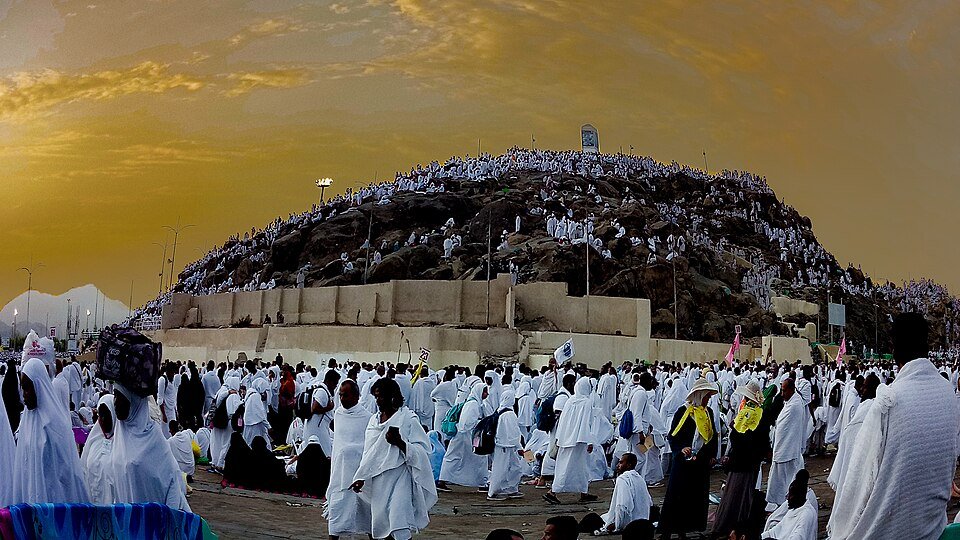
The 8th of Dhul Hijjah, known as the Day of Tarwiyah, marks the traditional start of the physical rituals of Hajj, when pilgrims move to Mina ahead of the Day of Arafah. Anyone planning Hajj transport should understand that demand and movement patterns on this day, and the days immediately after, are genuinely different from one another, and planning around that difference makes a real practical difference to your experience.
What happens on the Day of Tarwiyah
On the 8th of Dhul Hijjah, pilgrims move from Makkah to Mina, where they will spend the day and night before proceeding to Arafat on the 9th. The name Tarwiyah relates to the historical practice of pilgrims taking on water supplies before travelling onward, a reminder of how physically demanding this stage of the journey has always been. While some pilgrims today travel more directly to Arafat depending on their Hajj programme, moving through Mina on the 8th remains a widely followed part of the Hajj sequence and forms part of many Hajj missions’ organised schedules.
Because this movement happens on a single day, concentrated within Hajj mission and Muassasah coordinated transport plans, road and pedestrian routes into Mina see extremely high demand within a short window. This is one of the busiest single movements of the entire Hajj period.
How this differs from the days that follow
The days immediately after Tarwiyah, particularly the movement to Arafat on the 9th and the return through Muzdalifah, involve their own distinct surges, but the character of demand is slightly different. The 9th of Dhul Hijjah, the Day of Arafah, is the single most concentrated movement of the entire Hajj, since essentially the entire pilgrim population needs to be present at Arafat on that day for the standing, or Wuquf, which is central to the validity of Hajj. Movement out of Arafat toward Muzdalifah that evening, and onward to Mina again over the following days for the stoning rituals, each carry their own timing pressures.
In practical terms, this means transport demand across the Hajj days is not one continuous surge but a series of distinct peaks, each tied to a specific ritual and a specific, non negotiable timing. This is very different from ordinary travel demand, where a delay of a few hours is usually just an inconvenience. During Hajj, timing is tied to ritual requirements, which is part of why the organised, centrally coordinated transport system exists in the first place.
What this means for your planning
- Expect transport during the Hajj days to be organised by your Hajj mission, Muassasah or accredited provider, following a schedule built around these ritual timings, rather than something you can adjust independently.
- Build in significant extra time around each movement, particularly the move to Mina on Tarwiyah and the move to Arafat the following day, since these are among the busiest periods of the entire Hajj season.
- Stay close to your group leader’s instructions on timing, since they will be working from the coordinated plan for your specific camp and mission.
- Physically prepare for these days specifically, with appropriate footwear, hydration and rest beforehand, since the demands of walking and waiting during these peak movements are real regardless of which transport option your group uses.
Why understanding this helps even if you are not organising transport yourself
Even if all of your Hajj day transport is arranged for you as part of a package, understanding why the 8th of Dhul Hijjah and the days that follow feel so different from each other helps set realistic expectations. Delays and crowding during these specific windows are not a sign that something has gone wrong with your booking, they reflect the genuine scale of coordinated movement involved in bringing millions of pilgrims safely through the same sequence of rituals within a few days.
Patience, staying with your group, and following official guidance during these peak days matters more than any individual transport choice. The system is built to get everyone through safely, even when any single journey within it feels slower than you might expect.
How this affects your pre-Hajj preparation
Knowing that Tarwiyah and the Day of Arafah each represent distinct, extremely high demand movements, rather than one continuous busy period, helps you prepare more specifically. In the days immediately before Dhul Hijjah begins, focus your rest, hydration and any last minute errands on the days before the 8th, since from Tarwiyah onward your schedule will largely be dictated by the group movement plan rather than your own preferences. Arriving at the start of this period as rested and prepared as possible pays off across the following several days, not just on the first one.
It is also worth mentally separating the emotional significance of these days from any transport frustration you might feel. The crowding and the waiting are a direct result of the scale of shared worship happening around you, millions of people fulfilling the same rites at the same moments, rather than a sign that anything has gone wrong. Many pilgrims find that reframing the waiting itself as part of the experience, rather than an obstacle to it, changes how the days feel considerably.
It is also worth remembering that the intensity of these peak days is temporary, even if it does not always feel that way in the moment. Within a few days, the most acute transport pressure eases considerably as the core rituals of the Hajj days are completed and pilgrims begin moving at a more distributed pace again. Keeping this bigger picture in mind, that the hardest transport days are also the shortest and most tightly bounded, can help manage expectations when queues and waiting feel at their most demanding.
Frequently asked questions
Is transport genuinely busier on Tarwiyah than on an ordinary day in Makkah?
Yes, significantly. The concentrated movement of a large proportion of the pilgrim population into Mina within a short window on a single day creates demand unlike anything seen during the rest of the year.
Do all pilgrims travel through Mina on the 8th of Dhul Hijjah?
Practices vary depending on individual Hajj programmes and guidance followed, and this is something to confirm with your own scholars, group leader or Hajj mission rather than assume applies uniformly to everyone.
What is the busiest single movement of the entire Hajj period?
The movement to and gathering at Arafat on the 9th of Dhul Hijjah is widely regarded as the most significant and most concentrated movement of the entire Hajj, since presence at Arafat on that day is central to the pilgrimage itself.
Should I expect mobile phone networks to work normally during these peak days?
Network congestion is common during periods of extremely high concentrated usage. Agree a simple, low tech backup plan with your group in case calls or messages do not go through immediately, such as a fixed physical meeting point you can return to regardless of whether your phone works at that moment.
Does the weather affect transport timing on Tarwiyah and the days after?
Yes, heat in particular is a genuine factor during these days, and Saudi authorities and Hajj missions plan around it carefully. Follow guidance on hydration, rest and shade, and treat any advice to adjust timing for weather reasons as a sensible safety measure rather than an inconvenience.
Related guides
- Mina, Arafat and Muzdalifah: Transport Logistics During Hajj Days
- Dhul Hijjah Countdown: A Week-by-Week Hajj Transport Planning Timeline
- Hajj Season Dates and Why Transport Demand Spikes Early
Checked sources
- Ministry of Hajj and Umrah, haj.gov.sa
- Nusuk Hajj platform, hajj.nusuk.sa
- GOV.UK, Saudi Arabia travel advice, pilgrimage section