

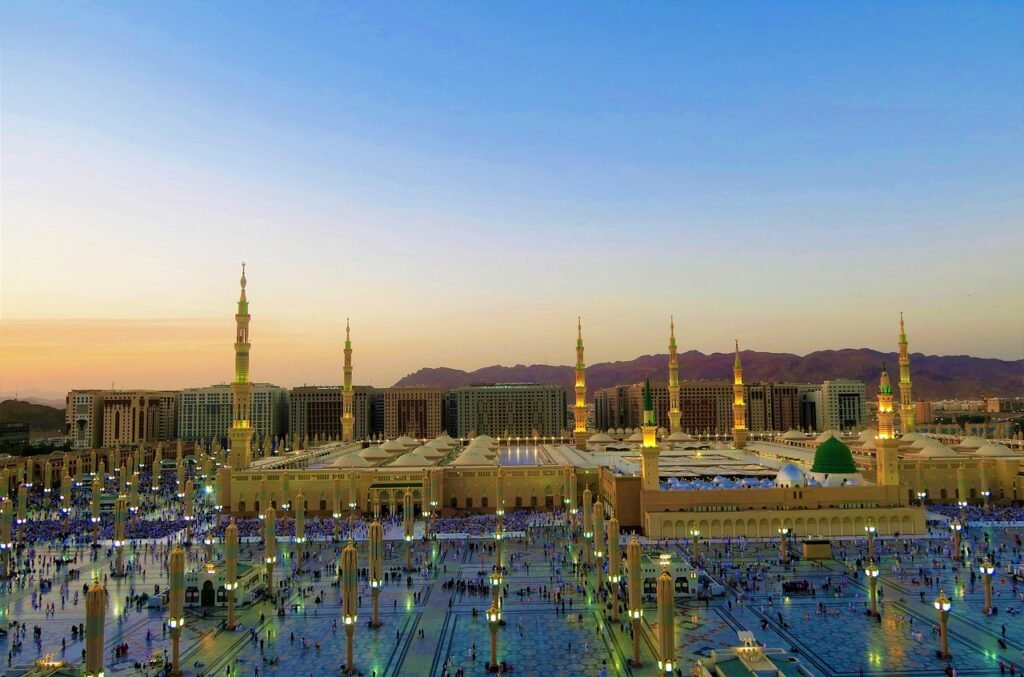
Most Umrah planning advice, understandably, focuses on Ramadan, the most spiritually significant time to perform Umrah for many Muslims, or on working around the Hajj season that dominates the second half of the Islamic calendar. Far less is written about the months in between, when neither Ramadan nor Hajj is drawing huge numbers of pilgrims to Makkah and Madinah at once. For pilgrims with flexibility over when they travel, those quieter months are worth serious consideration, and not only because of price.
Reviewed planning guidance. Details can change; use the linked official sources and get a live quote for current pricing and availability.
What counts as off-peak for Umrah travel
Broadly, the busiest periods for Umrah travel are Ramadan itself, when demand for flights, accommodation and transport all rise sharply, and the weeks immediately before and after Hajj, when general pilgrim traffic to the region is elevated even outside the fixed Hajj dates. Everything outside those windows can reasonably be considered off-peak by comparison, though demand still varies gradually rather than switching on and off overnight. Our guide to Hajj season dates and why transport demand spikes early explains the shape of the busy end of the calendar in more detail, which helps make sense of what falls outside it.
Transport availability in the quieter months
The most immediate practical advantage of travelling outside Ramadan and Hajj season is that transport providers are working with considerably less demand pressure. During peak periods, popular pickup times can be booked out well in advance, particularly around major flight arrival windows, and last-minute changes to your plans are harder to accommodate simply because vehicles and drivers are stretched across so many pilgrims travelling in the same narrow window. Our guide on what’s realistic to book on short notice for last-minute Umrah transport makes this contrast clear, since much of what is difficult to arrange at short notice during peak season is considerably easier to arrange during quieter months.
In off-peak months, providers generally have more flexibility to accommodate a specific pickup time, a change of plan partway through your trip, or a request that would be harder to fit in during a busier period. This does not mean transport should be left entirely to the last minute, since booking ahead is still the more reliable approach whenever you travel, but the margin for error is genuinely wider outside the peak season.
Pricing patterns outside peak season
Transport pricing, like flight and accommodation pricing, generally responds to demand, and demand is structurally lower outside Ramadan and the weeks around Hajj. This does not guarantee a specific discount, since pricing depends on the individual provider and your specific dates, but it does mean that off-peak travel tends to avoid the sharpest seasonal pricing increases that affect Ramadan and Hajj-adjacent travel. Getting a live, current quote for your actual dates remains the only reliable way to know what you will actually pay, rather than assuming a figure based on what someone paid during a different, busier month.

A quieter Haram experience
Beyond the practical transport and pricing advantages, many pilgrims who travel during off-peak months report a noticeably different experience at the Haram itself, with more space to move, shorter waits, and a calmer atmosphere for prayer and reflection than during the densest periods of the year. This is not a claim about ritual significance, since the spiritual value of Umrah is not diminished by when it is performed, but it is a genuine, practical difference in the physical experience of being there, and one worth weighing if you have flexibility over your travel dates.
For elderly pilgrims, those with mobility needs, or families with young children, this quieter atmosphere can make a real difference to how manageable the trip feels day to day. Less crowding generally means shorter distances to navigate around the Haram, easier access to seating and facilities, and less time spent waiting in dense crowds, all of which add up over the course of a multi-day stay.
Who benefits most from choosing an off-peak month
Off-peak travel suits pilgrims with genuine flexibility over their dates most of all, since the advantages described here depend on being able to choose a quieter window rather than being tied to a specific period for personal, religious or work reasons. It particularly suits first-time pilgrims who may find a quieter environment easier to navigate while they are still finding their feet, elderly pilgrims or those with mobility considerations who benefit from reduced crowding, and anyone prioritising cost and availability over travelling during a specific spiritually significant window like Ramadan.
It suits these groups less if the specific timing carries personal or spiritual significance that outweighs the practical advantages, which is a genuinely personal decision and not one this article is trying to make for you. The point is simply that off-peak months are a real, practical option worth knowing about, not that they are the right choice for everyone.
Planning an off-peak Umrah trip
The planning process itself does not change much regardless of when you travel: sort your visa, book flights, arrange accommodation, and book transport in advance rather than leaving it to chance. What changes is the margin for error and the range of options available to you at each step. Booking a few weeks ahead during an off-peak month is likely to give you more choice than booking the same distance ahead during Ramadan, when the same lead time might already be tight given how quickly availability moves. It is still worth checking current visa and entry requirements through the Nusuk Umrah platform at umrah.nusuk.sa before you travel, since requirements are the same regardless of season and are worth confirming for your specific dates.

Practical questions worth asking a transport provider about off-peak travel
If you are considering an off-peak trip, it is worth asking your transport provider a few direct questions rather than assuming quieter months automatically mean more flexibility across the board. Ask whether pickup times outside the busiest windows genuinely have more availability, or whether the provider’s capacity is fixed regardless of season, since this varies between operators. Ask whether pricing for your specific dates reflects the quieter season, rather than relying on a general assumption that off-peak always means cheaper. It is also worth asking about flexibility for changes to your itinerary once you are in Saudi Arabia, since one of the genuine advantages of a quieter month is that a provider may be better placed to accommodate a change of plan, an extra ziyarah visit, or an adjusted pickup time, than they would be during a fully booked peak week.
Do not assume that off-peak travel means transport planning can be left later than usual. The advantages described in this article come from choosing a quieter month, not from skipping preparation. Sorting your visa, confirming accommodation and booking transport in good time still gives you the best range of choices, even if the overall market is less pressured than during Ramadan or Hajj season.
Weighing off-peak travel against Ramadan Umrah
For pilgrims specifically drawn to performing Umrah during Ramadan, the spiritual significance of that timing is a genuinely personal and important factor that off-peak advantages do not outweigh. Our guide on why transport gets busier during Ramadan Umrah and how to plan ahead is the better starting point if that is your priority, since it addresses the busier season directly rather than steering you away from it. This article is aimed at pilgrims who either have no strong preference for a specific time of year, or who are weighing the practical benefits of a quieter trip against the significance of Ramadan or Hajj-adjacent travel, and want a clear picture of what the quieter months actually offer before deciding.
Frequently asked questions
What months count as off-peak for Umrah travel?
Broadly, any period outside Ramadan and the weeks immediately before and after Hajj season, though demand shifts gradually rather than switching sharply between busy and quiet.
Is transport actually cheaper outside Ramadan and Hajj season?
Pricing tends to avoid the sharpest seasonal increases seen during peak periods, though the exact price depends on your provider and dates, so a live quote for your specific travel dates is the only reliable way to know.
Will I still need to book transport in advance during off-peak months?
Yes, booking ahead remains the more reliable approach at any time of year, though the margin for error and the range of available options is generally wider outside peak season.
Is an off-peak Umrah less spiritually significant than one performed during Ramadan?
No, the spiritual value of Umrah is not tied to a specific month. Choosing when to travel is a personal decision that can reasonably weigh practical factors like crowding and cost alongside spiritual timing.
Who benefits most from travelling during off-peak months?
Pilgrims with flexible dates, first-time visitors who may find a quieter environment easier to navigate, and elderly pilgrims or those with mobility needs who benefit from reduced crowding around the Haram.
Checked sources
Official information for your planning
Transport, airport, visa and visitor arrangements can change. These official sources are provided so you can check the current position for your journey. Checked 2026-07-25.
Hajj & Umrah Taxi books transport year round, and off-peak months are genuinely one of the more flexible times to arrange a trip with us, with more choice of pickup times and fewer scheduling pressures than during Ramadan or Hajj season. Get a live quote for your dates and see what a quieter month could look like for your Umrah.