

Pilgrims researching Hajj transport often come across the word Muassasah without a clear explanation of what it actually means in practice. It sounds bureaucratic, but understanding it helps explain why Hajj transport, unlike Umrah transport, is not something you simply book freely on the open market, and how a private driver or provider you arrange yourself fits around it rather than replaces it.
What Muassasah means
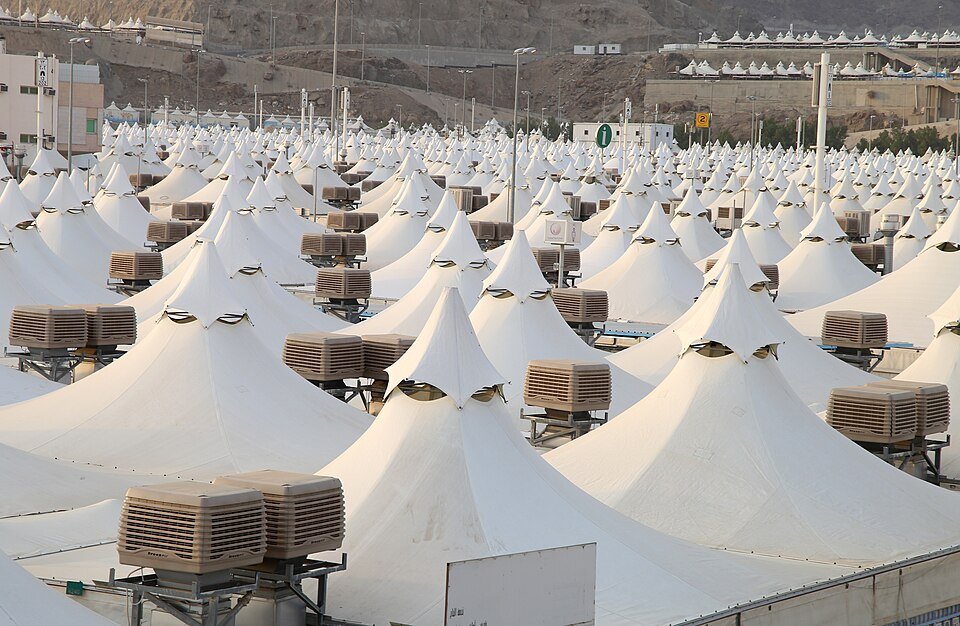
Muassasah is an Arabic term generally translated as establishment or institution. In the context of Hajj, it refers to the official establishments historically responsible for coordinating services, including accommodation, catering, guidance and transport, for pilgrims grouped by nationality or region during their time at the holy sites. These establishments have long formed part of how Saudi authorities manage the enormous logistical task of hosting millions of pilgrims within a short, fixed window each year.
In recent years, much of this coordination has moved onto the Nusuk digital platform operated by the Ministry of Hajj and Umrah, which now serves as the official one-stop point for registering, booking and managing Hajj services for pilgrims from many countries. Whether you interact with the term Muassasah directly, through your national Hajj mission, or primarily through Nusuk itself, the underlying principle is the same: Hajj services, including movement between Mina, Arafat and Muzdalifah during the Hajj days, are coordinated centrally rather than left to individual arrangement.
Why this matters for transport specifically
Because millions of pilgrims need to move between the same sites within the same narrow window, Saudi authorities plan road access, bus routes and crowd movement for the Hajj days as a single coordinated system. This is very different from, say, booking a taxi in an ordinary city, where supply can flex to meet demand. During Hajj, road capacity around Mina, Arafat and Muzdalifah is genuinely limited by geography and safety requirements, so movement has to be scheduled and managed rather than left open ended.
This is why transport for the Hajj days themselves is usually arranged through your accredited Hajj service provider, package operator or national Hajj mission, tied to your Nusuk registration, rather than booked as a standalone private hire the way you might book Umrah transport.
Where a private driver still fits in
None of this means private transport has no place in a Hajj trip. It simply means understanding where it fits. A privately booked driver or provider is typically most useful:
- Before Hajj begins, moving you between the airport, your Makkah accommodation and any preparation you need to do.
- After the Hajj days are complete, once the tightest crowd restrictions around the holy sites have eased.
- For any Madinah leg of your trip, before or after Hajj, where transport is not tied to the same Mina, Arafat and Muzdalifah movement plan.
- For airport transfers on arrival and departure, which sit outside the Hajj days movement system entirely.
A reputable private provider serving pilgrims will understand this distinction well and will be upfront that movement during the Hajj days themselves is handled through your Muassasah, group leader or package operator, not through them directly. Be cautious of anyone offering to arrange private transport that bypasses official Hajj day movement entirely, since this is unrealistic given the road restrictions in place during those days, and claims to the contrary are a warning sign rather than a selling point.
How this connects to your Nusuk registration
Your Nusuk Hajj registration is the record that links you to your accredited service provider and, through them, to the group your Hajj day movements will be coordinated within. This is one of several reasons why booking Hajj only through the official Nusuk platform, or an operator properly accredited within it, matters so much. It is not just a payment formality, it is what places you inside the coordinated system that makes Hajj day transport function safely for everyone.
Practical takeaways
- Expect transport during the Hajj days themselves to be arranged as part of your organised Hajj service, not booked independently.
- Use private, independently booked transport for the parts of your trip outside the Hajj days, such as airport transfers and any Madinah travel.
- Confirm with your provider, well before Hajj, exactly which parts of your journey they are responsible for and which are handled by your Muassasah or group leader.
- Keep your Nusuk documentation and any provider confirmations together and accessible throughout your trip.
Understanding the Muassasah system will not change how the Hajj days themselves work, but it does help set realistic expectations, so you know exactly what to arrange yourself and what will already be handled for you when you arrive.
How the system has evolved
The Muassasah system has existed in various forms for a long time, reflecting decades of experience managing pilgrim logistics at enormous scale. In recent years, much of the coordination that Muassasah establishments historically handled in person has been layered onto the Nusuk digital platform, which now serves as the primary interface between pilgrims, accredited providers, and the wider Hajj coordination system. This does not mean the underlying principle of centrally coordinated group services has changed, only that the technology through which it is managed has modernised considerably, making registration, tracking and communication faster and more transparent than in the past.
For pilgrims, the practical effect of this evolution is that your experience of the Muassasah system today is likely to feel less like dealing with a separate physical establishment, and more like a seamless part of your Nusuk registration and your accredited provider’s service. The name may come up less often than it once did, but the underlying coordination it represents remains just as important to how Hajj day transport is organised.
Frequently asked questions
Do I need to contact my Muassasah directly myself?
For most pilgrims, no. Your accredited Hajj service provider, package operator, or national Hajj mission handles this coordination on your behalf as part of your registered Hajj service. Your role is mainly to make sure your own Nusuk registration and documentation are accurate and complete.
Is the Muassasah system the same for Hajj and Umrah?
No. This coordinated group service structure is specific to Hajj, reflecting the unique scale and concentrated timing of the Hajj days. Umrah, which can be performed throughout the year with far more flexible timing, does not require the same centrally coordinated transport system.
What if I am travelling independently rather than with a national Hajj mission?
You are still required to be registered through the Nusuk platform and linked to an accredited service provider for Hajj, who will coordinate your Hajj day movements within the wider system, even if your overall trip otherwise feels more independently arranged than a large group package.
Can a private taxi driver ever replace the Muassasah’s role during the Hajj days?
No. Movement between Mina, Arafat and Muzdalifah during the Hajj days is managed through the coordinated system for safety and crowd management reasons that apply to everyone, regardless of how the rest of your trip is arranged.
Related guides
- Nusuk Card Explained: What It Means for Your Transport and Movement
- Mina, Arafat and Muzdalifah: Transport Logistics During Hajj Days
- Hajj Transport for First-Time Group Leaders: A Step-by-Step Guide
Checked sources
- Ministry of Hajj and Umrah, haj.gov.sa
- Nusuk Hajj platform, hajj.nusuk.sa
- GOV.UK, Saudi Arabia travel advice, pilgrimage section