Nusuk Visa Delayed? What to Do If Your Transport Is Already Booked
Reviewed planning guidance. This article is general planning guidance for pilgrims arranging ground transport for Umrah or Hajj. Always check your airline’s current baggage rules and the latest Nusuk guidance before you travel.
It is a common and stressful situation: you booked your transport early to secure your dates and get a fair price, then your Nusuk visa takes longer to process than you expected. You are left wondering whether to hold your travel plans, change your flights, or simply wait. This is especially unsettling when Umrah or Hajj is involved, because the emotional and spiritual weight of the trip makes any uncertainty feel heavier than it would for an ordinary holiday. This article sets out a calm, practical sequence for handling a Nusuk visa delay when your Jeddah or Madinah transfer, or your Makkah to Madinah journey, is already confirmed.
Why Nusuk visa delays happen
Nusuk visa processing times are not fixed to a single number of days. They can vary with the season, the volume of applications being processed at once, the completeness of your documents, and sometimes with checks that simply take longer for individual applications. Ramadan and the weeks before Hajj are consistently the busiest periods, and processing can slow during these windows purely because of demand. None of this means anything has gone wrong with your application specifically. It is worth checking the current guidance directly on the Nusuk platform rather than relying on timeframes you may have read elsewhere, since the platform is the authoritative source for your visa status and any published processing expectations.
It also helps to understand that an Umrah visa applied for directly through Nusuk and a Hajj visa arranged through a licensed Hajj group operator do not always move through the same channel. Hajj allocations are often processed in batches tied to your group operator’s own approval, so a delay affecting one pilgrim in a group can sometimes affect fellow travellers on the same booking too. If you applied through a licensed agent rather than directly through Nusuk, delays can also sit with the agent’s own submission queue rather than with the Ministry itself. It is worth asking your agent plainly whether the delay is on their side or on the visa system’s side, because the correct next step is different depending on the answer.
First, confirm what is actually delayed
Before changing anything, work out exactly what stage your application is at. There is a meaningful difference between:
An application that is still under review with no decision yet.
An application flagged for additional information or a document resubmission.
An approved visa that has not yet been issued or linked to your Nusuk account.
Log into your Nusuk account and check the application status directly rather than assuming from silence that something is wrong. If a message or request for further information is sitting unread, that alone can account for the entire delay, and resolving it promptly is the fastest way to get moving again. Common causes of a resubmission request include a passport photo that does not meet the platform’s specifications, a passport nearing its expiry date, or personal details that do not match exactly across your passport and any previous Hajj or Umrah records held in the system. If you are travelling as a mahram alongside a female relative whose application depends on your own, double-check that both applications show the same status before assuming that only one of you is stuck. If the status genuinely shows no update and no request, this is the point to contact Nusuk support or your agent for a status check before making any transport or flight decisions.
Contact your transport provider early, not at the last minute
The single most useful thing you can do once you know your visa is delayed is tell your transport provider as soon as possible, even before you know your new travel dates. A reputable provider would rather hear “my visa is delayed, I will confirm dates in a few days” than receive no contact until the day before pickup. Early notice gives the provider time to reallocate the vehicle and driver originally assigned to you, rather than holding a slot open that then goes unused at short notice.
When you do get in touch, be specific: give your booking reference, your original pickup date and airport or hotel, and an honest estimate of how much notice you expect to be able to give once your visa clears. Most providers who serve pilgrims regularly have dealt with this exact situation before and will have a straightforward process for amending a booking rather than cancelling it outright. If you are travelling as part of an organised Hajj group, keep in mind that movement between Makkah, Mina, Arafat, and Muzdalifah during the Hajj days themselves is usually fixed by your group’s own schedule rather than by an independent transport booking, so the flexibility discussed here mainly applies to your airport arrival and departure transfers rather than the rites period itself.
Understand your rebooking options before you need them
Ask your transport provider directly what their policy is for date changes caused by a documented visa delay, rather than assuming it will match a general cancellation policy. Many providers treat a visa-related delay differently from a simple change of mind, particularly if you flag it early and can show that the delay sits with the visa system rather than with you. Questions worth asking plainly include:
Is there a cut-off, in days, after which a date change is no longer possible without a new booking?
Does moving your dates affect the vehicle type or price you were originally quoted?
If your new dates fall in a busier period, will availability still be guaranteed?
What happens if the delay runs long enough that you need to cancel altogether?
If your itinerary includes ziyarah visits, such as a tour of historical sites in Madinah or a day trip beyond the Haram, ask whether those add-on bookings move automatically with the main transfer or need to be rescheduled separately. Get the answer in writing, even if it is just a short email or message confirming the amended dates once you have them. This protects you if there is any confusion later about what was agreed.
Keep your flights and transport moving together
A visa delay often forces a flight change too, and it is important that the two stay aligned. If you rebook flights before confirming the change with your transport provider, you risk a transfer being arranged around a pickup time that no longer matches your actual arrival. Always update your transport booking with the new flight number, arrival time, and terminal as soon as your flights are reissued, not after you land.
This matters just as much for the leg between the two holy cities as it does for your airport transfer. If your plan is to perform Umrah in Makkah before travelling on for ziyarah in Madinah, or the other way round, build a realistic buffer into your revised dates rather than assuming your rites will finish exactly on schedule. Many pilgrims prefer not to rush the days immediately around ihram and the core rites, and a transport booking that assumes no flexibility at all can end up working against you. If your delay means you are now travelling outside the window your original visa validity covers, check this directly against your Nusuk visa details, since travelling outside the approved dates is a documentation issue, not something a transport provider can resolve on your behalf.
When to consider postponing the whole trip
Sometimes a delay runs long enough that the sensible decision is to postpone rather than keep pushing dates back in small increments. If your visa has not moved for an extended period with no clear resolution in sight, or if the remaining window before a fixed event such as the Hajj dates becomes too tight to travel and perform your rites comfortably, it is worth stepping back and looking at the whole trip rather than just the transport piece. Speak to your transport provider about a longer-term hold or a full refund under their stated terms, and check your travel insurance policy, since delayed visa issuance is sometimes covered depending on the policy wording.
If you booked through a mosque committee, community group, or Hajj group operator, loop them in as soon as postponement becomes a real possibility rather than a last resort. Group organisers often have more room to reallocate a place or adjust arrangements than an individual pilgrim does on their own, particularly in the run-up to Hajj when availability across accommodation, transport, and group logistics is tightly linked. The gov.uk foreign travel advice for Saudi Arabia is also worth reviewing at this point, both for any entry requirement updates and for general guidance relevant to UK travellers whose plans have shifted.
Frequently asked questions
Q: How long can a Nusuk visa delay typically last? A: Processing times vary and are not published as a fixed guarantee, so there is no reliable single figure to plan around. Check your application status directly on the Nusuk platform rather than estimating from past experiences you may have heard about.
Q: Will I lose my transport booking if my visa is delayed? A: Not automatically, but you need to tell your provider as soon as you know there is a delay. Providers who work regularly with pilgrims generally have a process for amending dates on notice, rather than treating a visa delay the same as a simple cancellation.
Q: Should I book my flights before or after my visa is approved? A: Most guidance points toward waiting for visa approval before finalising flights, since changing flights around an uncertain visa timeline usually costs more than the small risk of booking slightly later. Speak with your transport provider about how much notice they need once you do have confirmed flights.
Q: Can my transport provider help speed up my Nusuk visa? A: No. Visa processing sits entirely with the Nusuk platform and the Ministry of Hajj and Umrah, not with any transport company. A provider can only adjust your booking around your visa timeline, not influence the visa itself.
Q: What should I do if my visa is approved but my transport dates have already passed? A: Contact your provider immediately with your new arrival details. Depending on how far past the original dates you are and current availability, they may rebook you on the same terms or need to issue a fresh quote, so it helps to raise this the moment your visa clears rather than waiting.
Q: Is a visa delay ever covered by travel insurance? A: Some policies cover costs linked to a documented visa delay, but this depends entirely on your specific policy wording. Check your policy directly and keep any written confirmation of the delay from Nusuk or your visa agent in case you need to make a claim.
If you would like help matching your plans to the right vehicle, Hajj & Umrah Taxi can put together a fixed-price quote based on your exact travel details. Get in touch before you fly and we will make sure your transport is arranged around how you are actually travelling, not the other way round.
Nusuk Transport Bookings vs Private Taxi Bookings: How They Interact
Reviewed planning guidance. This article is general planning guidance for pilgrims arranging ground transport for Umrah or Hajj. Always check your airline’s current baggage rules and the latest Nusuk guidance before you travel.
Since Nusuk became the official platform for Umrah and Hajj planning, many pilgrims assume that booking their permit and package there also settles their ground transport. In practice, Nusuk’s own transport options and a private taxi booked directly with a company like Hajj & Umrah Taxi are two separate systems that can sit alongside each other, or occasionally pull in different directions if you are not clear on what each one actually promises. This guide explains what each booking route covers, where the two overlap, and how to keep both working together rather than against each other, so your ground transport is arranged around your real itinerary rather than left to chance.
What a Nusuk transport booking actually covers
Nusuk is the Saudi Ministry of Hajj and Umrah’s official pilgrim platform, and it has expanded over recent seasons to include transport options alongside visa, permit, and accommodation booking. Depending on your package and the time of year, this can mean scheduled coach transfers between cities, organised movement during the Hajj days between Mina, Arafat, and Muzdalifah, or transport bundled into a group package you booked through a licensed provider listed on the platform. Some Umrah packages also include a single group transfer from the airport to your Makkah hotel as part of the wider booking, though this varies by provider and is not guaranteed simply because you booked through Nusuk.
What Nusuk transport is generally good at is moving large numbers of pilgrims on a fixed schedule, particularly during the Hajj rites themselves, when movement is tightly coordinated for safety and crowd-management reasons. What it is less suited to is flexible, door-to-door journeys on your own timetable, such as an airport pickup timed to your actual landing slot, a late-night Ziyarah trip, or a single family group travelling together with their own luggage on their own schedule. You can read the current scope of what is offered through hajj.nusuk.sa and umrah.nusuk.sa, and it is worth checking before you assume a leg of your journey is already arranged for you.
What a private taxi booking covers instead
A private taxi booking made directly with a transport provider works differently. You choose the exact pickup point, the exact time, and the vehicle size for your group, and the driver is assigned to your journey specifically rather than to a shared schedule with other pilgrims. For those flying into Jeddah or Madinah, this usually means booking an airport transfer in advance so a driver is waiting when you land, then arranging any further journeys, such as Makkah to Madinah or Ziyarah visits, on dates that suit your itinerary rather than a fixed group timetable set by someone else.
This kind of booking sits entirely outside the Nusuk system. It is a commercial arrangement between you and the transport company, confirmed by its own booking reference, and it does not appear anywhere on your Nusuk account or permit. That is not a flaw in either system, it simply means the two bookings are tracked in different places, which is the root of most confusion pilgrims run into when planning their trip in stages.
Can you use both at the same time?
Yes, and for most independent pilgrims this is the normal pattern. Your Nusuk account holds your permit, your visa status, and possibly a package-level transport entry for the Hajj days themselves, while a separately booked private taxi covers everything else: the airport transfer, intercity travel between Makkah and Madinah, and Ziyarah trips to nearby sites. Using both is not a conflict as long as you understand which system is responsible for which leg of your journey, and neither booking needs to reference the other to work correctly.
Problems tend to arise in one of two situations:
Assuming a Nusuk package includes ground transport when it only covers the permit or accommodation, and arriving without any transfer arranged at all.
Booking a private taxi for a leg that your Nusuk package already includes, leading to an unnecessary double booking, or occasionally a scheduling clash if the two turn up around the same time.
The simplest way to avoid both is to check your Nusuk booking confirmation line by line before you also book privately, rather than assuming either way. If your confirmation does not clearly say “transport included” for a specific leg, treat it as not included and plan accordingly.
Where the two systems can create confusion
The main friction points are around dates, permits, and expectations of flexibility, and they tend to show up most during the Hajj season rather than during a typical Umrah trip.
During Hajj specifically, your Nusuk permit and its associated movement schedule are tied to fixed dates and routes for the Hajj rites, and this is not something a private taxi provider can substitute for or override. A private taxi cannot take you into restricted zones during the Hajj days without the correct permit, regardless of how the journey is booked, so trying to arrange your own transport around the core Hajj movements instead of the organised schedule is not a workable substitute, however convenient it might seem.
Outside those fixed Hajj-day movements, though, and for Umrah at any time of year, there is generally no such restriction, and a private taxi is simply a more flexible alternative to a scheduled group transfer. The confusion usually comes from pilgrims not being sure which category their journey falls into. If your permit or booking documents don’t explicitly state that transport is included for a given leg, it is worth checking directly with your provider or through the official haj.gov.sa guidance rather than assuming either way and finding out at the airport.
How to decide which route suits your trip
A few practical questions help most pilgrims work out where a private taxi adds value alongside their Nusuk booking:
Does your package confirmation explicitly list ground transport for this leg, or only for the Hajj-day movements?
Are you travelling as a family or small group with luggage, where a shared or scheduled transfer may not fit your timing or seating needs?
Do you need a specific pickup time tied to a flight, rather than a general transfer window that might mean waiting?
Are you planning Ziyarah visits or an extended stay that falls outside any package itinerary altogether?
If the answer to any of these is yes, a private taxi booking is usually the more reliable option, since it is built around your actual travel details rather than a general schedule shared with other pilgrims. If you are travelling as part of a large organised group during the Hajj days themselves, the Nusuk-coordinated movement is the correct, and in many cases the only permitted, route for that specific journey, and no amount of private booking flexibility changes that.
Keeping both bookings aligned
Once you know which parts of your trip are covered by Nusuk and which need a private booking, keeping the two aligned is mostly a matter of good record keeping. Save your Nusuk booking confirmation and permit details somewhere you can access offline, and share your flight and permit dates with your private transport provider when you book, so they can plan around any Hajj-day restrictions rather than around guesswork. If your Nusuk permit dates change for any reason, update your private transport booking as soon as possible, since a mismatch between the two is one of the more common avoidable problems pilgrims run into during busy periods.
It also helps to carry a printed or downloaded copy of both confirmations while you travel, rather than relying purely on an app that may not have signal at the airport or on arrival. A driver waiting for a private pickup will usually want your flight number and a contact number, neither of which your Nusuk account needs, so keep the two sets of details separate but both easy to reach.
It is also worth checking your government’s own travel advice before you fly, since it covers practical safety and documentation points that sit outside Nusuk entirely. UK pilgrims can check the current position on the gov.uk foreign travel advice for Saudi Arabia page, and US-based pilgrims can refer to sa.usembassy.gov for equivalent guidance before finalising either booking.
Frequently asked questions
Q: Does booking my Umrah package on Nusuk automatically include ground transport? A: Not always. Some packages include transport for specific legs, such as an airport transfer or Hajj-day movements, while others cover only the permit or accommodation. Check your booking confirmation carefully rather than assuming.
Q: Can I book a private taxi for the Hajj-day movements between Mina, Arafat, and Muzdalifah instead of the Nusuk schedule? A: No. Those movements are tied to your permit and coordinated for safety and access reasons, and a private taxi cannot substitute for the official routing during those specific days.
Q: Will booking a private taxi affect my Nusuk permit or account in any way? A: No. A private taxi booking is a separate commercial arrangement and does not appear on or interact with your Nusuk account or permit status.
Q: What should I do if I’m not sure whether my package includes transport for a particular leg? A: Contact your package provider directly, or check the details on umrah.nusuk.sa or hajj.nusuk.sa, before booking a private taxi for the same leg to avoid an unnecessary duplicate booking.
Q: Is it common to use both a Nusuk-arranged transfer and a private taxi during the same trip? A: Yes. Many independent pilgrims use Nusuk-coordinated movement for the fixed Hajj-day rites and a private taxi for everything else, including airport transfers and Ziyarah visits.
Q: My flight time changed after I booked my Nusuk permit. Does that affect my private taxi booking? A: It affects your private taxi booking directly, so let your transport provider know as soon as your flight changes. Your Nusuk permit dates are a separate matter and should be checked independently if your overall trip dates have shifted.
If you would like help matching your plans to the right vehicle, Hajj & Umrah Taxi can put together a fixed-price quote based on your exact travel details. Get in touch before you fly and we will make sure your transport is arranged around how you are actually travelling, not the other way round.
UK Hajj visa application routes and the quota system explained
Applying for a Hajj visa from the UK works quite differently to booking an Umrah trip, and the reasons come down to how Saudi Arabia manages the sheer scale of Hajj itself. This guide explains the general shape of the UK Hajj visa application routes and the quota system that sits behind them, along with where to check the current detail before you commit to a booking.
Why Hajj visas are not a simple individual application
Unlike Umrah, which UK pilgrims can typically arrange through the Nusuk platform via a straightforward e-visa application, Hajj works through a more managed process. UK government guidance is explicit that Hajj requires a wholly separate visa from any tourist or Umrah e-visa, and that this Hajj visa is arranged through the official Nusuk Hajj platform rather than through a general visa application route. In practice, this means most individual pilgrims do not apply for a Hajj visa entirely independently in the way they might for an Umrah e-visa, but instead travel through an approved route.
Departures at London Heathrow Airport
How the quota system works, in general terms
Saudi Arabia manages Hajj numbers through a national quota system, allocating a set number of pilgrimage places to countries around the world each year to keep the total number of pilgrims within levels that can be safely managed at the holy sites. Because demand for Hajj places consistently exceeds available capacity in many countries, this quota system shapes how pilgrims in those countries are able to book, often working through officially recognised national or regional allocations rather than an unlimited, first-come application process.
The exact mechanics and figures behind country allocations are set and communicated by Saudi authorities and can change from year to year, so rather than relying on a fixed number, always check the current position directly through haj.gov.sa or your approved Hajj travel organiser ahead of the specific year you plan to travel.
The typical route for UK pilgrims
UK pilgrims most commonly travel to Hajj through accredited Hajj travel organisers, often ATOL-bonded UK travel companies working within Saudi Arabia’s official Hajj visa and permit framework, rather than applying for a Hajj visa as a fully independent individual application. These organisers handle the visa and permit process as part of a wider Hajj package, which typically also includes accommodation, transport within Saudi Arabia and guidance through the various stages of the pilgrimage.
Choosing an accredited, properly licensed Hajj travel organiser matters considerably here, since this is the route through which your visa and permit are secured, and an unlicensed or informal arrangement risks leaving you without a valid Hajj visa at all, with all the consequences that involves.
Passport control at a UK border
Planning your Hajj application timeline
Start researching accredited Hajj travel organisers well ahead of your intended travel year, since demand for places is high and booking windows can close earlier than you might expect.
Ask any organiser you are considering for clear evidence of their accreditation and their track record of successfully securing Hajj visas for UK pilgrims.
Check haj.gov.sa directly for the latest guidance on the current Hajj season’s requirements and any changes to the application process.
Confirm your visa and permit have been properly issued well before your planned departure, rather than assuming this will be finalised at the last minute.
What to be cautious of
Because demand for Hajj places is high and the process can feel opaque to first-time applicants, it is an area where informal offers and unlicensed operators sometimes appear, promising Hajj access outside the recognised quota and permit system. As covered in Saudi Arabia’s enforcement of Hajj permit rules, attempting Hajj without a valid, properly issued permit carries serious financial and legal consequences, so any offer that seems to bypass the normal accredited process should be treated with real caution.
In summary
Hajj visas for UK pilgrims are arranged through official channels linked to Saudi Arabia’s national quota system, most commonly via accredited Hajj travel organisers rather than a fully independent individual application. Because both the quota details and application processes can change year to year, always confirm the current position through haj.gov.sa and choose a properly accredited organiser, giving yourself plenty of time before your planned travel date.
Vaccination and meningitis certificate requirements for your visa
Vaccination requirements are one of the firmest, most non-negotiable parts of preparing for Hajj or Umrah, and the meningitis certificate in particular catches out more travellers than any other document on the checklist. This guide explains what is required, why the timing matters so much, and how to make sure you are properly covered before you fly.
The meningitis requirement, in plain terms
UK government travel guidance for Saudi Arabia is direct on this point: pilgrims travelling for Hajj or Umrah must have a valid certificate of vaccination against the ACWY strains of meningitis, and this certificate must be dated at least ten days before arriving in Saudi Arabia for it to count as valid. This is a mandatory entry requirement for pilgrims, not general travel advice, and it applies specifically to those travelling for Hajj and Umrah rather than to every visitor to Saudi Arabia.
A traveller receiving a vaccination ahead of international travel
Why the ten-day window matters
The ten-day rule exists because it takes time for the vaccine to become fully effective, and Saudi authorities require that protection to already be established by the time you arrive, not still developing. This means the timing of your vaccination needs to be planned well in advance of your flight, not scheduled as a last-minute task in the days immediately before travel. Missing this window can mean your certificate is not considered valid on arrival, even if you have genuinely had the vaccine, simply because it was not administered early enough.
Given this, it is worth booking your meningitis ACWY vaccination at least a few weeks ahead of your travel date, giving yourself a comfortable margin beyond the strict ten-day minimum in case of any delay in getting an appointment or receiving your certificate.
Other vaccinations to check
Alongside the mandatory meningitis requirement, UK government guidance notes that a yellow fever vaccination certificate may also be required if you are arriving in Saudi Arabia from a country where yellow fever is present, since Saudi Arabia applies this requirement based on your travel history rather than your nationality alone. Check your specific routing and any countries you will have passed through in the days before arrival, since a connecting flight through an at-risk country can trigger this requirement even if your final departure point does not.
A vaccine vial and syringe
Getting vaccinated before you travel
Book an appointment with your GP or a travel health clinic as early as possible once your travel dates are confirmed.
Ask specifically for the ACWY meningococcal vaccine and request a certificate confirming the vaccination date, since this is what may be checked before or on arrival.
Confirm the ten-day window against your actual departure date, allowing extra margin rather than cutting it close.
Check whether yellow fever vaccination applies to your specific itinerary, particularly if your journey includes a connection through another country.
Keep your certificate with your passport and other essential travel documents, rather than packed away in checked luggage.
What happens if you arrive without valid certification
Travelling without a valid meningitis certificate, or with one that does not meet the ten-day timing requirement, risks complications at check-in or on arrival, potentially including being denied boarding or facing additional questioning and delay. Given that this is entirely avoidable with a small amount of advance planning, it is one of the simplest checklist items to get right well before your trip, rather than something to leave until the final days before travel.
Building this into your wider pre-travel checklist
Vaccination timing works best when treated as one of the earliest items on your pre-travel checklist, alongside applying for the correct visa and booking your transport. Because the vaccine needs time to take effect, and because appointment availability at GP surgeries and travel clinics can vary, this is not a task to leave until the final week before you fly.
In summary
A valid meningitis ACWY vaccination certificate, dated at least ten days before you arrive in Saudi Arabia, is a mandatory requirement for Hajj and Umrah pilgrims under UK government guidance, alongside a possible yellow fever requirement depending on your travel route. Book your vaccination well ahead of travel, keep your certificate accessible with your other documents, and treat this as one of the first tasks on your pre-travel checklist rather than a last-minute afterthought.
Mandatory Hajj and Umrah travel insurance: what it covers and how to book it
Travel insurance for Hajj and Umrah works a little differently to a typical holiday policy, because part of it is often already built into your Saudi visa rather than something you need to shop for separately. Understanding what is included, and what is not, helps you avoid both unnecessary duplicate spending and the more serious risk of travelling without adequate cover.
How insurance is bundled into your Saudi visa
According to UK government guidance on Saudi visa types, the e-visa route used for tourism and Umrah includes health coverage as part of the visa itself, with cover reported at up to SAR 100,000. This means that pilgrims travelling to Saudi Arabia on this e-visa route already have a baseline of health insurance in place simply by holding a valid visa, without needing to arrange a separate policy for that specific cover.
This is not universal across every Saudi entry route, however. The same UK government guidance notes that Saudi Arabia’s Electronic Visa Waiver, a different entry option covering tourism, business, medical treatment, study and Umrah outside the Hajj season, explicitly does not include health insurance. Anyone travelling on this route needs to arrange their own cover separately, since there is no built-in safety net equivalent to the e-visa’s bundled insurance.
Heathrow Airport Terminal 2, London
What this means in practice
Travelling on the e-visa for Umrah: Baseline health cover up to SAR 100,000 is included as part of the visa, though it is still worth understanding exactly what this covers and its limits before assuming it is sufficient on its own.
Travelling on the Electronic Visa Waiver: No health insurance is included, so arranging separate travel insurance before you fly is essential, not optional.
Travelling on a Hajj visa: Hajj visas are arranged through official Hajj booking channels, and pilgrims should confirm directly with their booking provider or the Nusuk Hajj platform exactly what insurance cover, if any, is included as part of their Hajj package.
Why relying solely on bundled cover can still be risky
Even where a visa includes health insurance, it is worth checking what that cover actually includes, since a bundled policy designed to meet a general entry requirement may not match the level of cover you would choose for yourself on a standalone travel insurance policy. Considerations worth checking include what happens with pre-existing medical conditions, whether the cover includes repatriation in a serious medical emergency, and whether it extends to trip cancellation, lost luggage or other standard travel insurance protections that bundled visa cover typically does not address at all.
Airport boarding lobby
Booking additional cover alongside your transport
Many pilgrims choose to arrange a standalone travel insurance policy alongside their flights and transport, even when travelling on a visa route that includes some health cover, simply for the broader protection a dedicated policy offers. If you are booking your transport and other travel arrangements together, it is a sensible moment to also confirm your insurance position clearly, rather than leaving it as an afterthought once other bookings are already locked in.
Check exactly what your visa’s bundled cover includes, and its limits, before assuming it is enough.
If travelling on the Electronic Visa Waiver, treat separate travel insurance as a mandatory step, not an optional extra.
Look for a policy that specifically covers Hajj or Umrah travel, since some standard travel insurance policies exclude pilgrimage travel or have specific conditions attached.
Keep your insurance documents, along with your visa and other travel paperwork, easily accessible throughout your trip.
In summary
Insurance for Hajj and Umrah travel is not one-size-fits-all. The standard e-visa route used for Umrah includes bundled health cover up to SAR 100,000, while the Electronic Visa Waiver does not include any health insurance at all, making a separate policy essential on that route. Whichever visa you travel on, check exactly what is and is not covered, and consider a dedicated travel insurance policy for the broader protection that bundled visa cover typically does not provide.
The fine for travelling to Hajj without an official permit
Every year, Saudi Arabia’s Ministry of Interior reaffirms and enforces strict penalties for anyone attempting Hajj without an official permit. For pilgrims and their families, understanding exactly what these penalties involve, and why the rule exists, helps explain why booking through official, permit-linked channels matters so much more for Hajj than it does for most other kinds of travel.
Why Saudi Arabia enforces permit requirements so strictly
Hajj brings several million pilgrims to a physically constrained area within a short window of days, and safe crowd management depends on knowing, in advance, how many people are present and where. Saudi authorities have repeatedly stated that permit enforcement exists to protect pilgrim safety and ensure an orderly, secure pilgrimage, following past incidents where overcrowding beyond what the infrastructure could safely support contributed to serious safety failures. The Ministry of Hajj and Umrah has run public awareness campaigns under the banner “No Hajj Without a Valid Permit,” making the requirement, and the reasoning behind it, as clear as possible ahead of each Hajj season.
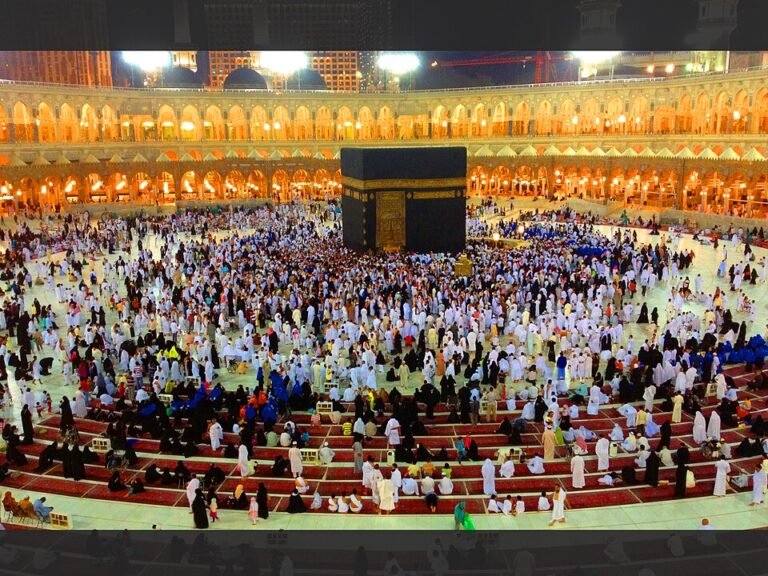
The Kaaba at Masjid al-Haram, Makkah
What the fines actually involve
Saudi Arabia’s Ministry of Interior has announced financial penalties that apply to anyone found performing, or attempting to perform, Hajj without a valid permit, as well as to those who help facilitate unauthorised pilgrims. Reported penalties for the current enforcement framework include fines of up to SAR 20,000 for an individual pilgrim caught without a permit, rising to fines of up to SAR 100,000 for those who transport, house or otherwise facilitate unpermitted pilgrims, with facilitator fines multiplying according to the number of people involved. Because enforcement details and figures can be updated from year to year, always check haj.gov.sa directly for the confirmed penalties in force for the specific Hajj season you are travelling in.
Beyond the financial penalty, violators can face deportation and a lengthy ban on re-entering Saudi Arabia, with courts also able to order the confiscation of any vehicle used to transport unauthorised pilgrims during the restricted period around Hajj.
Who the rules apply to
Pilgrims: Anyone found in Makkah or the holy sites during the Hajj-restricted period without a valid Hajj permit, regardless of what other Saudi visa they may be holding.
Transport providers: Anyone found transporting visa holders with the apparent intention of enabling unauthorised Hajj participation.
Hosts: Anyone found providing accommodation or shelter to unpermitted pilgrims during this period.
Sponsors and facilitators: Anyone applying for visas on behalf of others with the intent of enabling unauthorised Hajj attendance.
A pilgrim at Masjid al-Haram, Makkah
Why this matters even if you plan to comply
Most pilgrims booking through reputable, established channels will never come close to these penalties, since a properly booked Hajj visa and permit already puts you on the right side of the rules. Where it matters most is in avoiding informal or unofficial arrangements that promise Hajj access without the proper permit process, whether through an unlicensed agent, an unofficial visit-visa route, or a promise to “sort it out” once you arrive. These arrangements put pilgrims at real risk, not just of financial penalty but of being turned away entirely after significant expense and travel, with no realistic route to still performing Hajj that year.
How to stay firmly on the right side of the rules
Book your Hajj visa and permit through officially recognised channels, whether the Nusuk Hajj platform directly or an accredited, licensed Hajj travel organiser.
Verify any travel agent or organiser’s accreditation before booking, particularly for a Hajj package advertised at an unusually low price.
Keep your permit documentation with you at all times during your trip, ready to present if asked.
Be wary of any offer suggesting Hajj access is possible without a proper permit, since this is precisely the kind of arrangement the current penalties target.
In summary
Saudi Arabia enforces significant financial penalties, deportation and lengthy re-entry bans against anyone attempting Hajj without a valid, official permit, alongside even steeper penalties for those who help facilitate unauthorised pilgrims. The rule exists to protect pilgrim safety at an event with enormous crowd management demands, and the surest way to avoid any risk is to book through officially recognised, permit-linked channels well ahead of your trip, always checking the current requirements at haj.gov.sa.
Why a visit or tourist visa isn’t valid for entering Makkah
One of the most important, and most misunderstood, points in Saudi Arabia’s pilgrimage rules is that a standard visit or tourist visa cannot be used to enter Makkah. This catches out travellers who assume any valid Saudi visa gives them access anywhere in the country. This guide explains why that is the case, what the correct alternatives are, and what happens if the rule is not followed.
Why Makkah is treated differently
Makkah holds a unique status in Saudi Arabia, restricted to Muslims for the purpose of pilgrimage and worship. To manage entry and ensure pilgrims are properly registered, Saudi authorities require anyone travelling to perform Umrah or Hajj to hold a visa specifically linked to that purpose, rather than a general tourist or business visit visa. This is separate from, and stricter than, general Saudi entry rules for other cities.
The Kaaba at Masjid al-Haram, Makkah
What UK government guidance says
According to UK government travel advice, Umrah specifically requires an e-visa, and this e-visa route is described as mandatory for performing Umrah, distinct from Saudi Arabia’s separate Electronic Visa Waiver, which explicitly does not cover entry to Makkah for pilgrimage in the same way. Hajj sits apart from both of these again, with UK guidance stating clearly that a separate, dedicated Hajj visa is required, obtained through the official Nusuk Hajj platform, and that this visa cannot be substituted with any other type of Saudi visa.
During the Hajj season specifically, guidance confirms that Saudi authorities restrict travel for anyone not holding a Hajj visa, going as far as stopping visitors without one from flying to Jeddah, Madinah and Taif altogether during that period, regardless of what other valid Saudi visa they may be holding.
The practical difference between visa types
Tourist e-visa or Electronic Visa Waiver: Suitable for general tourism, business or, in the case of the e-visa, Umrah outside of the Hajj season, but not a substitute for a Hajj visa during the Hajj period.
Umrah e-visa: The correct route for performing Umrah, applied for as part of your travel arrangements rather than assumed to be covered by a general visit visa.
Hajj visa: A wholly separate visa category, tied to an official Hajj booking and required specifically for performing Hajj, with its own fixed, non-extendable duration.
Masjid al-Haram, Makkah
What happens if you try to enter Makkah on the wrong visa
Attempting to enter Makkah, or the wider Hajj-restricted area during the Hajj season, without the correct visa can result in being turned back, denied entry, or in more serious cases facing fines and penalties under Saudi Arabia’s enforcement of Hajj permit rules. Saudi authorities have made clear that entry to the holy sites depends on holding valid, purpose-specific documentation, and this is checked at multiple points, including transport hubs and checkpoints, not just at initial immigration.
Overstaying or otherwise breaching the terms of any Saudi visa can also lead to significant fines, detention or deportation, according to UK government advice, so it is worth being precise about which visa you hold and what it actually permits, rather than assuming any valid Saudi entry document covers a Makkah visit.
Getting the right visa before you travel
Confirm whether your trip is for Umrah or Hajj, since these require different visa routes.
Apply for the correct visa well ahead of travel, through official channels or an accredited travel organiser rather than assuming a general visit visa will suffice.
Double check your visa type against your actual travel dates, particularly if your trip falls close to the Hajj season, when restrictions on non-Hajj visa holders tighten considerably.
Keep your visa confirmation with your other travel documents, ready to show at multiple checkpoints, not just initial immigration.
In summary
A visit or tourist visa is not valid for entering Makkah for pilgrimage, and Umrah and Hajj each require their own specific visa route rather than a general Saudi entry document. Getting this right before you travel, by applying for the correct e-visa for Umrah or the dedicated Hajj visa for Hajj, avoids the very real risk of being turned back or facing penalties once you arrive.
Rawdah (Riyad al-Jannah) permit booking on Nusuk and timing it with your transport
A visit to the Rawdah, known in Arabic as Riyad al-Jannah, is one of the most sought-after moments of any trip to Madinah, and it is also one of the few Ziyarah experiences that now requires advance planning through an official permit system. This guide explains how the Rawdah permit process works through the Nusuk platform, and how to time it sensibly around your transport.
What the Rawdah is and why a permit exists
The Rawdah is the area of Masjid an-Nabawi between the Prophet Muhammad’s former house and his pulpit, described in a well known hadith as one of the gardens of Paradise. Because of its significance, it draws enormous numbers of pilgrims wanting to pray there, far more than the relatively small physical space can comfortably hold at any one time. To manage this, Saudi authorities introduced a permit-based booking system through the official Nusuk platform, replacing the informal queuing that used to determine access.
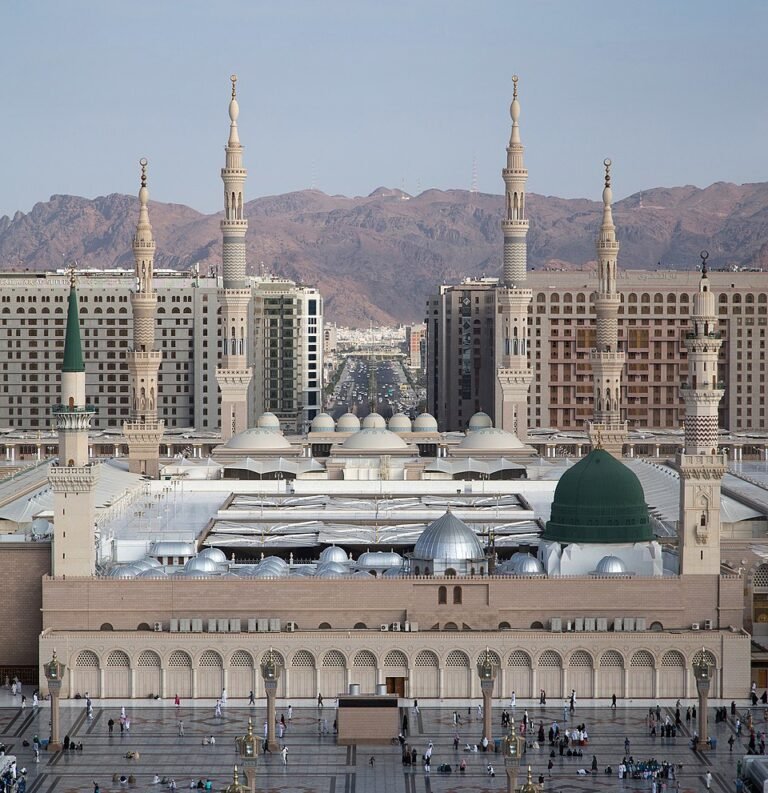
The Green Dome of Masjid an-Nabawi
Booking through Nusuk
Rawdah access is arranged through the Nusuk app or website, the official platform for Hajj and Umrah services in Saudi Arabia. Pilgrims select a time slot for their visit, generally organised in windows throughout the day, and the permit confirms your allocated time to enter and pray in the Rawdah area. Because slots are limited and demand is high, especially during busier periods of the year, it is sensible to check availability and book as early as your Nusuk account allows rather than leaving it until you arrive in Madinah.
If you already have a Nusuk account set up for your wider Umrah or Hajj booking, the Rawdah permit sits within the same platform, so it is worth becoming familiar with the app before you travel rather than trying to navigate it for the first time once you land.
Timing your Rawdah visit around your transport
Because your Rawdah slot is fixed to a specific time window, it pays to plan your transport around it rather than the other way round. A few practical points to consider.
Build in buffer time before your slot, particularly if you are travelling from a hotel further from the Haram, since arriving late may mean missing your allocated window entirely.
Account for the walk from the mosque’s outer areas to the Rawdah itself, which can take longer than expected during busy periods due to crowd management inside the mosque.
If your Rawdah slot falls close to a prayer time, expect the mosque and surrounding areas to be busier than usual, which can affect how long it takes to reach the entry point.
Coordinate with anyone else in your group so the whole party arrives in good time for a shared slot, since a permit booked for a specific window is not easily extended if part of the group is delayed.
Exterior of Masjid an-Nabawi
Practical tips for a smoother visit
Check your Nusuk booking a day or two before your planned visit to confirm the slot is still correctly recorded.
Keep your phone charged and your Nusuk app easily accessible, since your permit is generally shown digitally at the point of entry.
Dress appropriately and be prepared for a busy, close-quarters environment even with a permit system in place, since demand for Rawdah access remains very high.
Have a backup plan in mind if for any reason you cannot make your allocated slot, such as checking the app for the next available booking window.
Why this matters for your overall itinerary
Unlike many other Ziyarah activities that can be arranged flexibly around your day, a Rawdah visit now has a fixed appointment quality to it, similar in some ways to booking a timed slot for any high-demand attraction. This means it deserves a firm place in your day’s schedule, planned around properly rather than squeezed in opportunistically. If you are also arranging other transport, such as an airport transfer or a Ziyarah tour to other sites, share your Rawdah slot timing with your driver so the day’s plan works around this fixed point rather than creating a conflict.
In summary
A Rawdah visit is one of the most meaningful moments of a trip to Madinah, and booking it properly through the Nusuk platform, well ahead of your visit where possible, removes much of the uncertainty that used to surround access. Treat your allocated slot as a fixed appointment, plan your transport with a comfortable buffer, and check the official Nusuk platform directly for the current booking process and available windows before you travel, since details can be updated from year to year.
What Happens If Your Nusuk Permit and Transport Booking Dates Don’t Match
It happens more often than you would expect. You book your flights, arrange your transport, and set up your Nusuk permit or visa, and then something shifts, a flight gets rescheduled, a visa is issued with slightly different dates than you applied for, or your trip gets extended by a few days once you are already in Saudi Arabia. Suddenly your Nusuk permit dates and your transport booking dates do not line up. This guide covers what that situation actually means in practice, and what to do about it.
Reviewed planning guidance. Details can change; use the linked official sources and get a live quote for current pricing and availability.
Why this mismatch happens
Nusuk permits and visas are generally tied to specific dates, and transport bookings are made separately, often through a different provider entirely, based on your flight itinerary at the time you book. These two things are set up independently of each other, which means there is nothing structurally stopping them from drifting apart. A flight delay or reschedule changes your actual arrival or departure time but does not automatically update your permit. A visa processing delay can result in dates being issued that differ slightly from what you originally requested. A decision to extend your stay, made after you land, has no automatic effect on a transport booking made weeks earlier around your original return date.
None of this is unusual, and it does not mean anything has gone catastrophically wrong. It simply means one part of your planning has moved and the other has not yet caught up, and the practical task is to bring them back into alignment.
Working out which side needs to change
The first step is figuring out which is the fixed point and which is the flexible one. In most cases, your Nusuk permit or visa dates are the more rigid of the two, since these are tied to an official process with its own rules and, in some cases, defined windows for entry and exit. Your transport booking, by comparison, is usually the easier of the two to adjust, particularly if you booked with a provider that allows date changes.
That said, this is not always the case. If your permit was amended because of a genuine change to your travel plans, such as a flight reschedule on your side, then it is your transport booking that needs to catch up with the new reality, not the other way around. Work out which date changed and why before deciding what to do next, since that determines whether you are amending a booking to match a fixed permit, or checking whether your permit itself needs to be updated to reflect a change you made.
If your Nusuk permit dates change
If your Nusuk permit or visa is amended, whether due to a processing adjustment or a change you requested, your first task is updating your onward arrangements to reflect the new dates rather than the old ones. This means checking your transport booking, your accommodation, and your flights, in that order of urgency, since transport and accommodation both depend on knowing the dates that actually apply to your trip. Contact your transport provider as soon as you are aware of a change, since the earlier a provider knows about a shift, the more options they usually have to accommodate it, whether that means moving a pickup time, an entire day, or adjusting a multi-leg itinerary.
Do not assume a transport provider will automatically notice a mismatch or update your booking on your behalf. Even providers with flexible terms generally need you to tell them a date has changed, so treat this as something you actively manage rather than something you can leave for the provider to catch.
If your transport booking dates change
The reverse situation, where your flights or transport plans shift but your permit stays fixed, needs a different kind of attention. Your Nusuk permit or visa generally has its own validity window, and travelling outside that window can affect your entry, your stay, or your onward arrangements depending on the specifics of your permit type. If your flight changes mean your actual travel dates would fall outside your current permit dates, that is a matter to resolve through the Nusuk platform or the relevant official channel, not something to work around informally by simply adjusting your transport and hoping the rest sorts itself out.
Why booking transport with flexible, amendable terms matters
This entire situation is far easier to manage when your transport booking was made with a provider that allows reasonable date changes in the first place. A rigid booking with no flexibility turns a routine permit amendment or flight reschedule into a much bigger problem, since you may be facing the cost or hassle of an entirely new booking rather than a straightforward date change on an existing one. When you are comparing transport providers, it is worth asking directly what their policy is on amending dates after booking, rather than assuming every provider handles this the same way.
This is one of the practical reasons it makes sense to set up your Nusuk account and confirm your permit status before locking in transport dates in the first place, since it reduces how often this kind of mismatch comes up at all. Our guide on what Nusuk requires before you book your Umrah transport covers that sequencing in more detail.
Who to contact when dates do not match
For anything related to your permit, visa or Nusuk account itself, the Nusuk platform for your pilgrimage type, umrah.nusuk.sa or hajj.nusuk.sa, is the correct starting point, alongside haj.gov.sa for broader Hajj-specific guidance from the Saudi Ministry of Hajj and Umrah. For anything related to your transport booking specifically, contact your provider directly and explain the situation clearly, including which dates have changed and why, so they can advise on what is possible. If you are unsure whether a mismatch affects your entry or stay in Saudi Arabia, UK nationals can also check the UK Government travel advice for Saudi Arabia, and US citizens can refer to the US Embassy and Consulates in Saudi Arabia, for general guidance relevant to their nationality.
Two common scenarios worth planning for
A flight reschedule is one of the most frequent causes of this mismatch. An airline moves your outbound or return flight by a day or two, often for reasons entirely outside your control, and suddenly the transport booking built around your original itinerary no longer lines up with when you will actually be at the airport. This is usually the more straightforward scenario to resolve, since it is your transport, not your permit, that generally needs to change, and a provider with flexible terms can normally accommodate a shifted pickup time or date without much difficulty.
A visa or permit issued with different dates than expected is the less straightforward scenario. Processing timelines are not always exact, and the dates that come back on an issued visa or permit can differ from what was originally applied for. In this case, it is worth pausing before adjusting anything else, confirming exactly what your permit now states, and then working backwards to update your transport and accommodation to match it. Treating the permit as the fixed reference point in this scenario, rather than trying to argue your original booking dates back into place, is generally the more realistic approach.
Avoiding the mismatch in the first place
The most reliable way to avoid this situation is sequencing your planning properly from the start. Confirm your Nusuk account and permit or visa status before booking transport, keep a close eye on your flight confirmations for any changes, and if anything shifts on either side, update the other as soon as you know rather than waiting until closer to your travel dates. Booking with a transport provider that has a clear, stated policy on amending dates gives you a safety net if a mismatch does happen, rather than leaving you to manage it entirely on your own with a provider who is unwilling or unable to adjust.
Frequently asked questions
Is it common for Nusuk permit dates and transport bookings to not match?
It is not unusual, since permits and transport are arranged separately and either can change independently, through a flight reschedule, a visa processing adjustment, or an extended stay.
Which should I update first if my dates do not match?
Work out which changed and why. If your permit was amended, update your transport and accommodation to match it. If your transport plans changed, check whether that affects your permit’s validity window before assuming the transport side is the only thing to adjust.
Will a transport provider automatically notice if my dates have changed?
Generally no. Contact your provider directly as soon as you are aware of a change, since most providers rely on you telling them rather than catching a mismatch on their own.
Does travelling outside my permit’s validity window cause problems?
It can, depending on the specifics of your permit type, which is why a genuine mismatch between your actual travel dates and your permit dates should be resolved through the Nusuk platform or the relevant official channel rather than worked around informally.
How can I reduce the risk of this happening?
Confirm your Nusuk account and permit status before booking transport, monitor your flight confirmations closely, and book with a provider that has clear, flexible terms for amending dates if something changes.
Transport, airport, visa and visitor arrangements can change. These official sources are provided so you can check the current position for your journey. Checked 2026-07-25.
Hajj & Umrah Taxi Cab Co builds reasonable flexibility into transport bookings, so if your Nusuk permit or flight dates shift, adjusting your transport is a straightforward conversation rather than a fresh booking made under pressure. Get a live quote for your current dates, and let us know as soon as anything changes.
Nusuk Platform Account Setup: A Step-by-Step Guide Before You Book Transport
Before you book a single leg of transport for Umrah or Hajj, there is one piece of admin that has to come first: setting up your Nusuk account. It is the official platform the Saudi authorities use to manage pilgrim services, and getting your account set up properly and your details verified before you start booking flights, hotels or transport saves you from the awkward situation of having arrangements in place that do not line up with your actual permit or visa status. This guide walks through the practical steps of creating and setting up a Nusuk account, at the level of detail the official platform itself makes publicly available.
Reviewed planning guidance. Details can change; use the linked official sources and get a live quote for current pricing and availability.
What Nusuk is and why the order of operations matters
Nusuk is the official platform for organising Hajj and Umrah, with umrah.nusuk.sa handling Umrah-specific services and hajj.nusuk.sa handling Hajj-specific services. It is where pilgrims manage core elements of their trip, including visa-related steps, accredited service providers, and permit or Nusuk card details depending on which pilgrimage you are undertaking. Because the platform is the source of truth for your pilgrimage status, it makes sense as the first thing you set up, before you commit to specific flights, hotel dates or transport bookings.
The reason this order matters in practice is straightforward. Transport providers, including specialist companies like HUT, need accurate dates and details to build a booking around. If your Nusuk account is not yet set up, or your visa or permit status has not been confirmed, any transport booking made against guessed dates risks being wrong the moment your actual status is confirmed. Setting up Nusuk first, and treating it as the anchor point for the rest of your planning, avoids that entirely.
What you will need before you start
Creating an account on the Nusuk platform generally requires a working email address and a mobile number you can access for verification, along with your passport details for identity purposes. If you are travelling on a specific visa type, such as a tourist visa being used for Umrah, or a Hajj visa issued through an authorised channel, having those details ready before you start the account creation process makes the setup considerably smoother. It is worth reading our guide on Umrah visa types and what each one means for your travel plans if you are not yet sure which visa category applies to your trip, since this affects what the platform will ask you to confirm.
Creating your account step by step
The exact screens and wording on the Nusuk platform can change as the service is updated, so treat the steps below as the general shape of the process rather than a precise script, and always follow what the platform itself shows you at the time.
1. Start at the correct site for your pilgrimage
Go to umrah.nusuk.sa if you are travelling for Umrah, or hajj.nusuk.sa if you are travelling for Hajj. Using the correct starting point matters, since the two pilgrimages have different service pathways even though they share the same underlying platform.
2. Register with your email and phone number
Create your account using a personal email address you check regularly and a mobile number that can receive a verification code. Since this account will hold details relevant to your visa and permit status, use an email and number you expect to keep active for the full period of your trip planning, rather than a temporary or rarely checked address.
3. Complete identity verification
You will generally need to provide passport information as part of setting up your profile, since the platform links your account to your travel identity. Double check that the details you enter match your passport exactly, including spelling of your name, since mismatches between your Nusuk profile and your travel documents can cause complications later in the process.
4. Link or confirm your visa status
Depending on your route into Umrah or Hajj, your account may need to be linked to a visa that has already been issued, or you may apply for the relevant permission through the platform itself as part of setting things up. This step varies more than the others depending on your nationality, visa type and how you are travelling, so it is worth reading the guidance on the platform carefully at this stage rather than assuming your situation matches a generic example.
5. Review your confirmed details before moving on
Once your account is set up and your visa or permit status is linked, take the time to review everything shown on your profile: your name, passport number, visa or permit dates, and any other travel details the platform has recorded. This is the point at which you want to catch any errors, since it is far easier to correct a detail on your account now than to unpick a mismatch once flights, hotels and transport have all been booked against it.
Why transport bookings should wait until this is confirmed
It can be tempting to book transport as soon as flights are sorted, particularly if you are trying to lock in availability during a busy season. But your transport dates ultimately need to reflect your actual, confirmed Umrah or Hajj status, not a provisional guess made before your Nusuk account and visa details were finalised. If your permit or visa is later amended, whether because of a processing delay, a change in your travel plans, or a correction to a detail on your account, a transport booking made too early against the wrong dates can end up needing to be changed as well.
This is one of the reasons we recommend booking transport with a provider that allows reasonable flexibility on dates, rather than a fully rigid booking made the moment flights are confirmed. Our guide on what Nusuk requires before you book your Umrah transport goes into more detail on how your Nusuk status specifically feeds into a transport booking, once your account itself is already set up.
The Nusuk Card and what it means once your account is active
Once your Nusuk account is set up and your pilgrimage arrangements are confirmed, you may also be issued a Nusuk Card, which is used for identification and access to certain services during your trip. This is a separate step that follows on from initial account setup rather than being part of it, and it is worth understanding what the card does and does not cover for your movement and transport around Saudi Arabia. Our guide on the Nusuk Card and what it means for your transport and movement covers this in detail.
Common mistakes to avoid during setup
A handful of avoidable errors come up repeatedly when pilgrims set up their Nusuk account in a rush. Entering a name that does not exactly match your passport is one of the most common, and one of the most disruptive to fix later. Using an email address or phone number you are likely to lose access to before your trip is another, since you may need to receive verification messages or updates throughout the planning process. Booking flights or transport before your account and visa status are confirmed is a third, and arguably the one most relevant to this guide, since it is the mismatch that causes the most friction once your actual travel dates are locked in.
Keeping your account current as plans change
Pilgrimage planning rarely stays completely static from the day you first set up your Nusuk account to the day you fly. Flight dates shift, visa processing can take longer than expected, and travel plans within a family group sometimes change after the account has already been created. Whenever something changes on your side, whether that is a new passport, a different visa route, or amended travel dates, it is worth logging back into your Nusuk account and checking that everything shown still matches your current plans, rather than assuming the original setup is still accurate months later.
This habit of checking back in matters more the closer you get to your travel dates. A detail that was correct when you first registered can become outdated if your circumstances shift, and catching that early gives you time to sort it out through the proper channel before it affects transport, accommodation or anything else booked against those dates.
Frequently asked questions
Do I need a Nusuk account for both Umrah and Hajj?
Yes, the Nusuk platform covers both pilgrimages, with umrah.nusuk.sa and hajj.nusuk.sa as the pilgrimage-specific starting points depending on which trip you are planning.
What information do I need ready before creating a Nusuk account?
Generally a working email address, a mobile number for verification, and your passport details. Having your visa type confirmed in advance also makes the process smoother.
Should I book transport before or after setting up my Nusuk account?
After. Your Nusuk account and confirmed visa or permit status should come first, since transport bookings should reflect your actual travel dates rather than a provisional guess.
What happens if I make a mistake entering my details on Nusuk?
Review your profile carefully once your account is set up and correct any errors as early as possible, since mismatches between your Nusuk profile and your travel documents are easier to fix before other bookings are made against them.
Is the Nusuk Card the same as the Nusuk account?
No, the account is your online profile on the platform, while the Nusuk Card is a separate physical or digital identifier issued once your pilgrimage arrangements are confirmed.
Transport, airport, visa and visitor arrangements can change. These official sources are provided so you can check the current position for your journey. Checked 2026-07-25.
Once your Nusuk account is set up and your dates are confirmed, Hajj & Umrah Taxi Cab Co can arrange your airport transfers and intercity transport around those exact dates, with a fixed price agreed in advance and the flexibility to adjust if your permit details change before you fly.