

Reviewed planning guidance. Details can change; use the linked official sources and get a live quote for current pricing and availability.
If you have ever looked at a Hajj itinerary and seen the word “Maktab” followed by a letter and a number, you have probably wondered what it actually means for you. It is not a hotel booking reference or a random administrative code. It is the zone system that decides where in the vast tent city of Mina your group is housed, and it has a direct, practical effect on where a driver can pick you up or drop you off during the days you spend there.
This guide explains what Maktab zones are, why Mina does not work like a normal city with street addresses, and what that means for planning transport around your tent camp during the Hajj days.
What a Maktab zone actually is
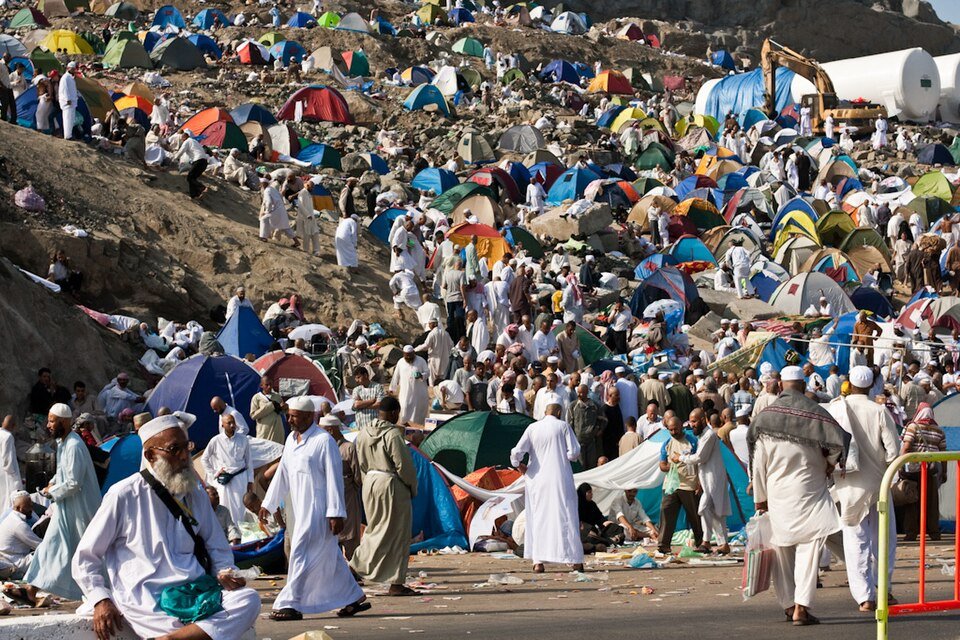
Mina is a vast, temporary tent city that houses well over a million pilgrims for the days of Hajj. To make a space this size manageable, the authorities divide it into numbered and lettered zones, often referred to as Maktab areas, each administered by a specific Hajj mission or group of missions. Your Maktab assignment is decided by the Muassasah (the guidance and services establishment linked to your country or region of origin), not by you or your transport provider, and it is usually fixed once your Hajj permit and group registration are finalised.
Each Maktab has its own cluster of tents, its own catering arrangement, and its own access route from the surrounding road network. Two pilgrims travelling with different missions, even if they are staying only a short walk apart as the crow flies, can be in Maktab zones with completely different vehicle access points, simply because the tent city’s internal layout does not follow a conventional grid.
Why “Maktab A vs Maktab B” matters more than a street address
In an ordinary city, a taxi app or driver can navigate to a street number. Mina does not work that way during the Hajj days. Vehicle access inside the tent city is heavily restricted and controlled by the authorities for crowd safety, and most zones are reachable only on foot from a designated vehicle drop-off point, sometimes a considerable walk from the tent itself.
This is why your Maktab number, not a street address, is the single most useful piece of information you can give a transport provider. A driver who knows you are in, say, Maktab 34 rather than Maktab 61 can identify the correct approach road and the nearest permitted stopping point, rather than attempting to reach a tent directly, which is rarely possible by vehicle in any case.

How Mina’s layout differs from Makkah and Madinah
Pilgrims who have already spent time in Makkah or Madinah sometimes assume Mina will work the same way, with recognisable streets and hotel entrances a driver can simply follow on a map. It does not. Mina’s tent city is reconfigured and managed afresh each Hajj season, road closures shift according to crowd flow, and much of the internal circulation is on foot only, particularly on the days of Tarwiyah and Arafat when movement between Mina, Arafat and Muzdalifah is at its heaviest.
Because of this, transport around Mina itself, as opposed to transport that brings you to Mina from Makkah or takes you onward to Arafat, is fundamentally different from the point-to-point taxi journeys you may have already experienced elsewhere on your trip. Official Hajj transport plans, organised through your Muassasah and mission, are the primary way most pilgrims move between the three sites during the Hajj days themselves. A private taxi is far more useful for the journeys either side of Mina, such as reaching your Makkah hotel beforehand or being collected afterwards.
What to prepare before the Hajj days begin
Whether you are relying on your group’s official transport plan or arranging a private vehicle for the days before or after your time in Mina, a little preparation goes a long way.
Know your Maktab number and write it down somewhere accessible, not just saved in an app that might lose signal. Your mission or group leader will normally confirm this well before you travel.
Confirm your nearest recognised access point, not just your Maktab number. Group leaders and experienced pilgrims from previous years are often the best source for the practical detail of which road or landmark to give a driver.
Agree a realistic meeting point outside the tent city for any private transport either side of your Hajj days, since a vehicle is very unlikely to be able to reach the tent itself.
Keep your phone charged and carry a portable battery, since coordinating a pickup by phone is far more reliable than trying to describe a location from memory in an unfamiliar, crowded environment.

Coordinating with your driver or transport provider
If you have booked a private transfer for the days before you enter Mina, or for your return journey afterwards, tell the provider your Maktab number and mission as early as possible, ideally at the time of booking rather than on the day. A transport provider familiar with the Hajj season will usually know the general approach roads for different Maktab clusters and can advise a realistic pickup point rather than promising a doorstep collection that is not physically possible.
It is also worth agreeing a backup plan. Mobile networks can be heavily congested in Mina during peak Hajj days simply because of the number of people in a small area, so a fallback meeting time and landmark, agreed in advance, is more reliable than assuming a call will always get through on the first attempt.
How group leaders can help their whole Maktab coordinate transport
If you are travelling as part of a larger mission or community group, the group leader is usually the most efficient point of contact for transport coordination rather than each pilgrim individually contacting a provider. A group leader who holds the confirmed Maktab number, the mission’s assigned access route, and a single shared transport plan for the days either side of Mina can brief a driver once, clearly, rather than the provider trying to piece together the same information from several different pilgrims with potentially slightly different recollections of the details.
This also helps avoid a common source of confusion: pilgrims within the same Maktab sometimes assume their tent is close to another group’s tent simply because both groups mention a similar-sounding zone name, when in fact the numbering and lettering system is precise and small differences matter. A single, confirmed reference point shared across the whole group reduces this risk considerably.
What first-time Hajj pilgrims often get wrong about Mina transport
A common assumption among first-time Hajj pilgrims is that Mina will function much like a taxi journey anywhere else in Makkah, where a driver simply follows a mapping app to a specific address. Because of the scale of the tent city, the temporary nature of its road layout, and the sheer density of pilgrims moving on foot during the Hajj days, this expectation rarely matches reality. Pilgrims who go in expecting a normal point-to-point taxi experience within Mina itself are often the ones who find the logistics most stressful, simply because their expectations were not aligned with how the tent city actually operates.
Setting realistic expectations before you travel, understanding that most movement within Mina during the Hajj days is on foot and coordinated through your mission rather than an independent taxi booking, makes the whole experience considerably less confusing once you are actually there.
Frequently asked questions
Can I choose my own Maktab zone?
No. Maktab allocation is decided by the Muassasah linked to your Hajj mission, based on your country or region of origin and your registered group, not by individual pilgrims or transport providers.
Can a private taxi collect me directly from my tent in Mina?
Generally not. Vehicle access inside the Mina tent city is tightly restricted during the Hajj days for crowd safety, and most zones are reached on foot from a designated stopping point. Private transport is far more relevant for the journeys before you enter Mina and after you leave.
What should I tell a transport provider if I am arranging a pickup near Mina?
Give your Maktab number and mission name as early as possible, and ask about the nearest realistic vehicle access point rather than expecting a doorstep collection.
Does my Maktab number change from year to year?
It can. Maktab configurations are set afresh each Hajj season by the authorities, so a number from a previous year should not be assumed to apply again.
Checked sources
Official information for your planning
Transport, access and site arrangements at Mina can change season to season. These official sources are provided so you can check the current position for your journey. Checked 25 July 2026.
If you are planning transport for the days either side of your time in Mina, arrange your pickup and drop-off well ahead of the Hajj season so your driver has time to plan around your Maktab zone. Hajj & Umrah Taxi takes bookings for these transfers in advance, so get in touch through our booking form to secure your dates.