

Reviewed planning guidance. Details can change; use the linked official sources and get a live quote for current pricing and availability.
Taking elderly parents on Umrah when one or both need a wheelchair adds a layer of planning that goes well beyond an ordinary family trip. Airports are large, distances between sites in Makkah and Madinah can be considerable, and not every vehicle or pickup point is genuinely wheelchair accessible without some advance thought. This guide focuses specifically on the transport side of travelling with a wheelchair user, from airport arrival through to everyday journeys around the holy cities.
Start with airport wheelchair assistance, arranged in advance
Both King Abdulaziz International Airport in Jeddah and Prince Mohammad Bin Abdulaziz Airport in Madinah offer wheelchair assistance services, but these are far more reliably arranged in advance through your airline than requested on arrival. Contact your airline as soon as you book flights to register the need for wheelchair assistance at every stage, from the departure airport in the UK through to arrival and any connecting flights.
This assistance typically covers movement through the terminal, but it is worth understanding where that service ends and where your booked ground transport begins, so there is no gap in support between the arrivals hall and your vehicle.
Choosing a genuinely wheelchair-accessible vehicle
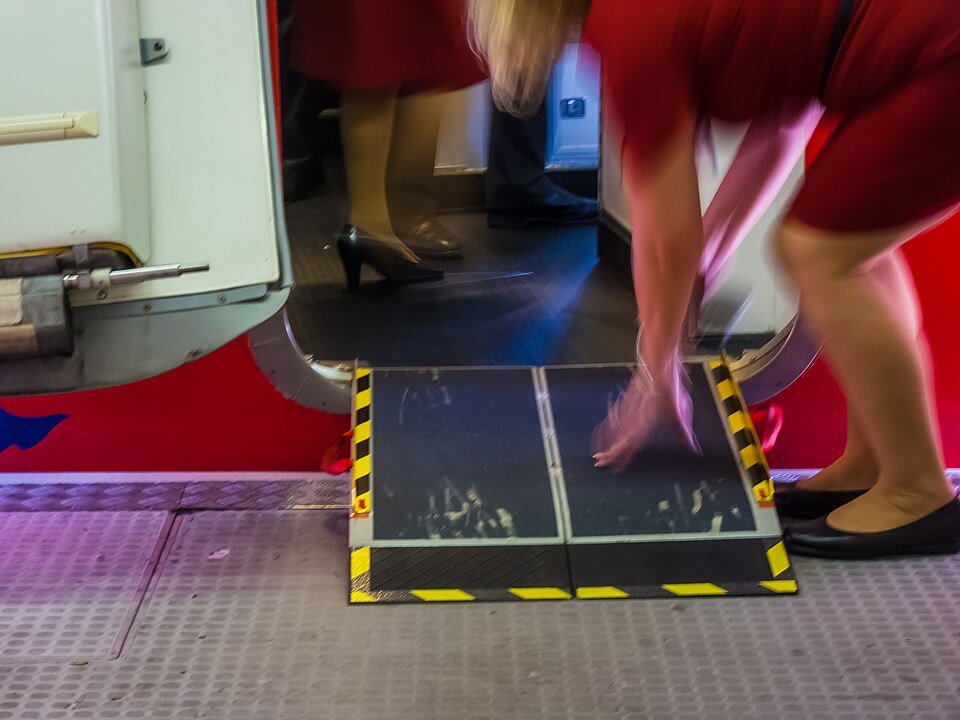
Not every vehicle marketed for family or group travel is suitable for a wheelchair user, particularly if the wheelchair itself needs to travel folded in the boot rather than the passenger transferring to a car seat. Be specific with your transport provider about your parent’s mobility needs: can they transfer from the wheelchair into a standard car seat with some support, or do they need to remain in the wheelchair throughout the journey, which requires a vehicle with wheelchair access and securing points rather than an ordinary saloon or estate car.
If a folding wheelchair simply needs to be stored rather than the passenger travelling in it, confirm the wheelchair’s folded dimensions with your provider so they can select a vehicle with enough boot space alongside your luggage. If your parent needs to remain seated in the wheelchair for the whole journey, ask specifically whether the provider has wheelchair-accessible vehicles (WAVs) available, since this is a distinct category of vehicle that not every operator has in its fleet, and availability should be confirmed well ahead of travel rather than assumed.
Distances and terrain around the Haram that affect planning
The area immediately around Masjid al-Haram in Makkah and Masjid an-Nabawi in Madinah involves considerable walking distances even from a nearby drop-off point, and crowd density at peak prayer times can make navigating a wheelchair through the crowd genuinely difficult. Both mosques have wheelchair-accessible entrances and, in Makkah, dedicated wheelchair circuits around the Kaaba, but reaching these facilities from a general drop-off point still requires some planning.
Booking a hotel as close to the Haram as reasonably possible, and discussing the closest permitted vehicle drop-off point with your transport provider, both make a meaningful difference to how manageable each day feels for an elderly parent using a wheelchair.

Intercity travel between Makkah and Madinah
For the journey between Makkah and Madinah, a private wheelchair-accessible vehicle generally offers more comfort and flexibility for an elderly parent than the Haramain high-speed train, since it allows door-to-door travel without navigating a large train station and platform on top of the journey itself. If cost or preference points you towards the train instead, check accessibility arrangements at both stations directly with Saudi Arabia Railways well before travel, since station-to-hotel transport at each end will still need to be arranged separately.
Planning for a slower overall pace, not just accessible vehicles
Accessible transport solves the physical logistics of moving your parent between locations, but it is only part of a genuinely comfortable trip. Building a slower, less packed daily itinerary matters just as much, since an elderly wheelchair user typically needs more recovery time between activities than a younger, more mobile traveller. Rather than planning back-to-back Ziyarah stops or same-day intercity travel combined with a full evening at the Haram, spread your itinerary out with realistic rest periods, and communicate this pacing to your transport provider so pickup times reflect a schedule your parent can actually sustain across the full trip, not just the first day or two.
Involving your parent in the planning conversation
It is worth having a direct conversation with your parent about their own comfort preferences before finalising transport arrangements, rather than making every decision on their behalf based on assumptions. Some elderly wheelchair users strongly prefer to remain in their own chair throughout a journey for familiarity and confidence, while others are comfortable transferring to a car seat if it means a wider choice of available vehicles. Their preference should shape which type of accessible vehicle you prioritise booking, since both approaches are valid and the right choice depends on the individual, not a general rule.
Practical tips for the journey itself
Build in extra time at every stage, from airport transfers to Ziyarah visits, rather than a tightly packed schedule that leaves no room for a slower pace.
Carry any mobility-related medical documentation or letters, particularly if your parent has specific medical needs that a driver or airport staff might need to be aware of.
Confirm hotel room accessibility separately from transport, since a wheelchair-accessible vehicle does not guarantee a wheelchair-accessible hotel room, and both need checking independently.
Discuss your parent’s specific needs directly with your transport provider before booking, rather than assuming a general “accessible vehicle” request covers every situation, since needs vary considerably between wheelchair users.
Frequently asked questions
How far in advance should I arrange wheelchair-accessible transport?
As early as possible, ideally alongside your flight and hotel booking, since wheelchair-accessible vehicles are a smaller part of most providers’ fleets and can be booked up during busy periods.
Can my parent stay in their own wheelchair during the transfer?
This depends on the vehicle. Ask your provider specifically whether they have wheelchair-accessible vehicles with securing points, as opposed to a standard vehicle that only accommodates a folded wheelchair in the boot.
Is the area around the Haram itself wheelchair accessible?
Both Masjid al-Haram and Masjid an-Nabawi have wheelchair-accessible entrances and facilities, including a dedicated wheelchair circuit around the Kaaba in Makkah, though reaching them from a drop-off point still involves some distance and crowd navigation to plan around.
Should I choose a private car or the Haramain train for an elderly wheelchair user travelling between Makkah and Madinah?
A private wheelchair-accessible vehicle generally offers a more comfortable, door-to-door option, avoiding the additional navigation of a large train station on both ends of the journey.
Checked sources
Official information for your planning
Accessibility services can change. These official sources are provided so you can check the current position for your journey. Checked 25 July 2026.
Tell us about your parent’s specific mobility needs when you book, including whether they need to remain in their wheelchair throughout the journey, and we will arrange the right vehicle. Hajj & Umrah Taxi has experience with accessible Umrah transfers, so get in touch through our booking form.