

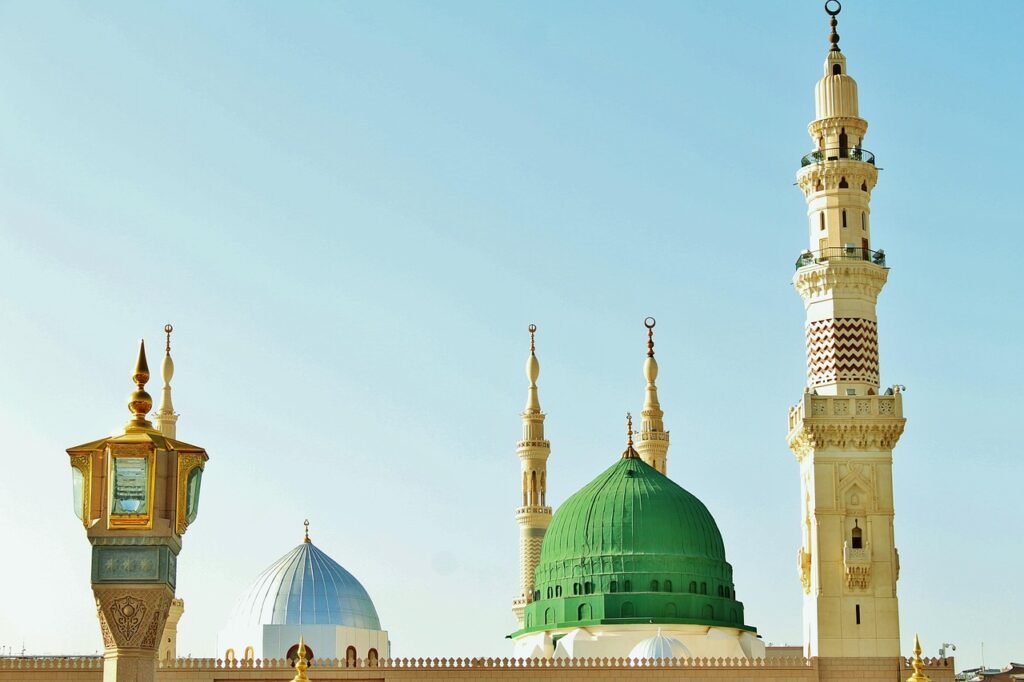
Reviewed planning guidance. This article is general planning guidance for pilgrims arranging ground transport for Umrah or Hajj. Always check your airline’s current baggage rules and the latest Nusuk guidance before you travel.
Most first-time pilgrims focus their Ziyarah planning on the well-known stops: Jabal al-Nour, Jabal Thawr, Mina, Arafat, Quba. Fewer think about Hudaybiyyah, the site of the treaty that changed the course of early Islamic history, or the handful of other historically significant but rarely visited locations scattered around the outskirts of Makkah. These places are not on most group tour itineraries, and getting to them raises a genuinely practical question: is it worth arranging your own private transport, or is a shared coach trip good enough?
What counts as a lesser-known Ziyarah site
The best-known Ziyarah stops in and around Makkah tend to be the ones with clear historical weight, easy road access, and space for coaches to park. Hudaybiyyah, where the Prophet Muhammad (peace be upon him) and the Quraysh agreed the treaty that opened the way for the peaceful conquest of Makkah, sits further out and is visited far less often, despite its significance. There are a small number of other sites in the same category: places tied to specific events in the Seerah that are meaningful to visit but do not draw the same volume of pilgrim traffic as the mountain sites or the Hajj plains. Group operators generally leave these off standard packages simply because the numbers do not justify a dedicated coach run. Hudaybiyyah is the most commonly asked about of these sites because of Surah Al-Fath, which references the treaty as a clear opening for the Muslims, but it is not the only one. Ji’ranah, where the Prophet Muhammad (peace be upon him) distributed the spoils after the Battle of Hunayn and later entered ihram for Umrah, falls into the same category: a place with a clear connection to the Seerah that most first-time pilgrims have never heard of before they arrive. Masjid al-Jinn, associated with the verses describing jinn listening to the Qur’an being recited, is another example that pilgrims sometimes ask about once they learn it exists. None of these sites carry the constant footfall of Jabal al-Nour or Jabal Thawr, and that is precisely what makes reaching them a different kind of logistical question.
Why these sites are harder to reach
The challenge with lesser-known sites is rarely the distance itself. It is the combination of factors around it: no fixed public transport route serving the location, limited or informal parking, and no set visiting hours built around prayer times the way the Haramain are. A taxi hailed from outside your hotel may not know the site or may be reluctant to wait around while you visit. Coordinating a return journey without a driver who is expecting to wait can turn a short visit into a stressful one, particularly if you are travelling with elderly relatives or young children who cannot easily manage an uncertain wait for onward transport in the heat. There is also a simple information gap. Guidebooks and group itineraries are written around the sites most pilgrims want to see, so detail on access roads, parking, or the best time of day to visit a place like Hudaybiyyah is thin compared to what is available for the well-trodden stops. A driver who has taken pilgrims to Jabal al-Nour a hundred times may still need directions for a site he rarely gets asked to visit, which is worth knowing before you assume any taxi will simply know the way.

What group tours typically include and leave out
If you are travelling with an organised group, it is worth asking early what the Ziyarah itinerary actually covers, rather than assuming. Many group packages bundle a standard city tour that covers the major mountain and battlefield sites but stops short of anything requiring an extra hour or two on the road. That is a reasonable commercial decision for the operator, but it means pilgrims with a specific interest in a site like Hudaybiyyah often discover only after arrival that it is not included. If a lesser-known site matters to you, ask your group leader directly before you fly, rather than hoping it appears on the day. It is also worth asking whether the operator has taken pilgrims to the site before, rather than assuming a general Ziyarah tour easily extends to cover it. An operator unfamiliar with a lesser-known location may agree to add it to the itinerary without having a clear sense of the extra driving time involved, which can affect the rest of the day’s schedule if prayer times are already built tightly around the main stops.
- Confirm in writing which Ziyarah stops are included in your package, not just the general description.
- Ask whether waiting time at each stop is fixed or flexible.
- Check whether the group tour can be supplemented with an optional add-on for sites outside the standard route.
- If travelling independently, decide in advance whether you want a single multi-stop trip or separate short visits on different days.
Weighing up private transport
The case for private transport comes down to three things: time, flexibility, and how many people are sharing the cost. A private vehicle with a driver who waits for you removes the guesswork entirely. You are not trying to flag down a return ride from a quiet roadside, and you are not tied to a fixed group schedule that may rush you through a site you wanted time to reflect at. For a family or small group travelling together, splitting the cost of a private vehicle across several people often works out comparable to what several individual taxi fares would cost anyway, without the uncertainty. For a solo pilgrim with a tight budget, the calculation is different, and a shared group excursion, where available, may be the more sensible choice.
What tips the balance most often is simply how much a particular site matters to you. A quick, once-only visit to somewhere off the beaten track is exactly the kind of trip where a rushed or uncertain journey can undermine the purpose of going at all. If seeing Hudaybiyyah or a similar site is genuinely important to your visit, the extra cost of private transport buys you the ability to actually spend unhurried time there. There is a middle ground worth considering too. Some pilgrims choose to keep the well-known sites on the group itinerary and arrange a single separate private trip just for the lesser-known locations that matter to them. This avoids paying for private transport across an entire Ziyarah day while still getting the unhurried visit to the site that group tours are unlikely to cover.
Planning a private Ziyarah trip properly
If you decide private transport is the right call, a little preparation makes a real difference. Agree the full itinerary and the number of stops before you set off, rather than adding destinations on the fly. Confirm whether the driver is waiting at each stop or dropping and returning at a set time, since both approaches work but need to be understood in advance. Build in slightly more time than you think you need, particularly around prayer times, since a Ziyarah trip that tries to cram in too many stops back to back tends to feel more like a checklist than a visit. It is also worth checking current guidance on movement and permitted travel through the official Nusuk pilgrim platform before finalising plans, since arrangements around specific sites and access can change between seasons. Language can also be a small but real hurdle. If you are booking through an agency rather than a taxi flagged from the street, explaining the exact site by name in advance, rather than relying on the driver recognising it on the day, reduces the chance of confusion once you are already on the road. A short written note with the site name, in both English and Arabic where possible, is a small step that avoids a wasted trip.

When a shared or group option still makes sense
Private transport is not automatically the right answer for every pilgrim. If your main interest is the well-known Ziyarah sites that are already included in a group package, there is little reason to pay separately for a private trip covering the same ground. Similarly, if you are travelling alone on a limited budget and the lesser-known sites are a nice-to-have rather than a priority, joining whatever shared excursion your accommodation or group leader can arrange is a perfectly sensible way to see more without the added cost. The decision really only shifts firmly toward private transport when a specific site matters enough to you that you do not want to risk it being rushed, skipped, or left off the itinerary entirely. It is also worth remembering that priorities change during a trip. A pilgrim who arrives thinking a shared excursion will be enough may find, once immersed in the history of the place, that they want more time at a specific site than the group schedule allows. There is no harm in reassessing partway through a trip and arranging a short private visit later in the stay if a particular site turns out to matter more than expected.
Frequently asked questions
Q: Is Hudaybiyyah open for pilgrims to visit at any time? A: Access arrangements can change, so it is worth checking current guidance on the Nusuk platform or with your group leader before planning a visit, rather than assuming the site is always accessible on the same terms.
Q: Do standard Umrah packages usually include Hudaybiyyah? A: Most standard packages focus on the better-known Ziyarah sites and do not automatically include Hudaybiyyah or similar lesser-visited locations, so it is worth asking your operator directly if this matters to you.
Q: How long should I allow for a trip to a lesser-known Ziyarah site? A: Allow more time than you think you need, including travel, a reasonably unhurried visit, and a buffer around prayer times, rather than trying to fit it tightly between other plans.
Q: Is it better to visit several lesser-known sites in one trip or spread them out? A: This depends on your schedule and how much time each site deserves, but combining too many stops into one journey often means less meaningful time at each one, so a smaller, focused trip is usually more satisfying.
Q: Can a private driver wait while I visit a site? A: Many private transport arrangements allow the driver to wait, but this should be agreed and understood clearly before the trip starts, rather than assumed on the day.
Q: Is private transport worth it for a solo pilgrim on a budget? A: Often a shared group excursion is more cost-effective for a solo traveller, unless a specific lesser-known site is important enough to you that the certainty of private transport is worth the extra cost.
If you would like help matching your plans to the right vehicle, Hajj & Umrah Taxi can put together a fixed-price quote based on your exact travel details. Get in touch before you fly and we will make sure your transport is arranged around how you are actually travelling, not the other way round.