

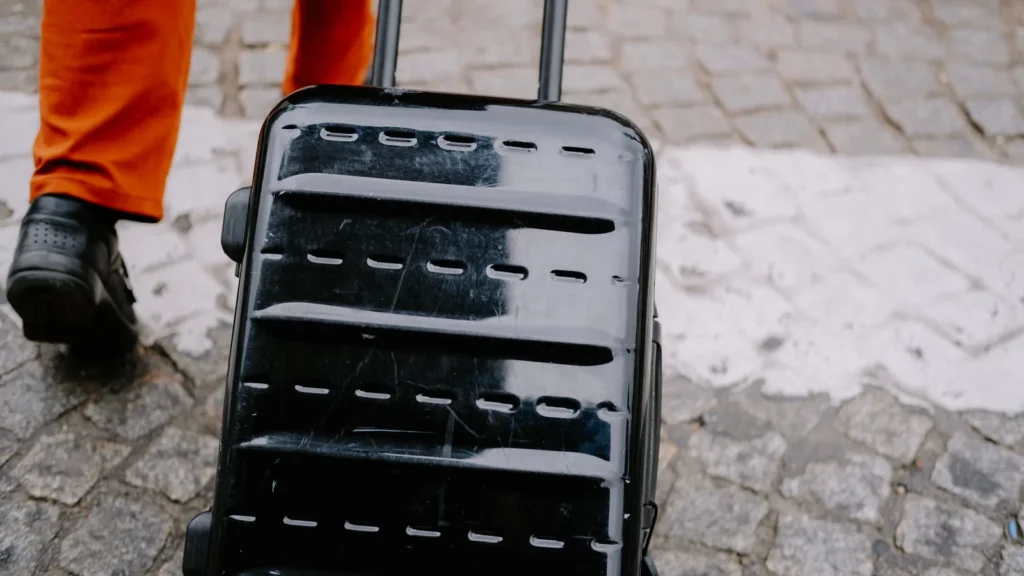
Most pilgrims travelling from Jeddah Airport to Makkah pack for more than a normal holiday. Between everyday clothes, Ihram garments, gifts for family back home, and items bought for the trip itself, luggage volumes on this route regularly run higher than a typical airport transfer. If you know roughly what to expect from a private taxi’s boot space, and how to plan ahead when you are carrying more than the average pilgrim, the transfer from Jeddah to Makkah stays simple rather than becoming a scramble on the kerb.
Reviewed planning guidance. Vehicle capacity and luggage handling vary by provider and vehicle class. Always confirm bag count and size with your transport provider at the time of booking, and check your airline’s own baggage allowance separately, since that is set by the airline, not by the ground transport company.
What “excess luggage” usually means for pilgrims
On the Jeddah to Makkah route, excess luggage rarely means a single oversized case. More often it means a family or small group arriving with a combination of items: standard checked suitcases, a holdall or two of Ihram clothing and towels, hand luggage that would not fit under an aircraft seat, and sometimes bulky extras such as a folding wheelchair, a car seat, or boxes of Zamzam water and gifts collected during the visit. Individually, none of these look excessive. Together, they can exceed what a standard saloon car can carry comfortably.
Why this route in particular sees more of it
Jeddah Airport to Makkah is usually the very first leg of a pilgrim’s journey in Saudi Arabia, so travellers are carrying everything they packed for the entire trip in one go, rather than having already dropped bags at a hotel. It is also common for several members of an extended family to land on the same flight and share one transfer, which multiplies the luggage total even if each individual bag is a normal size.
How much a private taxi can realistically carry
Vehicle capacity depends entirely on the class of car booked, so this is the single most useful thing to get right before you fly.
Saloon and estate cars
A standard saloon taxi is built for one to three passengers and their normal luggage load, typically two full-size suitcases plus a couple of pieces of hand luggage in the boot, with anything extra needing to go on laps or a rear seat. If you are travelling as a couple with two large cases and a smaller bag each, a saloon is usually fine. Add a third traveller with their own bags, or bring Ihram holdalls in addition to your main cases, and the boot space runs out quickly.

SUVs and larger vehicles
For three to five passengers with a full luggage load, or for two passengers carrying noticeably more than usual, an SUV or larger estate-class vehicle gives you meaningfully more boot and rear-seat space. This is the vehicle class most pilgrim transport providers recommend by default for any group carrying Ihram bags in addition to normal luggage.
Vans and minibuses for larger groups
Family groups of six or more, or any group with a genuinely heavy luggage total, are usually better served by a van or minibus rather than trying to split into multiple saloon cars at short notice at the airport. This also keeps the group together for the journey, which matters more than it might seem after a long flight.
Ihram related extra bags
Ihram clothing adds a small but predictable amount of extra luggage that is easy to plan for once you know it is coming. Many pilgrims travel in their day clothes and change into Ihram either before boarding their flight, at the airport, or once past the miqat, which means a spare change of clothes, a small towel set, and sometimes unstitched Ihram cloths need to travel as an additional bag rather than being folded into a main suitcase. If your Ihram change happens close to landing or shortly after, keep this bag as something you can access easily and mention it, alongside your suitcase count, when you book your transfer, so the driver knows to expect one more item than the case count alone would suggest.

Roof racks and extra vehicle options
Roof racks are not a standard fitting on private taxis operating out of Jeddah Airport, and providers generally will not improvise one on the day, so it is not something to plan around. If a group’s luggage genuinely will not fit inside a single vehicle even in an SUV or van class, the practical solution is booking a second vehicle for the same pickup time rather than trying to overload one car. This is worth arranging in advance rather than requesting it at the kerb, since it depends on vehicle availability at the time your flight lands.
When a second vehicle makes sense
A second vehicle is usually the right call for large family or group bookings, for anyone travelling with mobility equipment in addition to normal luggage, or for groups carrying bulk items such as multiple boxes of supplies. Splitting into two vehicles also means the journey is not held up if one car’s luggage load makes loading and unloading slower at each end.
Practical advice for pilgrims arriving with excess baggage
Declare your bag count when you book
The single most useful step is telling your transport provider your exact bag count, including hand luggage and any Ihram bag, when you book rather than on arrival. This lets the provider assign the right vehicle class before your flight even lands, instead of trying to solve a mismatch at the kerb after a long journey.
Keep essentials accessible
Pack anything you will need in the first hour after landing, medication, your Ihram change if it happens after arrival, and travel documents, somewhere you can reach without opening a case in the car park. Loading and unloading goes faster when only one bag needs to be reachable rather than the whole set.
Check your airline allowance separately
Ground transport capacity and airline baggage allowance are two separate limits, and confirming one does not confirm the other. Check your airline’s checked and hand baggage allowance directly with them before you fly, since excess baggage fees at check-in are outside your taxi provider’s control and are set entirely by the airline.
Tell your provider about bulky or fragile items
Folding wheelchairs, car seats, musical instrument style cases, or boxed items are all things a provider can plan around if they know in advance. Mentioning these at booking, rather than as a surprise at pickup, is what keeps the vehicle choice right the first time.
Booking the right vehicle for your luggage
The simplest way to avoid a squeeze on the Jeddah to Makkah road is to match the vehicle to the honest total of what you are carrying, not just the number of passengers. Count every bag, including the Ihram bag and hand luggage, before you book, and if you are close to the edge between a saloon and an SUV, choose the larger class. It costs less than the stress of repacking bags on the pavement outside the terminal after an overnight flight, and it means the first hour of your pilgrimage starts calmly rather than with a luggage puzzle.
Related guides
- Jeddah Airport to Makkah: What to Expect on Your Umrah Transport Journey
- Umrah Transport for Families: Seats, Pushchairs and Luggage
- What Pilgrims Should Pack for Long Intercity Transport Journeys