

Reviewed planning guidance. This article is general planning guidance for pilgrims arranging ground transport for Umrah or Hajj. Always check your airline’s current baggage rules and the latest Nusuk guidance before you travel.
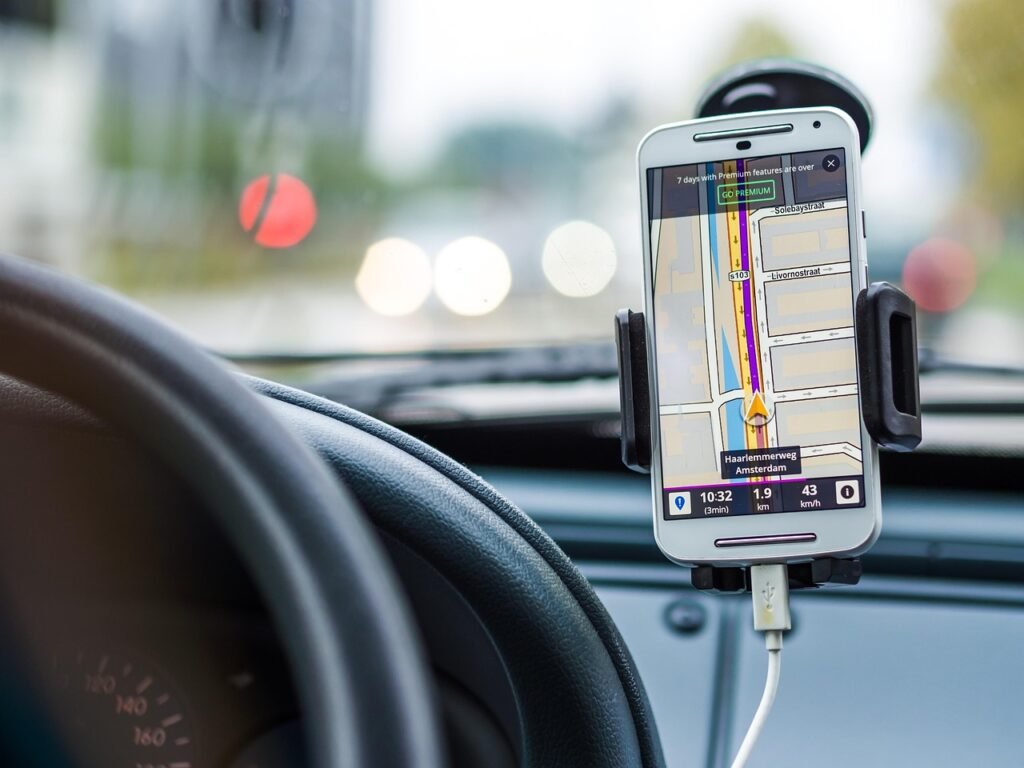
A long transfer from Jeddah Airport to Makkah, or an intercity journey between Makkah and Madinah, can easily run two to five hours once you account for traffic, prayer stops and rest breaks. For most of that time your phone is doing more work than usual: showing your Nusuk permit, holding your boarding passes, guiding your driver, and keeping family back home updated. A flat battery at the wrong moment, whether that is at a checkpoint, a hotel check-in desk, or simply when you need to reach your group leader, turns a minor inconvenience into real stress. Staying connected during Hajj also means coping with patchy signal near the holy sites during the busiest days, not just keeping the battery topped up, so it helps to plan for both. A little planning before you set off removes almost all of that risk.
Why transfer days drain your phone faster than the rest of your trip
Ordinary sightseeing days rarely tax a phone battery the way a long transfer does. On a transfer day you are typically using GPS or a maps app almost continuously, keeping messaging apps open to coordinate with a driver or group, taking photographs of the journey, and possibly using a translation app at rest stops. Screen brightness tends to stay high because you are outdoors or in bright terminal lighting. All of this pulls far more power than a normal day of walking between the Haram and your hotel with the phone mostly locked in your pocket.
Heat adds another factor. Saudi Arabia’s climate, particularly outside the winter months, can push a phone’s internal temperature up quickly if it sits in direct sun on a dashboard or by a window. Many phones throttle performance or refuse to charge at all once they get too hot, which can leave you with a device that is plugged in but barely gaining charge. Leaving a phone resting on a parcel shelf or against a window for a long stretch of an intercity transfer is one of the easiest ways to end up with an overheated device that will not charge properly even when it is plugged in.
What to pack so you are never relying on a single charge
The single most useful item for a long transfer is a fully charged portable power bank. A few practical points worth knowing before you buy or pack one:
- Airline rules generally require power banks to travel in hand luggage, not checked bags, and most carriers cap the size you can bring on board, so check your airline’s current limit before you fly.
- A power bank in the 10,000 to 20,000 mAh range is usually enough for a full transfer day plus a top-up in the evening, without adding excessive weight to your hand luggage.
- Pack a short, sturdy charging cable as a spare. Cables are the part most likely to fail or go missing partway through a trip.
- A basic car-style USB adapter is worth carrying even if your transport vehicle already has USB ports, since not every vehicle’s ports deliver a fast or reliable charge.
- If you are travelling from the UK, remember Saudi Arabia uses the same three-pin plug type as the UK in most modern buildings, so a travel adapter is often unnecessary for UK travellers, though it is worth checking your specific charger.
- Consider carrying a spare set of headphones or earphones as well, since these are useful for listening to recitations, calls with family, or navigation prompts without draining your speaker volume or disturbing fellow passengers.

Why staying connected matters specifically for pilgrims
Beyond the ordinary reasons to keep a phone charged while travelling, pilgrims carry a particular kind of digital dependency. Your Nusuk permit and related documentation are typically accessed through the platform’s app or website, and officials at various points during Hajj may ask to see this on your phone. Check the latest guidance on nusuk.sa for exactly what needs to be shown and when, since requirements can be updated between seasons. If your phone is dead at a checkpoint, a flight gate, or a hotel reception desk, you cannot produce that information on demand, even if everything is technically in order.
The same applies to hotel booking confirmations, your transport driver’s contact details, and any e-visa or entry documentation stored digitally. A transfer day is precisely when you are most likely to need several of these things in quick succession, often in an unfamiliar environment where you cannot easily borrow someone else’s phone or find a print shop.
Connectivity itself is worth thinking about separately from battery life. During the busiest days of Hajj, particularly around Mina, Arafat and Muzdalifah, mobile networks are handling an enormous concentration of devices in a small area, and data speeds can slow down noticeably even with a full charge and full signal bars. A simple text message or a voice note often gets through when a video call will not, so it is worth agreeing with your group or family in advance that short messages, rather than calls, will be the default way of checking in on the busiest days.
Backup habits that do not depend on your phone at all
However good your charging setup, it is worth building in a layer of redundancy that has nothing to do with electronics. Before a long transfer, take a few minutes to:
- Save a screenshot of your Nusuk permit, hotel booking, and driver or transport confirmation to your phone’s gallery, not just an app, so it is viewable even with patchy data.
- Print a single paper copy of your key documents and keep it in your hand luggage. This costs nothing and takes seconds if you have access to a printer before you leave home.
- Write down your group leader’s or driver’s phone number on paper as well as storing it digitally, in case your phone is unreachable for any reason.
- Tell a family member or fellow pilgrim your rough transfer schedule before you set off, so someone else knows roughly where you should be and when.
- Agree a simple meeting point with your group in advance, such as a specific gate number or hotel lobby feature, so you have somewhere to head to even if messages are not getting through.
None of this replaces a working phone, but it means a flat battery becomes an inconvenience rather than a genuine problem.
Charging realities in airports and vehicles
Charging points at Jeddah and Madinah’s airports are generally available around gate areas and lounges, but they are shared with a high volume of travellers, particularly during peak Umrah and Hajj periods, and free sockets can be hard to find exactly when you need one. Arriving with a topped-up phone and a charged power bank removes the need to compete for an outlet the moment you land. It is also worth keeping your power bank somewhere accessible in your carry-on rather than buried at the bottom of a bag, since you may be asked to remove it for separate screening at security in some terminals.
Inside a pre-booked vehicle, charging options vary by car and by provider. Some vehicles have USB ports built into the dashboard or rear seats, others do not, and cigarette-lighter adapters are not always supplied as standard. If reliable in-transit charging matters to you, it is worth asking your transport provider what is fitted in the vehicle before your journey, rather than assuming, and bringing your own power bank as the reliable fallback regardless of the answer.

Building a simple connectivity plan for transfer day
A short routine the night before a transfer removes most of the guesswork. Charge your phone and power bank fully overnight, confirm you have your key documents saved offline as well as in an app, pack your cable and adapter somewhere easy to reach rather than buried in checked luggage, and check that your UK or EU mobile plan’s roaming allowance, or your local SIM, will actually work for the day ahead. If you are relying on a local SIM or an eSIM, it is worth activating and testing it before you set off on a long transfer rather than discovering a problem once you are already on the road, since shops selling SIM cards are far easier to find in the city than partway along a motorway. It is also worth reviewing the latest official travel advice before you fly. The gov.uk foreign travel advice for Saudi Arabia is a reasonable starting point for general planning, and sa.usembassy.gov publishes similar guidance for pilgrims travelling from the United States. None of this takes more than a few minutes, but it is far easier to do calmly at home than while queuing for a vehicle with a battery already at ten per cent.
Frequently asked questions
Q: Can I bring a power bank in my hand luggage for a Hajj or Umrah flight? A: Most airlines allow power banks in hand luggage but not in checked bags, and there is usually a capacity limit. Check your specific airline’s current rules before you pack, since limits can differ between carriers and change over time.
Q: Do UK phone chargers work in Saudi Arabia without an adapter? A: Saudi Arabia commonly uses the same three-pin socket type as the UK in modern hotels and buildings, so many UK travellers do not need an adapter, though it is sensible to check your own charger’s plug type before you travel.
Q: Should I rely on my phone alone to show my Nusuk permit at checkpoints? A: It is safer to have a saved screenshot and, where practical, a printed copy as backup. Check the latest requirements on nusuk.sa, since what needs to be shown and how can change between seasons.
Q: Will my transport vehicle have a charging point? A: This varies by vehicle and provider. It is worth asking your transport company in advance rather than assuming, and carrying your own power bank as a reliable fallback either way.
Q: How much power bank capacity do I actually need for a transfer day? A: A power bank in the 10,000 to 20,000 mAh range is generally enough to fully charge a phone more than once, which comfortably covers a long transfer plus normal use that evening.
Q: What is the biggest cause of phones losing charge quickly on a transfer? A: Continuous use of maps or GPS apps, high screen brightness in bright light, and heat from direct sun on a dashboard or window are the most common causes on a long road journey.
If you would like help matching your plans to the right vehicle, Hajj & Umrah Taxi can put together a fixed-price quote based on your exact travel details. Get in touch before you fly and we will make sure your transport is arranged around how you are actually travelling, not the other way round.