

Reviewed planning guidance. This article is general planning guidance for pilgrims arranging ground transport for Umrah or Hajj. Always check your airline’s current baggage rules and the latest Nusuk guidance before you travel.
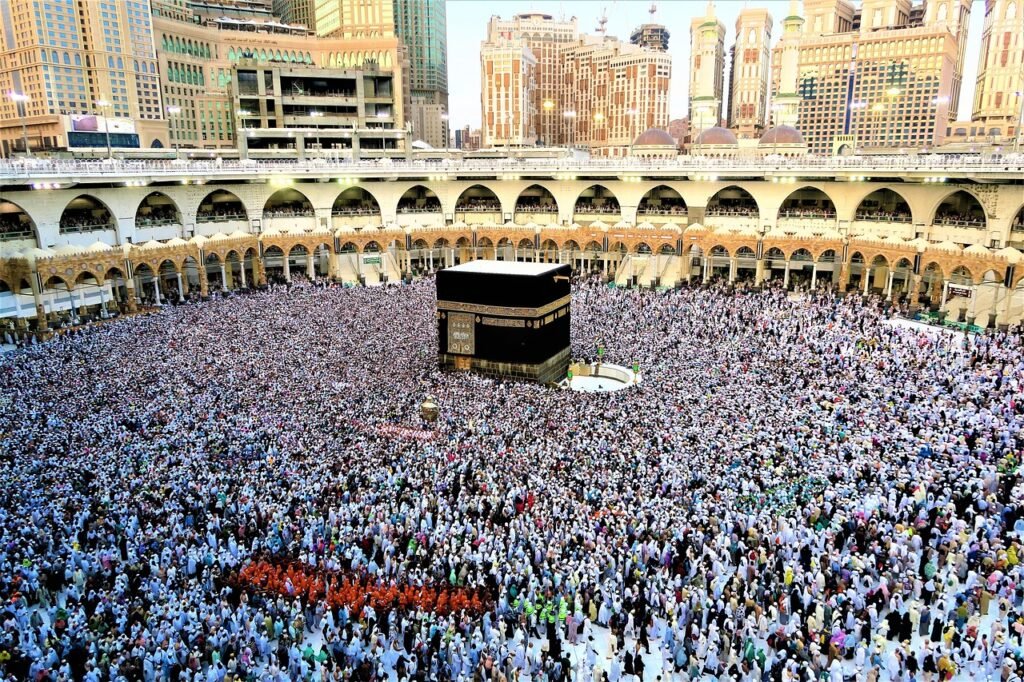
The final two weeks before Dhul Hijjah are the busiest and most compressed period on the entire Hajj calendar. Millions of pilgrims arrive within a narrow window, and the roads, airports and vehicles that serve them come under pressure all at once rather than gradually. If you are still finalising how you will move between the airport, Makkah, Madinah and the holy sites, understanding what changes in these final days will help you plan around it rather than be caught out by it.
Why demand accelerates so sharply in the final fortnight
Hajj has a fixed set of dates each year, and almost every pilgrim needs to be in or near Makkah before the rites begin. Unlike Umrah, which can be spread across months, Hajj travel concentrates into a short arrival window that ends before the standing at Arafat. That means airport arrivals, hotel check-ins and transport bookings that would normally spread across weeks instead land inside a fortnight.
For transport providers, this shows up as a sharp step change rather than a slow build. A driver who might comfortably manage several bookings a day in an ordinary week suddenly has far more requests for the same dates, often for the same few hours after major flight banks land at Jeddah or Madinah. Vehicles that are free on one day can become fully committed within days as more pilgrims lock in their final travel details.
It also matters that pilgrims are not the only travellers moving through Jeddah and Madinah at this time. Group operators, official Hajj mission convoys and family parties are all trying to secure vehicles for broadly the same dates, and they are often working from the same pool of licensed drivers and vehicles. A provider that comfortably serves both individual pilgrims and larger groups in an ordinary month has to plan its fleet and driver rotas well ahead of the fortnight itself, precisely because there is so little slack left once the surge actually begins.
What becomes harder to secure as Dhul Hijjah approaches
It is not that transport disappears. It is that the easy, flexible options thin out first, leaving pilgrims who wait until the last moment with fewer choices and less room to negotiate timing. In practical terms, the things that tend to tighten first are:
- Larger vehicles for families or groups, since these are booked in blocks well ahead of the rush
- Late evening or overnight transfers between Makkah and Madinah, when many pilgrims prefer to travel to avoid daytime heat
- Airport pickup slots that line up with the busiest arrival banks in the days immediately before Dhul Hijjah begins
- Ziyarah trips to sites around Makkah and Madinah, which get pushed down the priority list as drivers focus on core airport and intercity journeys
- Same-day or next-day bookings generally, as more capacity is absorbed by pilgrims who booked weeks in advance
None of this means transport becomes unreliable. It means the margin for changing your mind at short notice narrows considerably, and pilgrims who confirm their plans earlier tend to get the option, vehicle type and timing they actually wanted rather than whatever is left.

Road access, checkpoints and locking in your transport timeline
As Dhul Hijjah gets closer, movement in and around Makkah, Mina, Arafat and Muzdalifah becomes more tightly managed. During the Hajj period itself, access to these areas is controlled and generally restricted to pilgrims and vehicles operating under valid Hajj permits, with checkpoints in place to manage the sheer volume of people converging on a small area over a few days. This is a safety and crowd management measure, not an inconvenience aimed at any one group of pilgrims, and it is worth planning your movements with it in mind rather than assuming the roads will behave as they do outside the season.
The practical effect for transport is that journeys which are straightforward in the weeks before Dhul Hijjah, such as a short taxi ride across Makkah, can take considerably longer once the city fills and access routes are reorganised. Building in extra time for any journey scheduled in the final days before Hajj begins is sensible, and confirming your permit and transport arrangements align is worth checking against the latest official guidance on hajj.nusuk.sa before you rely on either.
This is also the period when your Hajj permit and your Nusuk booking details need to be consistent with each other and with whatever transport you have arranged. A mismatch that would be a minor inconvenience to sort out in a quieter month becomes far harder to fix once the final fortnight is under way and everyone else is also trying to resolve last-minute questions with the same offices and platforms.
Most of this pressure can be avoided simply by confirming transport earlier rather than leaving it to be arranged on arrival. A reasonable approach is to treat the final fortnight as a deadline rather than a starting point:
- Confirm your Jeddah or Madinah airport transfer as soon as your flights are booked, ideally well before the final weeks of Dhul Qadah
- Fix your Makkah to Madinah (or Madinah to Makkah) intercity transfer date and approximate time, even if you keep some flexibility either side
- Decide early whether you need a larger vehicle for a family or group, since this is the category that fills fastest
- Leave Ziyarah trips until closer to the time, but do not assume they can be arranged the same day once the city is busy
As a point of reference, transfers such as Jeddah Airport to Makkah start from 220 SAR, Makkah to Madinah from 550 SAR, and Madinah Airport transfers from 100 SAR when booked as fixed-price journeys rather than negotiated on the spot. Fixed pricing agreed in advance also removes one more thing to negotiate during a period when everyone else is trying to do the same.
Why arrival timing and hotel check-in windows matter more now
Outside the final fortnight, a flight that lands a few hours later than planned is a minor inconvenience. Inside it, that same delay can push your airport pickup into a much busier window, particularly if it lands close to a peak arrival bank when several flights from the UK, Europe or elsewhere touch down within a short space of each other. Sharing your actual flight details with your transport provider, rather than an approximate arrival time, gives them a realistic chance of having a vehicle and driver ready when you land rather than scrambling to fit you in.
The same logic applies at the other end of the journey. If your hotel in Makkah or Madinah has a fixed check-in time, or if your group is arriving in stages, it is worth telling your transport provider so they can plan pickups around it rather than assuming everyone in a family or group is ready to leave at once. Small pieces of information like this cost nothing to share in advance but make a real difference once the fortnight’s pressure is in full swing.

If your plans change or you arrive in the final rush
Not every pilgrim has the luxury of booking months ahead. Visa approvals, group arrangements or personal circumstances sometimes mean transport has to be confirmed inside the final fortnight regardless. If that is your situation, a few things make a genuine difference. Contact your transport provider as early as you can within that window rather than on the day, be flexible about pickup timing where possible, and keep your Nusuk booking reference and transport confirmation together so you are not searching for details while you are travelling. It is also worth checking the UK government’s foreign travel advice for Saudi Arabia in the days before you fly, since guidance on entry requirements and local conditions can be updated as the season approaches.
If you are travelling with elderly relatives or young children, the final fortnight is not the time to assume something can be sorted out on arrival. Confirming vehicle type and timing in advance protects the people who need the most predictability, even if it means accepting a slightly less convenient time than you would have preferred.
Frequently asked questions
Q: How many days before Dhul Hijjah should I confirm my transport? A: Aim to have your airport transfer and any intercity journey confirmed at least two to three weeks before Dhul Hijjah begins, since vehicle availability tightens fastest in the final fortnight.
Q: Will I still be able to book a taxi if I arrive in the last few days before Hajj? A: Transport is still available, but choice narrows considerably, particularly for larger vehicles and specific pickup times, so book as early as you can within that window.
Q: Why do journeys around Makkah take longer close to Dhul Hijjah? A: Access to Makkah, Mina, Arafat and Muzdalifah becomes more tightly managed as the city fills with pilgrims, and checkpoints are introduced to control the volume of people and vehicles, which naturally slows normal journeys.
Q: Should I book a fixed-price transfer or arrange transport on arrival? A: A fixed-price transfer booked in advance removes the uncertainty of negotiating on the spot during the busiest period of the year and secures your vehicle before the rush affects availability.
Q: Does Ziyarah transport get harder to arrange close to Hajj? A: Yes, drivers tend to prioritise core airport and intercity journeys during the final fortnight, so Ziyarah trips are best planned with some flexibility rather than assumed to be available same day.
Q: Where can I check the latest official guidance before I travel? A: Check hajj.nusuk.sa for permit and platform guidance and the UK government’s Saudi Arabia travel advice for any updates closer to your departure date.
If you would like help matching your plans to the right vehicle, Hajj & Umrah Taxi can put together a fixed-price quote based on your exact travel details. Get in touch before you fly and we will make sure your transport is arranged around how you are actually travelling, not the other way round.