

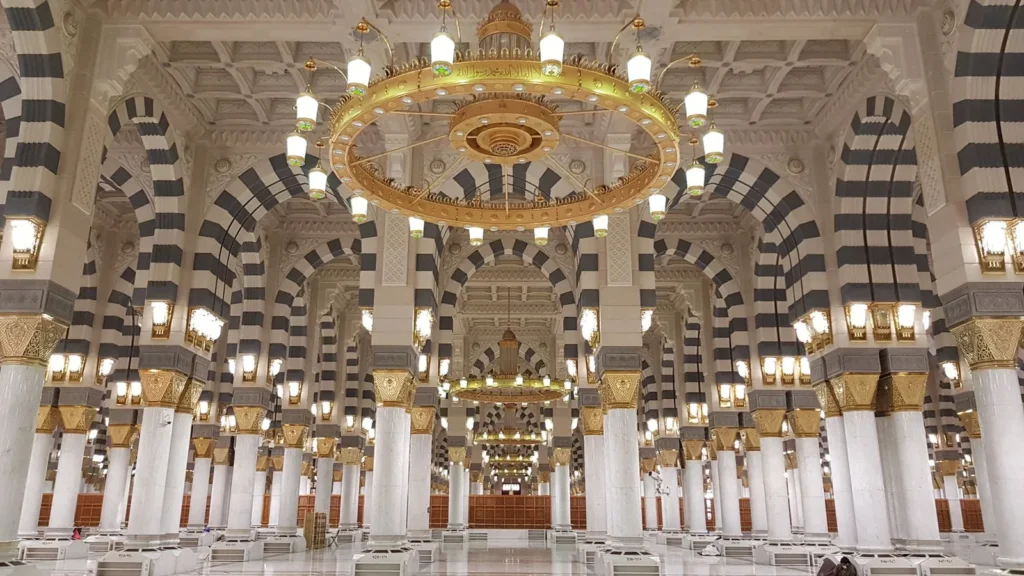
Registering for itikaf at the Prophet’s Mosque is the part of a Ramadan trip with the least room for improvisation. Places are allocated in advance, and the dates hang on a month whose exact length nobody knows at the time the flights are booked.
The last ten days of Ramadan are the busiest single stretch of the Umrah calendar, and nowhere feels that more than Prince Mohammad Bin Abdulaziz International Airport in Madinah. Pilgrims travelling to catch Laylat al-Qadr, itikaf and the final Taraweeh prayers of the month arrive in far greater numbers than usual, and the airport experience changes noticeably as a result. Knowing what to expect helps you plan a realistic transfer and avoid the frustration of a delay you had not budgeted for.
Why the last ten nights draw such a surge
Many Muslims specifically time their Umrah trip to catch the odd nights of the last ten days of Ramadan, when Laylat al-Qadr is believed to fall. Airlines add extra services and larger aircraft on routes from the UK and other major Umrah source markets during this window, and Madinah becomes a preferred entry point for pilgrims who want to spend the final stretch of Ramadan at Masjid an-Nabawi before moving on to Makkah. The result is a sustained surge in arrivals that peaks around the 20th night of Ramadan and stays elevated through to Eid.

What actually changes at the airport
Arrivals halls and immigration
Immigration queues lengthen considerably during this period, simply because more flights are landing closer together and each one is fuller than average. Saudi authorities typically add extra desks and staff to manage the flow, but even with that support, pilgrims should expect immigration processing to take longer than it would outside Ramadan, particularly for flights arriving in the evening once Taraweeh has finished and demand for onward transport peaks.
Baggage reclaim
With more aircraft cycling through in a shorter window, baggage reclaim can be slower and busier than usual. Carousels fill up quickly and porters are in high demand, so it is worth keeping hold of any valuables and essential items in hand luggage rather than relying on a swift bag collection.
Kerbside pickup areas
The pickup and drop-off zones outside the terminal see the most visible change. Traffic marshals manage a steady stream of taxis, private transfers and group buses, and during peak hours it can take longer for a driver to reach the designated meeting point once you have cleared the terminal. This is where a pre-booked transfer with a clear meeting instruction makes the most difference, since drivers familiar with the airport’s Ramadan patterns can plan around the busiest slots.
How this affects your transfer booking
During the last ten days of Ramadan, transport demand in Madinah does not just come from the airport. Hotels near Masjid an-Nabawi are full, taxis are in heavy demand for the short hop to and from the mosque for each prayer, and drivers themselves are often balancing longer working hours around their own fast and prayer commitments. All of this means that booking your airport transfer well in advance, rather than expecting to arrange one on arrival, is far more important during this window than at quieter times of year.
It also helps to build extra time into your plans. A transfer that might take twenty five minutes from the airport to a central hotel outside Ramadan could reasonably take forty five minutes to an hour once you add immigration queues, baggage collection and busier roads into the mix, especially if your flight lands in the hours immediately before or after iftar.

Timing your arrival around prayer and iftar
If you have any flexibility over your arrival time, it is worth thinking about how it lines up with the day’s prayer and fasting schedule. Flights that land in the couple of hours before Maghrib can mean a rushed transfer as everyone, including your driver, is racing to break their fast on time. Arrivals a little later in the evening, after iftar, often move a touch more smoothly, though the roads around the Haram remain busy well into the night as pilgrims head out for Taraweeh and, on the odd nights, for extended night prayers.
Daytime arrivals during the last ten days tend to be calmer at the airport itself, though the heat and the fasting hours mean drivers and pilgrims alike are often more comfortable avoiding unnecessary waiting around in the open.
Practical tips for travelling during this period
- Book your Madinah airport transfer well ahead of travel, ideally as soon as your flight is confirmed, since demand for reliable transport peaks alongside flight arrivals.
- Share your flight number with your transport provider so they can track any delays, which are more common during this busy period.
- Keep essentials, including any medication and a change of clothes, in hand luggage in case baggage reclaim takes longer than expected.
- Allow extra time between landing and any plans that depend on a fixed schedule, such as joining family already in Madinah for a specific prayer.
- Stay hydrated and comfortable while waiting, since queues and pickup waits can be longer than usual even with good planning.
In summary
The last ten days of Ramadan bring a genuine, predictable surge to Madinah airport, from fuller immigration queues to busier pickup zones. None of this is unmanageable, but it does call for a bit more planning than a quieter month. Book your transfer early, share your flight details, and build a little extra time into your schedule so the excitement of arriving for the final stretch of Ramadan is not overshadowed by an avoidable wait.
Related guides
- Where to Meet Your Driver at Madinah Airport
- Ramadan Umrah: Why Transport Gets Busier and How to Plan Ahead
- Connecting Flights Through Madinah: Transport Timing for Tight Layovers
Checked sources
- Tibah Airports, operator of Prince Mohammad Bin Abdulaziz International Airport
- GOV.UK, Saudi Arabia travel advice: Pilgrimage
How to register for itikaf in Masjid Nabawi
Places are limited and issued through the official platform for the Prophet’s Mosque rather than at the door, so this is closer to applying than to turning up. Registration opens in a defined window before the last ten nights and closes once the places are gone. Have identity and travel documents to hand for the moment the window opens, and read the conditions published for your own year, because what is asked of applicants has not been identical every Ramadan.
How to book itikaf
Booking itikaf is not a purchase. A place is granted, not sold, so treat anyone offering to secure one for a payment as outside the system. If you are not granted a place, you can still spend the nights in the mosque under the ordinary rules for worshippers, which is not the same as being a registered mutakif.
When itikaf starts, and how long it lasts
When does itikaf start in 2026?
The itikaf of the last ten nights begins with the night of the twenty-first, which in practice means being inside the mosque before Maghrib on the twentieth day of Ramadan. The Gregorian date moves with the sighting of the moon, so work from the day of the month, not a date circulated before Ramadan is announced.
How long does itikaf last, and when does it end?
It runs to the end of the month. You leave once Ramadan closes at sunset on its final day, and many stay on for the Eid prayer the next morning. Because Ramadan may be twenty-nine or thirty days, the finishing night is not known when you book, so leave that uncertainty in your return arrangements rather than treating it as a fixed ten-day block.