

Reviewed planning guidance. This article is general planning guidance for pilgrims arranging ground transport for Umrah or Hajj. Always check your airline’s current baggage rules and the latest Nusuk guidance before you travel.
Eid al-Fitr and Eid al-Adha are the two busiest points on the pilgrimage calendar for a reason that has nothing to do with religious obligation and everything to do with timing. Millions of people finish Ramadan Umrah or complete Hajj in the same handful of days, and they all want to move through the same airports, the same highways and the same holy sites at once. If you are planning to travel around either Eid, the transport side of your trip needs a different approach than it would at any other time of year. Flights land closer together, roads carry more traffic for longer stretches of the day, and the ordinary gap between arriving and getting to your accommodation can stretch out simply because everyone else is moving at the same time. Understanding why each Eid behaves the way it does is the first step to booking transport that holds up under that pressure rather than being caught out by it.
Why the two Eids create such different pressure points
Eid al-Fitr and Eid al-Adha look similar on a calendar but behave very differently for anyone booking transport. Eid al-Fitr marks the end of Ramadan, and it lands at the tail of the busiest Umrah month of the year. Demand builds gradually through Ramadan as more pilgrims arrive to perform Umrah in the final ten nights, then crests in the days immediately before and after Eid, when a huge number of people are trying to leave Makkah and Madinah at the same time that new arrivals are still coming in for the holiday itself.
Eid al-Adha sits inside Hajj season and follows a sharper, shorter curve. It falls on the tenth day of Dhul Hijjah, right after the main Hajj rites at Mina and Arafat, so the transport surge is compressed into a narrower window and overlaps directly with the movement of pilgrims completing their final rites and heading home. The practical result is that Eid al-Fitr pressure is broader but more predictable, while Eid al-Adha pressure is shorter but harder to plan around because it is tied to the fixed sequence of Hajj days.
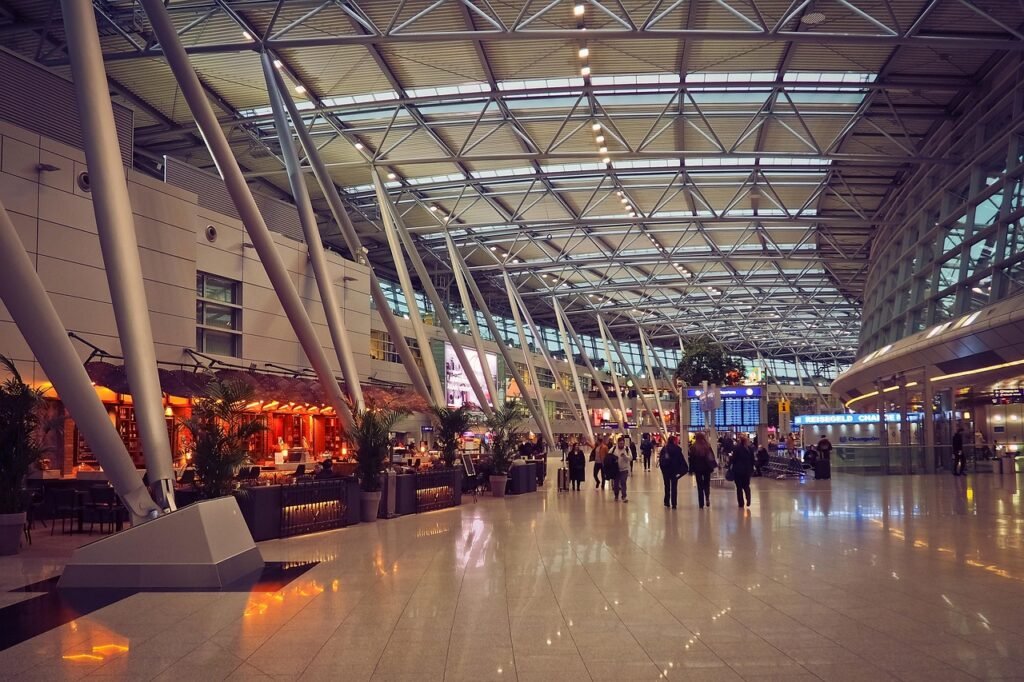
Both spikes converge on the same physical pinch points. Jeddah Islamic Airport and Prince Mohammad Bin Abdulaziz Airport in Madinah handle far higher arrival and departure volumes in these windows, the Haramain High Speed Rail stations see longer queues at ticket gates, and the Makkah to Madinah highway carries more coaches and private vehicles than on an ordinary week. None of these locations change what they are during Eid, but the sheer number of people passing through them at once changes how long everything takes, from checking in to reaching your hotel.
The Eid al-Fitr crowd: the end of a month-long build-up
Ramadan Umrah demand does not appear overnight. It climbs steadily from the first week, with a noticeable jump in the last ten nights as pilgrims seek out Laylatul Qadr, and it peaks around the transition into Shawwal. This means Eid al-Fitr transport pressure is really the final spike of a month-long pattern, not an isolated event. Drivers, vehicles and airport pickup slots that were merely busy in week one of Ramadan can be fully booked out by the last week.
Two groups collide at this point. Pilgrims who arrived early in Ramadan are trying to leave before or just after Eid, often on the same flights and the same highway routes as pilgrims who timed their trip specifically to be in Makkah for the holiday itself. Add UK, EU and US school holiday patterns that sometimes align with the end of Ramadan, and you get a genuine crunch on airport transfers, Makkah to Madinah routes and Ziyarah transport all in the same window.
Pilgrims who leave their transport until the last ten nights of Ramadan often find the choice is no longer between different vehicle types or providers, but between whatever is still available and no confirmed transport at all. Booking earlier in the month, even while your own travel dates still feel a long way off, is what keeps that choice open.

The Eid al-Adha crowd: transport inside Hajj season itself
Eid al-Adha transport demand is a different animal because it sits inside the fixed, non-negotiable sequence of Hajj days. Pilgrims move between Mina, Arafat and Muzdalimah on set dates, and Eid falls immediately after the standing at Arafat, when huge numbers of people are converging on Mina and then dispersing again. Anyone travelling for Hajj is working within official pilgrim transport arrangements for those core rites, but the days either side of Eid, when pilgrims are arriving before Hajj begins or departing after their rites are complete, are where independently booked ground transport matters most.
Because Hajj dates shift each year against the Gregorian calendar, the exact timing of this spike moves too. That is precisely why fixed advance planning matters more here than for almost any other trip: you cannot shift Eid al-Adha to a quieter week, so the only lever you have is booking your surrounding transport earlier and with more margin than you would for an ordinary Umrah trip.
It is worth remembering that this pressure is not confined to pilgrims performing Hajj itself. Many people travel to Makkah and Madinah for Umrah or Ziyarah in the weeks around Eid al-Adha without taking part in the Hajj rites, and they still share the same airports, highways and hotel districts as the much larger Hajj crowd. Treating an Umrah trip timed around Eid al-Adha as a normal-season booking is one of the more common planning mistakes pilgrims make.
How far in advance to book around each Eid
The honest answer is earlier than feels necessary. For Eid al-Fitr, that means booking airport transfers and any Makkah to Madinah legs as soon as your Ramadan travel dates are fixed, rather than waiting until the last ten nights when availability tightens fastest. For Eid al-Adha, it means locking in pre-Hajj and post-Hajj transport well before the Hajj season itself, since the days immediately after Eid see a wave of pilgrims all trying to depart within a similar short window.
- Confirm your Nusuk permit or Umrah visa dates before booking transport, so your ground transport dates match your actual travel window.
- Book airport pickups for the last third of Ramadan or the days after Eid al-Adha as early as your flights allow, not closer to the date.
- Build in a buffer day either side of Eid itself if your itinerary allows, since this is when roads and airports are at their most congested.
- If you are travelling as a family or a larger group, confirm vehicle capacity in advance rather than assuming a suitable vehicle will be available on short notice.
What actually changes on the ground during Eid week
It helps to know what you are planning around, not just that it is busy. During Eid week, journey times between Makkah and Madinah can lengthen noticeably compared with a quiet week, simply because more vehicles are on the same roads. Airport arrivals and departures halls run at higher volumes than usual, which can extend the time between landing and getting into a vehicle. Popular Ziyarah sites and areas near the Haram see more foot and vehicle traffic, so short local journeys that are normally quick can take longer than expected.
None of this means travel is unmanageable around Eid. It means that a transport plan built for an ordinary week, with tight connections and no slack, is more likely to come under strain during these specific windows. Building a little extra time into your itinerary around pickups and transfers is a simple, low-cost way to absorb that pressure without it affecting your plans.

Practical steps to protect your booking
A few habits make a real difference to how smoothly your transport runs during an Eid travel spike.
- Book your ground transport as a fixed, confirmed arrangement rather than relying on finding a vehicle on arrival, since availability tightens fastest in exactly the windows you need it most.
- Keep your booking confirmation and driver contact details accessible offline, in case connectivity is patchy in a crowded arrivals hall.
- Share your flight number and any changes with your transport provider as early as possible, so pickup timing can adjust if your flight is delayed during a busy period.
- Check the latest travel guidance on gov.uk’s Saudi Arabia travel advice before you fly, since it is updated as conditions change.
- If you are a US citizen, the sa.usembassy.gov pilgrim guidance page is worth reviewing alongside your transport plans.
It is also worth checking your permit and visa details directly against the official Nusuk platform before you confirm any transport booking, since a mismatch between your documented dates and your travel plans is far easier to sort out before you fly than once you have landed.
Frequently asked questions
Q: Is Eid al-Fitr or Eid al-Adha the busier time for transport? A: They are busy in different ways. Eid al-Fitr sits at the end of a month-long Ramadan Umrah surge, so pressure builds gradually and peaks around the holiday. Eid al-Adha pressure is shorter and sharper because it falls inside the fixed sequence of Hajj days.
Q: How early should I book transport for travel around Eid al-Fitr? A: As soon as your Ramadan dates are confirmed, ideally well before the last ten nights, since that is when demand and prices for available vehicles tend to tighten fastest.
Q: Does Eid al-Adha transport pressure affect people who are not performing Hajj that year? A: Yes. Anyone travelling for Umrah or Ziyarah around Eid al-Adha will still encounter busier roads and airports because of the wider Hajj season activity happening at the same time, even if they are not part of the official Hajj rites.
Q: Should I build extra time into my itinerary around Eid? A: It is a sensible precaution. Journey times between cities and through airports typically lengthen during Eid week, so a buffer day or a longer gap between connections reduces the chance of a tight schedule causing stress.
Q: Can I still get a fixed-price transport booking during an Eid travel spike? A: Yes, provided you book ahead rather than trying to arrange transport on arrival. Confirming your vehicle and pickup details in advance is the main way to keep both price and availability predictable during peak periods.
Q: What should I do if my flight is delayed during Eid week? A: Share your flight number with your transport provider when you book, and update them as soon as you know of any delay, so your pickup can be adjusted rather than missed.
If you would like help matching your plans to the right vehicle, Hajj & Umrah Taxi can put together a fixed-price quote based on your exact travel details. Get in touch before you fly and we will make sure your transport is arranged around how you are actually travelling, not the other way round.