

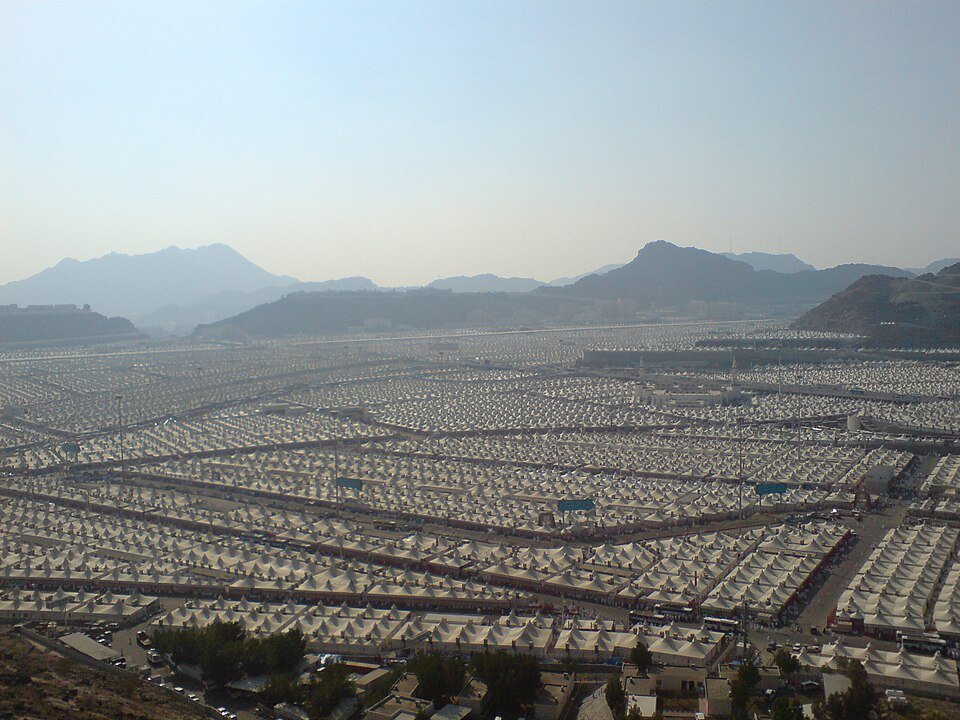
If you are travelling for Hajj as part of an organised group, one of the first practical questions you will face is how you actually move between Mina, Arafat and Muzdalifah during the Hajj days themselves. Two options tend to come up: the large SAPTCO bus fleets that form part of the official Hajj transport system, and privately arranged taxi or minibus transport. Both exist for good reasons, and understanding how they differ helps you plan realistically rather than assume one is simply “better” than the other.
What SAPTCO buses actually are
SAPTCO, the Saudi Public Transport Company, is the Kingdom’s national public transport operator. Beyond its everyday intercity coach routes between cities such as Jeddah, Makkah, Madinah and Riyadh, SAPTCO also supplies a significant share of the bus fleet used during the Hajj season to move pilgrims between the holy sites. During the days of Hajj, when several million people need to move between Mina, Arafat and Muzdalifah in a tightly compressed window, organised bus movements are one of the ways the Saudi authorities manage that scale safely.
In practice, access to these organised Hajj buses is usually arranged through your Hajj group, mission or the accredited service provider your Nusuk Hajj booking is linked to, rather than something an individual pilgrim books directly on the day. Seats, routes and timings are coordinated centrally as part of the wider crowd management plan for the Hajj days, which is why your camp, your Hajj operator or your national Hajj mission will normally tell you where and when to gather for your bus rather than you choosing a route yourself.
What a private taxi arrangement offers instead
A privately booked taxi or small vehicle, arranged in advance through a licensed transport provider, is a different kind of service. Rather than joining a scheduled group movement, you are booking a specific vehicle and driver for your party, at times you agree in advance where the Hajj traffic plan for the day allows it. For some pilgrims, particularly smaller family groups, older travellers, or those with mobility needs, this feels more manageable than joining a mass bus movement with a large group of strangers.
It is worth being realistic about the limits of private transport during the Hajj days, however. Traffic management around Mina, Arafat and Muzdalifah during the peak days is heavily controlled by the Saudi authorities, with many roads restricted to authorised Hajj transport at certain times. A private taxi cannot simply bypass these restrictions, and during the busiest hours movement by any vehicle, organised or private, will be slower than at any other time of year. Booking a private vehicle does not remove you from the Hajj transport system, it simply changes which part of it you are using.
Comparing the two side by side
Group size and flexibility
SAPTCO and other organised Hajj buses are built around moving large numbers of people on a fixed schedule tied to the wider Hajj movement plan. Private taxis suit smaller parties who want a set pickup point and a vehicle sized to their group, without waiting for a scheduled departure.
Cost
Organised bus transport during Hajj is typically included within your overall Hajj package or Muassasah service fee, so there is rarely a separate per-journey cost to think about. Private taxi transport is booked and paid separately, and pricing should always be agreed and confirmed in writing before Hajj begins, since demand and road restrictions on the Hajj days can affect availability.
Predictability
Buses follow the routes and timings set by the official Hajj movement plan for that year, which can shift at short notice if crowd conditions or weather change. A private taxi gives you a single point of contact for your own journey, but your driver is still working within the same road restrictions and timings that apply to everyone else on the Hajj days.
Why this is not really an either or choice
For most pilgrims performing Hajj through an organised package, movement between Mina, Arafat and Muzdalifah on the Hajj days themselves is arranged as part of that package, often using SAPTCO or similar organised bus services coordinated with your Muassasah or group leader. Private taxi transport tends to matter more either side of the Hajj days themselves, for example getting to your accommodation in Makkah before Hajj begins, or travelling back after the pilgrimage is complete, when the tightest crowd restrictions have eased.
If you are booking transport independently rather than through a full Hajj package, it is worth asking your provider directly and early how movement during the Hajj days themselves will be handled, since this is one of the areas where an accredited, experienced provider makes the practical difference between a smooth Hajj and unnecessary stress.
Questions worth asking before Hajj begins
- Is transport for the Hajj days included in your package, or will you need to arrange it separately?
- If organised buses are being used, who confirms your pickup point and timing, and how will you be told if this changes?
- If you are considering private transport for the Hajj days, does your provider have direct experience operating within the official Hajj traffic plan?
- What is the plan if road restrictions mean your usual pickup point is not accessible on a given day?
Whichever route you take, the Hajj days involve genuine physical demands and unavoidable crowding, whichever transport option you use. Building in extra time, staying close to your group leader or driver’s instructions, and keeping your booking confirmation and Nusuk documentation with you at all times will do more for a smooth journey than the choice between bus and taxi alone.
What first-time group leaders often get wrong
Pilgrims leading a group for the first time sometimes spend a disproportionate amount of energy deciding between SAPTCO buses and private taxis, when the more useful question is usually simpler: what has your Muassasah or accredited provider already arranged for the Hajj days, and where does your own decision making actually begin and end. Spend your planning energy confirming that detail clearly with your provider well before Hajj, rather than researching alternatives to a system that, for most pilgrims, is already largely decided by the package or mission they are travelling with.
It also helps to accept that comfort expectations need to shift for these few days. Even the most experienced private drivers and the most efficiently run bus fleets are working within the same road restrictions and the same enormous scale of movement. Neither option will feel like an ordinary taxi ride in a quiet city, and expecting that is where most of the frustration during Hajj day transport actually comes from, rather than any failing in the transport itself.
Frequently asked questions
Can I choose to use a private taxi instead of my group’s organised SAPTCO bus during the Hajj days?
In most cases movement during the Hajj days is fixed to your group’s coordinated plan for safety and crowd management reasons, so this is not usually a free choice. If you have specific needs that make the standard arrangement difficult, raise this with your group leader or provider well before Hajj begins rather than trying to arrange an alternative on the day.
Is SAPTCO the only company operating Hajj buses?
SAPTCO is the national public transport operator and a major part of the organised Hajj bus system, but Hajj transport during these days is coordinated as a whole system involving Saudi authorities, Muassasah establishments and accredited providers, rather than a single company operating in isolation.
Does a private taxi cost more than using the organised bus system?
Organised Hajj day transport is usually already included in your package or Muassasah service fee, so there is rarely an additional direct cost. Privately arranged transport is a separate, additional booking, so compare it against what is already included before assuming it is the better value option.
What should I do if I feel unwell or unable to continue during a Hajj day movement?
Tell your group leader, a nearby official, or medical personnel immediately. Extensive medical and support services are in place throughout the Hajj days specifically because of the physical demands involved, and asking for help early is always the right choice.
Related guides
- Mina, Arafat and Muzdalifah: Transport Logistics During Hajj Days
- Group vs Private Transport for Hajj: Which Is Right for Your Group?
- Visiting Mina, Arafat and Muzdalifah: getting around during Hajj
Checked sources
- Ministry of Hajj and Umrah, haj.gov.sa
- Nusuk Hajj platform, hajj.nusuk.sa
- GOV.UK, Saudi Arabia travel advice, pilgrimage section