

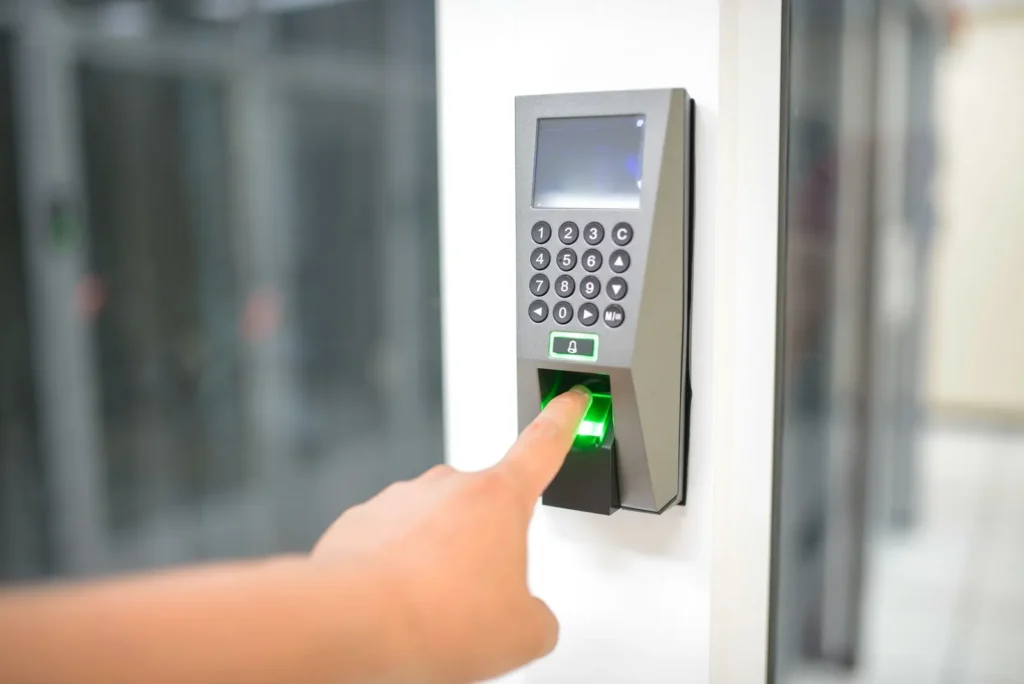
If you are applying for a dedicated Umrah visa from Britain, the Saudi Visa Bio biometrics step, completed in the Saudi Visa Bio app on your own phone, sits between submitting your application and receiving the visa. It records your fingerprints and a facial image so that UK applicants do not have to attend a visa centre, and it has to be completed before the visa is issued. The practical consequence for anyone arranging their own trip is simple: do not pay for transport, or anything else with a fixed date, until the biometrics are done and the visa is in hand. This guide explains who the requirement applies to, how the app works as published by its developer, where it fits in the sequence, and how the whole thing changes if you travel on a tourist or electronic travel authorisation instead.
Umrah visa biometrics for UK applicants: is it required?
For the Umrah visa itself, yes. In December 2022 the Saudi Ministry of Hajj and Umrah was reported as requiring pilgrims from five countries, the United Kingdom among them, to register biometric data, fingerprints and a facial image, through the Saudi Visa Bio app before an electronic Umrah visa could be issued. The app had been launched in the UK earlier that year at an event attended by the Saudi Embassy’s consular staff. As of October 2026 the app is still live and still lists the Umrah visa as the visa type it supports, so the requirement should be treated as current unless your agent or the Saudi Embassy tells you otherwise.
We cannot point you to a single English-language page on a Saudi ministry site that states the rule in plain words, and we would rather say that than pretend. What we can point to is the app’s own listing, published by the developer, the Ministry of Foreign Affairs of Saudi Arabia, which describes exactly who it is for and what it collects. If your Umrah visa is being arranged through a UK agent, the agent will normally tell you when to enrol and give you the application number you need.
What is the Saudi Visa Bio app and who publishes it?
Saudi Visa Bio is a free smartphone app published by the Ministry of Foreign Affairs of Saudi Arabia. It is available for iPhone on the App Store and for Android on Google Play. Both listings describe the same purpose: to let visitors to Saudi Arabia submit the biometric data needed for their visa application from a smartphone, without visiting or queueing at a visa service centre. The listings state that enrolment should take under ten minutes and that the data collected is deleted from the app once enrolment is complete.
As published in October 2026, the Android listing was last updated in July 2026 and the iPhone listing in May 2026, with an earlier update in February 2025 adding support for reading NFC-enabled passports. The App Store listing requires a recent version of iOS. The app is offered in English and ten other languages, including Urdu, Bengali, Malay and Indonesian, which tells you something about where its users come from.
Check the developer name before you download. The genuine app is published by the Ministry of Foreign Affairs KSA, and the Google Play listing gives a Riyadh postal address and a customercare@mofa.gov.sa support email. Anything else using similar words or logos should be ignored.
What does the app ask you to do?
The developer’s listings set out the components in the same order, and there is no reason to improvise around them.
- Apply for your Saudi visa first. The app is not a visa application; it needs a visa application number that already exists.
- Enter your personal details, passport details and visa application number, along with a valid email address that you can access on the phone you are using.
- Photograph your passport, including the details page. Phones that support NFC can read the chip, which is the update added in early 2025.
- Capture your face using the phone’s camera, following the on-screen framing.
- Capture your fingerprints, which the app does by photographing your fingers rather than using a hardware fingerprint reader.
The listings also set age rules: users must be six or older, and anyone under eighteen must be supervised by an adult while enrolling. In a family, that means each child aged six and over enrols separately on a parent’s phone, while younger children do not use the app at all. Follow whatever the app and your agent tell you for infants and under-sixes rather than assuming.
Why do so many people struggle with the fingerprint step?
Read the public reviews on either store and the same complaint appears repeatedly: the fingerprint capture takes many attempts, and some users report failing at the email verification stage. We are not in a position to diagnose the app, but the pattern in those reviews suggests a few practical steps that cost nothing to try.
- Enrol in a well-lit room with a plain, dark surface behind your hand, not against a patterned tablecloth or in direct sunlight.
- Wash and dry your hands, and remove rings that cast shadows across the fingers being photographed.
- Hold the phone still with the other hand resting on a table, rather than hovering in mid-air.
- Use a current phone with a good camera; an older or cracked device will struggle with the fine ridge detail the app is trying to read.
- Make sure the email address you enter is one you can open on the same device, so the verification code arrives while the session is still live.
If you cannot complete enrolment after a reasonable effort, stop and speak to your agent before your visa deadline rather than after it. Agents who handle many UK applications will know whether an in-person alternative is currently available through a visa service centre.
Where Saudi Visa Bio biometrics sit in the Umrah visa timeline
The sequence for a UK pilgrim on a dedicated Umrah visa runs in a fixed order, and the whole point of this article is that transport booking belongs near the end of it.
- Your agent or the Nusuk platform submits the visa application and generates an application number.
- You enrol your biometrics in Saudi Visa Bio using that number.
- The visa is issued electronically and you receive a copy with its issue date.
- A fixed window to enter Saudi Arabia starts from the issue date, and your permitted stay starts when you actually enter.
- You confirm flights, hotel and ground transport inside that window.
- You book your Umrah permit and, if you want one, a Rawdah slot through Nusuk once your dates are firm.
Steps one to three are where delays happen, and our article on what to do if your Nusuk visa is delayed and your transport is already booked explains the fallout when people book in the wrong order.
Why does the 30-day entry window change the booking order?
In November 2025 the Ministry of Hajj and Umrah was reported to have shortened the period in which an Umrah visa holder must enter the Kingdom to one month from the date of issue, down from three months, with the visa cancelled automatically if the holder has not entered by then. The permitted stay after arrival was reported as unchanged. We have not seen this on an official English-language page and are relying on press reports of the announcement, so check the dates printed on your own visa, which are what the border officer will apply.
The booking lesson stands whatever the exact figure. If the visa cannot be issued until biometrics are complete, and the entry window runs from issue, then a transfer booked for a date before your biometrics are done is a transfer booked blind. Finish biometric enrolment before Umrah travel dates are fixed, let the visa issue, and then book the ground legs against the dates you are now certain of. Our overview of the different Umrah visa types covers the validity rules in more depth.
Does the requirement differ by visa type?
It does, and this is where many UK pilgrims can save themselves the fingerprint step entirely. The Foreign, Commonwealth and Development Office’s entry requirements for Saudi Arabia, as published in October 2026, list three routes for British passport holders that permit Umrah outside the Hajj season: an electronic travel authorisation valid for multiple entries over a two-year period with a capped total stay, an electronic visa waiver for a single entry, and the tourist e-visa. None of those descriptions mentions pre-travel biometric enrolment, and the official tourism visa portal at visa.visitsaudi.com lists the United Kingdom as eligible and states that the e-visa covers Umrah but not Hajj, again without any mention of a biometrics app.
The Saudi Visa Bio listings themselves say the app is currently available for the Umrah visa, not for tourist or visit visas. So, as far as the published material goes, the biometric enrolment before Umrah applies to the dedicated Umrah visa route, which is normally arranged through an agent, and not to the self-service tourist and electronic routes. We are describing what the official pages say, not giving an eligibility guarantee; the Saudi authorities can add requirements at any time, and your passport is still photographed and fingerprinted at the border on arrival whichever route you use.
Hajj is different again. The FCDO is explicit that Hajj requires a separate Hajj visa and that, during the Hajj period, visitors without one may be prevented from flying to Jeddah, Madinah and Taif. If your dates are anywhere near Dhul Hijjah, read our guide to UK Hajj visa application routes and the quota system before you look at transport at all.
Which route should a UK pilgrim choose, then?
That is a question for you, your agent and the official pages, not for a transport company, and the answer depends on how you are travelling. A pilgrim on an agent’s package will usually be on the Umrah visa and will do the biometrics because the agent’s process requires them. An independent traveller booking their own flights and a Nusuk-approved hotel may find the tourist e-visa or the electronic travel authorisation simpler, with no app enrolment and a longer validity that suits a flexible return date.
What a transport company can tell you is the consequence for the ground legs. Whichever route you take, we need the names on your booking to match your passports, a Saudi-time pickup that matches your flight, and a hotel that exists on the day you land. The visa route changes when you can safely commit to those three things: later for the Umrah visa, because of the biometrics and the entry window, and earlier for the tourist and electronic routes, because the authorisation is in your hand before you book anything.
What about the Nusuk permit and the meningitis certificate?
Two other items run alongside the visa and are easy to confuse with it. The first is the Umrah permit, booked through the Nusuk platform, which the Nusuk site describes as an instant service for requesting a permit to perform Umrah. The permit is not the visa and does not involve biometrics; it is booked against dates once you know them, which is another reason to settle your visa before fixing dates. Our step-by-step on Nusuk account setup before you book transport covers the account side.
The second is the vaccination certificate. The FCDO states that Hajj and Umrah pilgrims need proof of a meningococcal quadrivalent vaccine, and points to TravelHealthPro for the detail. That is a document for the visa and the border, not for the app, but it has its own lead time, so a pilgrim who leaves both the jab and the biometrics to the final fortnight is running two clocks at once.
A fictional family does the biometrics in the right order
Consider a fictional family of five from Blackburn, two parents, a grandmother and two children aged nine and four, planning Umrah in the February half-term through a local agent. The agent submits their applications in early January and sends over the application numbers. That evening the father enrols himself, his wife, his mother and the nine-year-old in Saudi Visa Bio on his phone, one after another, sitting at the kitchen table under the ceiling light with a dark tea towel under each hand. The four-year-old is below the app’s minimum age and is handled by the agent.
The grandmother’s fingerprints take the longest; worn ridges are a common problem for older applicants and the app needs several attempts. Everyone is enrolled by the following day. The visas are issued the next week, and only then does the father fix the flights, confirm the hotel and book the Jeddah airport pickup and the Makkah to Madinah transfer, knowing the entry window and the half-term dates line up. Nothing was paid for a fixed date before the visas existed. This family is fictional and is used to illustrate the sequence; they are not a real customer.
A fictional solo traveller who chose a different route
Now picture a fictional accountant from Edinburgh who wants a short Umrah in Rajab and prefers to arrange everything herself. She reads the FCDO page, sees that the tourist e-visa and the electronic travel authorisation both allow Umrah outside the Hajj season, and applies for the e-visa online. There is no biometrics app in her process and the authorisation is in her inbox before she has booked a flight. She then books her flights, a hotel she has confirmed is listed on Nusuk, and her airport transfers, and finally books her Umrah permit once the dates are firm. Her fingerprints are taken for the first time at the e-gate in Jeddah. This scenario is fictional and is not a real customer; it is included to show that the biometrics question depends on the route.
Checklist: biometric enrolment before Umrah transport is booked
- Confirm with your agent which visa route you are on; the Saudi Visa Bio step applies to the dedicated Umrah visa.
- Download the app only from the Ministry of Foreign Affairs KSA developer listing on the App Store or Google Play.
- Have your passport, visa application number and an email address you can open on the phone ready before you start.
- Enrol each family member aged six and over separately; supervise anyone under eighteen.
- Use good light, a plain dark background, clean dry hands and a steady phone for the fingerprint photos.
- Wait for the visa to be issued and note the issue date and entry window printed on it.
- Only then fix flights, hotel and ground transport, and book the Nusuk Umrah permit against firm dates.
- Check the FCDO page again in the week you fly for any seasonal change, especially around Hajj.
Ready to book once your visa is issued?
When the biometrics are done and the visa has arrived, you are in the position where a transfer can be booked with confidence. Send us your arrival flight, your Makkah and Madinah hotels and the names as they appear on the passports, and the booking tool will price each journey on your itinerary. If you are still waiting on a visa and want to understand your options before committing, contact Hajj & Umrah Taxi and we will explain how the booking status and cancellation rules work around an uncertain date.
Sources reviewed 15 October 2026: the entry requirements section of the FCDO’s Saudi Arabia travel advice on GOV.UK; Saudi Visa Bio app listings published by the Ministry of Foreign Affairs KSA on the Apple App Store and Google Play; Saudi Ministry of Foreign Affairs visa platform (visa.mofa.gov.sa); Saudi tourism e-visa portal (visa.visitsaudi.com); Nusuk (nusuk.sa). The December 2022 biometrics requirement and the November 2025 entry-window change are taken from press reports of Ministry of Hajj and Umrah announcements and could not be confirmed on an official English-language page; this article is not visa or eligibility advice. Photo: panumas nikhomkhai / Pexels.