

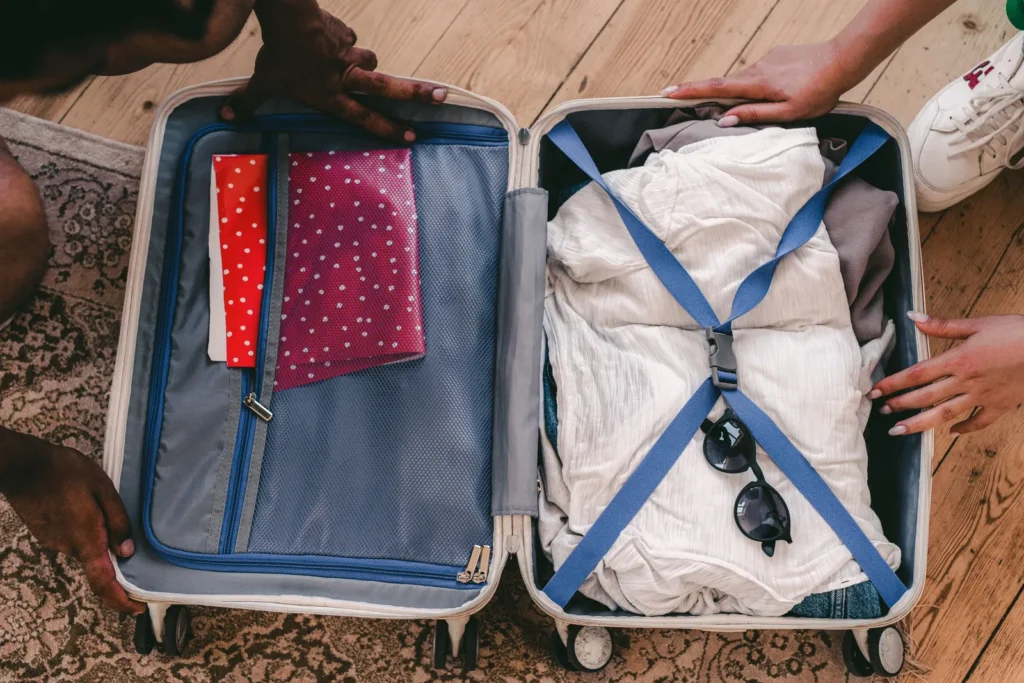
Taking a CPAP machine on an Umrah trip needs a small equipment plan alongside your ordinary packing list. Identify the exact device and accessories, check the rules of each operating airline, and make sure the case reaches your room with the right power supply. When booking road transfers, describe the bag and any handling needs rather than assuming a car’s phone charger can power medical equipment.
The practical aim is continuity: the same complete kit leaves home, passes through the airport, travels with the correct passenger and arrives at the hotel. A missing power supply or a case left behind during a hotel move can matter more than the size of the suitcase you chose. Those are preventable packing and handover problems.
This guide covers travel logistics for someone who already uses prescribed equipment. It does not advise on treatment, settings, fitness to travel or whether equipment can safely be used during a journey. Take those questions to your clinician and equipment provider. The airline decides its carriage and onboard-use arrangements; your taxi provider can assess the actual road transport request.
Make an inventory for your own machine
Start with the manufacturer’s exact model name, rather than the general description “sleep machine”. Write down the components you normally need and compare them with the user manual. Your list might include the device, mask, tubing, power supply and leads, plus accessories specified for your model. Do not turn another traveller’s packing list into a claim that every machine uses the same parts.
Keep a photograph of the assembled kit for your own reference, with any personal information out of view. It can help you check a hotel room before leaving. If someone else is packing on your behalf, show them which small components belong to the equipment rather than allowing an unfamiliar cable to be put in a different person’s suitcase.
Record the equipment supplier’s contact details and keep the correct manual accessible offline. A web search for a similar-looking model is a poor substitute when you need to identify a connector or packing instruction. If you have a travel-specific configuration already approved by your equipment provider, use its instructions; this article does not recommend buying a new device or substituting components.
Separate carriage from use during a flight
There are two different airline questions: may the equipment travel, and what arrangements apply if you intend to use it onboard? Tell the operating airline which applies to you. Include your actual model and any battery details it requests. A general statement that medical equipment is accepted does not answer every question about space, power, documentation or onboard use.
Check every flight in the itinerary, including a connection operated by another carrier. The airline name on the ticket seller’s website is not always the operator of each aircraft. British Airways explicitly notes that partner-operated flights may have different processes on its medical equipment information page. Apply that check to the return journey as well.
Save the relevant response with your travel documents. If the airline needs further details, resolve those through its official support route before departure. Do not send a taxi driver your medical paperwork as a way of obtaining airline clearance: those are separate responsibilities, and the driver cannot authorise equipment for the flight.
Two airline examples, not a universal allowance
At the time of review, British Airways states that a CPAP device may travel in the cabin as an additional hand-baggage item without charge. Its CPAP section recommends carrying a medical professional’s letter and warns that onboard power cannot simply be assumed. Read the current page for your journey and ask the airline about your own arrangements rather than applying this example to another carrier.
Emirates’ medical equipment guidance separately covers PAP and CPAP equipment, including size and stowage requirements, batteries and aircraft-dependent power availability. That is useful evidence of why “there is a socket on the plane” is not a complete plan. Its published arrangements belong to Emirates and should not be presented as rules for all flights to Saudi Arabia.
For either example, the useful preparation is to ask a precise question and retain the answer. Identify the model, flight and whether you need onboard use. If the itinerary changes, check whether the answer still applies to the new operating carrier or aircraft arrangement. Do not assume a previous journey’s approval automatically covers a different trip.
Ask about batteries without guessing from a phone power bank
If your setup includes a battery, collect its manufacturer, model and rating information before contacting the airline. The carrier may need those details to assess carriage. A marketing description such as “travel battery” or “all-night power” is not a substitute for the actual specification, and the bag containing it still needs to follow the airline’s packing requirements.
Do not assume that a battery or cable used to charge a phone can operate your machine. Compatibility and duration are questions for the equipment manufacturer or supplier; airline permission is another question again. This guide deliberately gives no universal battery capacity or runtime, because the relevant answer depends on the equipment and the arrangements required for your flight.
Keep the airline’s battery instructions together with the device documents. If it asks for a particular approval or packing method, make sure the person preparing the bags has seen that instruction. Avoid discovering at the airport that one family member packed the device while someone else put its battery into a different bag without checking.
Prepare the case for repeated movements
An Umrah itinerary may move the kit through a home departure, airport screening, a vehicle, a hotel room, another intercity transfer and the return airport. Pack for those handovers, not only for the first flight. Use the carrying case and protective arrangements recommended for your model, keeping the parts together in a way you can check quickly.
ResMed’s travel guidance advises its users to empty the humidifier tub before packing and to check suitable power connections and adapters. Follow your own manufacturer’s instructions for your exact device; the useful lesson is to prepare it for transport deliberately rather than move it straight from a bedside setup into a travel bag.
Give the case an ordinary private contact label if appropriate, without displaying a diagnosis or treatment information. Make it recognisable to the traveller and any companion who may help carry it. If the case resembles a laptop bag or toiletry bag, point it out before loading so nobody treats it as an unimportant extra that can be left with another party.
Keep the airport process and the road pickup separate
Ask the airline or departure airport what you need to present at screening and how to handle the equipment during that process. Different airports and carriers can give different instructions. Keep the required documentation accessible to the staff who need it, but do not publish it in a family chat that also contains drivers, tour contacts or unrelated passengers.
When arranging the airport pickup, include the equipment case in the baggage description. You can say that a small equipment bag needs careful handling without sharing your diagnosis. Give its size if that affects storage and explain any practical assistance you need with carrying the combined load. The complete passenger and baggage count still matters for the vehicle.
Tell the transport provider about your actual readiness after arrival. Retrieving bags and completing the airport process are separate from the aircraft landing. Our Jeddah airport meeting guide helps you establish a clear handover location; it does not replace airline equipment arrangements or guarantee a particular waiting allowance.
Describe the bag to the transfer provider, not your medical history
A useful booking note is factual: “Two passengers, two suitcases and one additional equipment case, approximately [dimensions]. Please confirm suitable storage and careful handling.” This is an example of information to provide, not a promise that every vehicle has a particular compartment. Add any agreed practical assistance needs through the provider’s normal booking channel.
At loading, identify the case and discuss where it can be stored securely. Do not assume it can sit loose on a passenger seat or that the driver will know what is inside an unmarked bag. Equally, the case should not be separated from the travelling party merely because another family vehicle has spare room, unless you have deliberately planned the handover.
If you need more than ordinary luggage transport, make that clear before booking and ask the relevant professionals about the travel arrangement. A standard taxi booking does not establish medical supervision, equipment operation or a guaranteed power supply. The transport request should reflect what the provider can actually confirm, not what a photograph of a vehicle suggests.
Do not build the plan around power in a car
A vehicle advertised with USB charging has not thereby been assessed for your CPAP device. Avoid treating a charging port, mains-style socket or plug adapter as proof of electrical compatibility. Ask the equipment provider about the model’s requirements and the transport company about the actual vehicle facilities if these are relevant to the journey.
Keep the question specific. “Can I charge my phone?” and “Can this equipment be operated from this supply?” are different requests. A driver can describe a fitted outlet but cannot replace manufacturer guidance or clinical advice. This article does not advise using a CPAP machine in a moving vehicle or promise that a particular supply will remain available.
For an intercity journey, organise the departure and destination around arrangements that have been established in advance. If the proposed travel plan depends on a service or facility that nobody has confirmed, resolve that gap before treating the transfer as ready. Do not conceal an essential requirement inside a generic request for a comfortable car.
Ask the hotel practical room questions before arrival
Contact the property with the room reservation and the practical facilities you need to check. Ask about an accessible socket near the intended bedside position and suitable space for your equipment. A photograph of another room is not a confirmation about yours. Explain the requirement in ordinary terms without assuming hotel reception can assess the machine’s electrical compatibility.
Check the device’s power requirements against its own documentation and obtain any necessary advice from the supplier. Pack the correct approved leads and appropriate adapters for the planned setup. Do not infer that a plug fitting into a socket settles every electrical question, or copy an adapter recommendation from a traveller using a different machine.
After entering the room, check that the kit and its accessories arrived together and that the agreed practical facilities are present. If the room arrangement differs, contact reception while there is time to resolve the room issue. Questions about operating the equipment, water requirements or treatment remain with its instructions and your care or equipment provider.
Plan for a Makkah–Madinah hotel move
Before a hotel change, give the equipment its own place on the departure checklist. A device can be packed while its power supply remains plugged into the wall or its mask is still drying elsewhere. Check the whole kit rather than counting only the main unit. Use your original inventory to make that check repeatable.
Keep the case assigned to the traveller who needs it. In a family using several cars, decide which vehicle carries both that person and the equipment. If another adult helps with loading, ask them to confirm the case is present before the car leaves. This is a simple handover task, not a reason for everyone in the group to see the equipment user’s private documents.
For broader baggage planning, our Umrah luggage guide can help you account for the whole party’s bags. Check the new hotel’s room arrangements separately. Having a workable setup in Makkah does not establish what will be available at the Madinah property, even when the same organiser reserved both.
A fictional packing check catches the missing part
Consider a fictional traveller preparing for Umrah with a partner. The traveller already has a prescribed machine and has checked the airline’s requirements. The partner packs the carrying case while the traveller handles the travel documents. At first glance, the main unit, tubing and mask are all present.
They compare the packed items with the device inventory and notice that the power supply is still beside the bed. It had been mistaken for a charger that would go into the ordinary electronics pouch. They put the complete approved kit together and decide who will carry it through each handover. No new equipment or treatment change is needed to solve this packing mistake.
The road transfer request now includes the additional case alongside the suitcases. The hotel has been asked about the practical room arrangement. Neither confirmation is treated as airline approval or medical advice. The example shows the value of checking responsibilities and components before departure; it is not a real customer case or a guarantee about any named model.
A fictional hotel change keeps the case with its owner
Imagine another fictional family moving from Makkah to Madinah in two vehicles. Most suitcases are grouped in the lobby, while the equipment user is still checking the room. A helpful relative suggests putting the small case in whichever car has space. Before loading, the family checks which vehicle the traveller will actually use.
They keep the kit with that traveller and verify the power supply, mask and other required components against the inventory. The person responsible for the second vehicle handles the remaining general luggage. The booking provider receives the accurate load for each car, while the clinical documents stay with the equipment user.
At the destination, the family takes the case to the correct room rather than leaving it with all the other bags awaiting allocation. They check the room facilities directly. This solves a custody and organisation problem; it does not assume the driver operates the device, that a hotel provides consumables or that replacement parts are available locally.
If the kit is missing or a component is damaged
Identify the last confirmed location and contact the provider responsible for that part of the journey. If the issue is at the airport, use the relevant airline or airport reporting route. If a case was left in a transfer vehicle, provide the booking reference and an ordinary description through the transport provider’s contact channel. Do not post sensitive documents as proof of ownership.
Separately contact your equipment provider or care team about what the missing or damaged component means for you. Do not improvise repairs, substitute an unfamiliar power supply or change treatment based on a driver’s or another traveller’s suggestion. A transport company may help trace a bag, but it cannot determine a safe replacement equipment plan.
Keep the report reference and any clear photographs of damage for your own records. If insurance or another service may be relevant, check your actual policy or agreement; this guide does not promise reimbursement. The immediate logistical objective is to locate the kit and reach the appropriate professional contact with accurate information.
Use the same checks for the return journey
Recheck the operating airline, equipment arrangements and battery instructions before flying home, especially if the return differs from the outward route. Gather all components before the hotel room is cleared. A successful outward journey is useful experience, but it does not confirm the rules or facilities for a different carrier.
Give the airport transfer provider the actual passenger and baggage load, including any extra shopping as well as the equipment case. Do not assume the return car is suitable simply because the outward load fitted. Our Madinah hotel-to-airport planning guide covers the wider departure arrangement; your airline remains the source for its equipment and check-in requirements.
A compact equipment handover checklist
- Exact model, current manual and supplier contact saved privately.
- Each operating airline’s carriage and any onboard-use requirements checked.
- Device, required accessories, power supply and any approved battery arrangements accounted for.
- Case included in the transfer’s baggage description, with practical handling needs agreed.
- Hotel room facilities checked directly, without assuming equipment compatibility.
- Full kit counted again at each hotel departure and vehicle handover.
For the road journey, contact Hajj & Umrah Taxi with the route, party size and luggage requirements. Share what the provider needs to assess the vehicle and handling arrangement; keep diagnosis, treatment details and clinical paperwork with the appropriate professionals. A well-defined transport request makes the equipment handover clearer while leaving medical decisions in the right hands.
Sources reviewed 4 October 2026: British Airways’ medical equipment guidance, Emirates’ current medical forms and equipment page, and ResMed’s model-related travel guidance. Carrier and manufacturer examples apply to their own services and products, not every airline or device. Both scenarios are fictional. This article provides packing and transport coordination, not clinical advice. Photo: SHVETS production / Pexels.